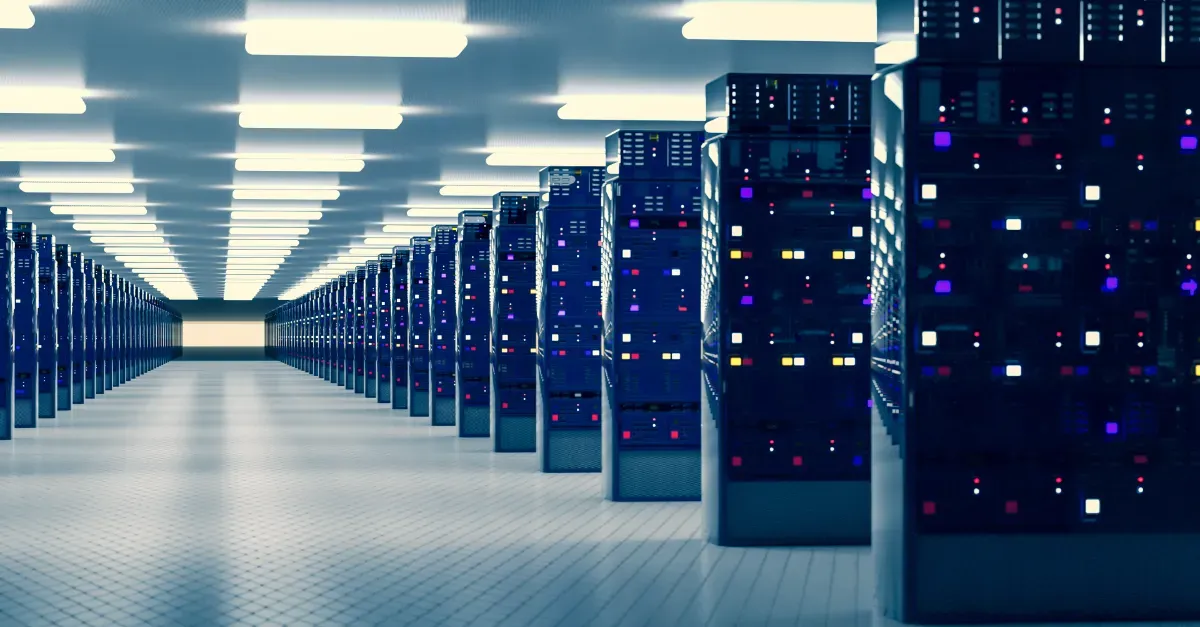
These facilities, or parts of them, are used to train artificial intelligence algorithms, which require enormous quantities of data stored on physical devices or via the cloud. This system requires energy to power its components, starting with the processors. These facilities produce heat and therefore need to be cooled, which requires even more energy.
Artificial intelligence algorithms are ‘programs’ and, note, the quotation marks are no accident: the term program is reductive. Indeed, they ‘run’ (as industry experts say) on machines equipped with processors, disks, RAM and electronic circuits: somewhat similar to our computers, but enormously more powerful, larger and therefore far more energy-hungry.
How large companies solve the problem
In recent years, large IT companies have become particularly sensitive to the environmental impact of these data centres, and so they are taking action to produce and use renewable energy. If you want to get a sense of what these data centres are and how the energy issue is addressed, we recommend visiting Google’s website: https://www.google.com/intl/it/about/datacenters/. It is worth it; you will be amazed by this reality.
Not all companies take the same approach
As you can well imagine, this race for AI is played out on a global level. There are countries with major data centres powered by energy produced from hydrocarbons. The service provided by these data centres may be less green than we expect, with a significant environmental impact. Considering also that data ‘travels’ across servers around the world, it can be complicated to understand where the service is really based.
People often use IT services without thinking too much about how and where they originate. Nevertheless, greater ecological awareness, as is already happening in other sectors, could lead users to choose one company’s service over another’s: but to do this they must be informed.
New artificial intelligence services are born every day that in fact ‘rely’ on the servers of the main players. These services serve millions of people every day; this will inevitably lead to greater demand for computing power and, as a result, more and more demand for energy. To quote one of our great writers: ‘Posterity will pass the difficult judgement’.