Vernacular architecture: a valuable inspiration from the past
Indeed, so-called ‘vernacular architecture’ can offer ideas of striking relevance today. Vernacular architecture means a set of buildings that arose spontaneously in different territories, built using traditional techniques and materials easily found locally, without the involvement of architects, but as the fruit of popular wisdom.
These buildings respond functionally to the climate, the landscape and the needs of everyday life. In northern Italy, a typical example is the stone and wood Alpine huts of the mountain valleys, built to withstand cold and snow, with pitched roofs and thick walls for thermal insulation.
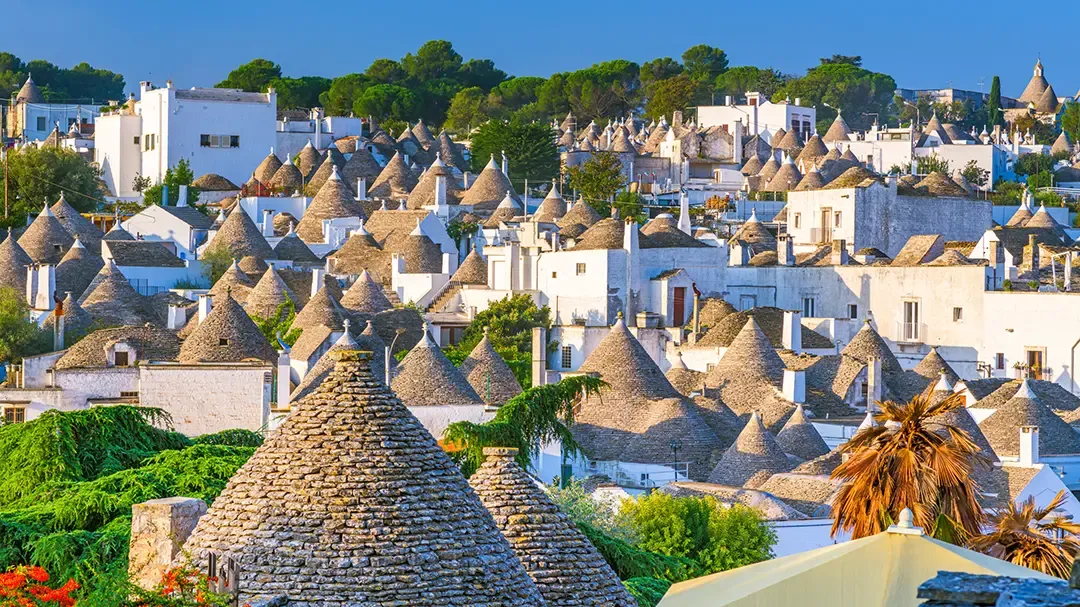
In the South, by contrast, the trulli of Puglia stand out, with their characteristic conical limestone roofs, perfect for coping with the summer heat and built entirely dry, that is, without mortar. The tuff houses of Campania and the underground dwellings of Basilicata – think of the famous Sassi of Matera – also belong to this tradition: concrete examples of how people have adapted to their environment with intelligence, creativity and respect for nature.
Traditional architecture, in fact, not only adapts perfectly to its environmental context without distorting it – there are no eyesores among spontaneous buildings – but is also inherently eco-sustainable: the materials used are local and natural, and the construction techniques exploit their physical properties to ensure thermal comfort and ventilation.
From abandonment to redemption: the case of the trulli
Thanks to these qualities, vernacular architecture is undoubtedly coming back into fashion. One sign of this is, for example, the growing demand on the property market for historic and traditional buildings, which are restored and lived in. In Puglia, for instance, more and more people prefer a trullo or a masseria in the countryside to a flat in the city.
For some decades now, the trulli of Puglia have become famous worldwide, thanks also to the renowned Alberobello, a town made up entirely of these buildings and declared a UNESCO World Heritage Site. In the past, however, this was not the case: because of rural depopulation, these splendid buildings were often abandoned, and anyone who inherited a trullo saw it almost as a useless burden to manage.
But the last word has never been said: these buildings have indeed come back into favour, thanks to their unique charm, which fits perfectly into the Puglian countryside. Cool in summer and warm in winter, they are now much loved by locals and tourists alike.
The cave houses of Matera
Likewise, the cave houses of Matera are another remarkable example of vernacular architecture that has experienced a rebirth. Matera, indeed, has gone from being the “shame of Italy” to a jewel known throughout the world. Its traditional homes, carved directly into the limestone rock of the Sassi, have existed for millennia and demonstrate a perfect harmony between human settlement and the natural environment. Thanks to their position and structure, they provide thermal insulation and protection from the elements, exploiting the constant temperature of the rock.
For a long time, however, these cave houses were considered a symbol of backwardness and poverty: in the 1950s, many families were even forced to leave them in the name of “modernisation”. Today, on the contrary, they represent an architectural and cultural heritage of inestimable value. Matera became European Capital of Culture in 2019, and the Sassi, recognised as a UNESCO World Heritage Site, have been partly restored and brought back to life as residential, hospitality and cultural spaces.
Here too, the reappraisal came about thanks to a new awareness: living sustainably also means rediscovering and respecting the solutions of the past.
A model for the future
Ultimately, at a time when we are trying to reduce emissions and resource consumption, vernacular architecture undoubtedly represents a model to be rediscovered and adapted to contemporary needs. Today’s architects can certainly draw inspiration from these examples to design modern buildings that do not become ugly and dilapidated within a few decades but, on the contrary, blend in with the surrounding environment and meet their occupants’ needs in terms of sustainability and wellbeing.