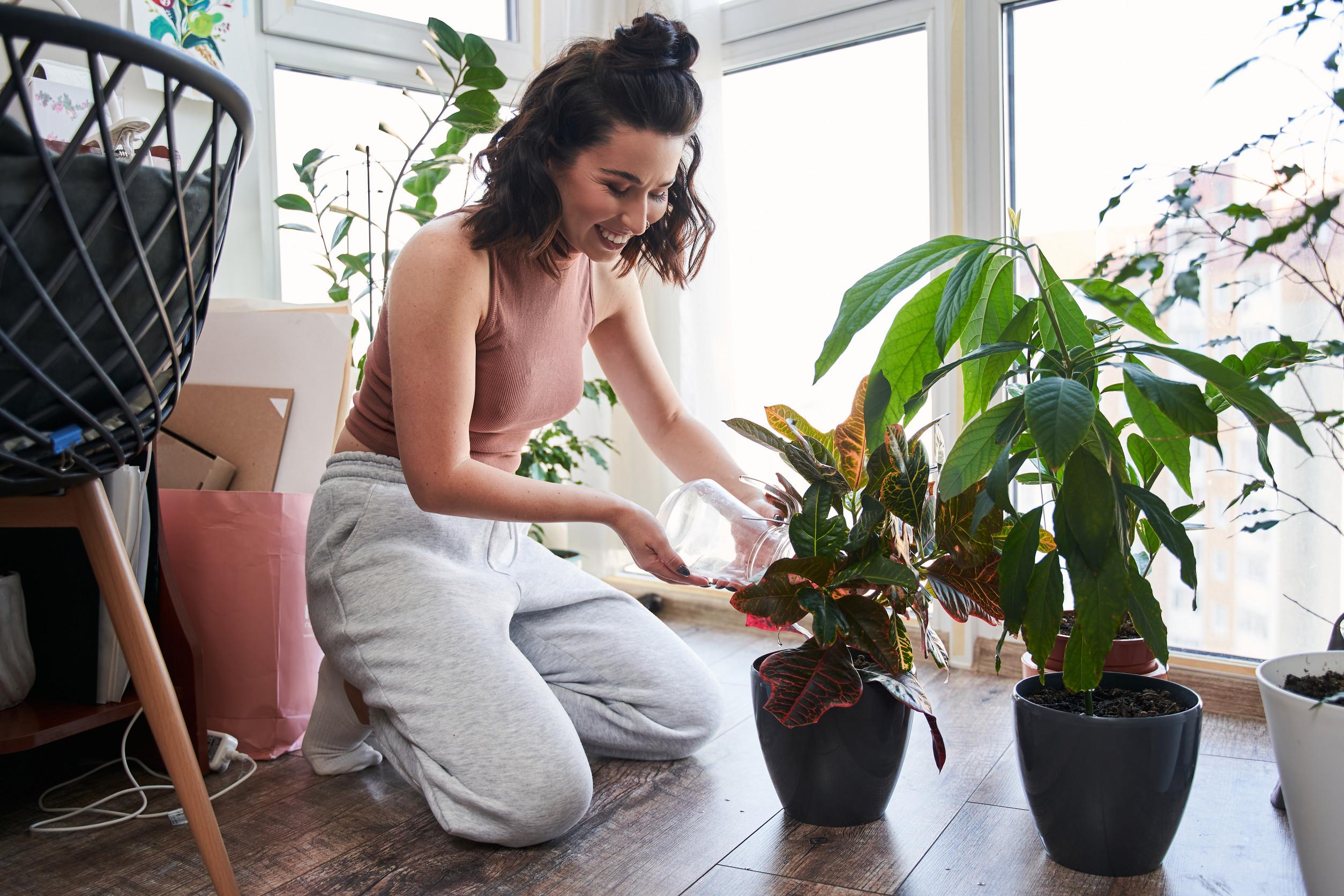
But now let’s look at which plants are ideal for purifying the interiors of our homes:
Peace lily (Spathiphyllum)
The peace lily is a plant with dark, glossy green foliage, featuring elegant white flowers reminiscent of calla lilies. It is one of the most effective plants for purifying the air, as it absorbs harmful substances such as benzene, formaldehyde and trichloroethylene. It is also easy to grow and requires little care, making it ideal for those without green fingers: it needs only moderate watering and thrives in environments with indirect light.
Aloe vera
Aloe vera is a very well-known plant these days: it has thick, fleshy, light green leaves, which can be used to extract a gel that is beneficial for the skin and useful for treating minor burns or skin irritations. Many beauty products are in fact based on aloe vera, a plant that is, however, also excellent for purifying the air, eliminating benzene and formaldehyde and producing oxygen during the night. It needs direct sunlight and infrequent watering.
Snake plant (Sansevieria trifasciata)
Also known as “mother-in-law’s tongue”, the snake plant has long, stiff leaves with green and yellow stripes. It is a very hardy plant and suits any environment. It filters toxins such as benzene and carbon monoxide and releases oxygen at night, making it perfect for the bedroom. It also requires very little water and grows well even in low light. Its longevity makes it an excellent choice for anyone looking for a low-maintenance plant.
English ivy (Hedera helix)
English ivy is a climbing plant with small, lobed leaves of a deep green, sometimes variegated. It can be grown in hanging pots or left to climb on supports. It is very effective at absorbing mould and allergens in the air, a quality that makes it perfect and particularly useful for people who suffer from allergies or asthma. It needs moderate light and regular watering.
Rubber plant (Ficus elastica)
The rubber plant has large, thick, glossy, dark green leaves with reddish tints. It needs little maintenance and grows well in low-light environments. It is, in fact, a sturdy plant as well as a very elegant one, and it is useful for removing pollutants such as formaldehyde and xylene.
Dracaena (Dracaena spp.)
There are several varieties of dracaena (plants with long, thin leaves, often with coloured stripes) and all of them are excellent air purifiers, able to absorb numerous chemical toxins. They are elegant plants and decorate every room of the home with taste. They also need little watering and indirect light to grow lush.
Pothos (Epipremnum aureum)
Pothos has heart-shaped leaves, either green or variegated with yellow or white shades. It is one of the easiest plants to grow, either in water or in soil, even in low light, and is known for its ability to eliminate formaldehyde, benzene and carbon monoxide. Pothos is perfect for anyone who wants a plant that requires little care but is at the same time beautiful, useful and decorative.
Bamboo palm (Chamaedorea seifrizii)
This palm has slender stems and feathery leaves, and undoubtedly lends an elegant, exotic look to a room. But beyond its aesthetic appeal, the bamboo palm is also an excellent ally in the fight against indoor pollution, as it removes benzene and trichloroethylene while increasing the humidity of the air. It requires indirect light and regular watering to stay healthy.
Boston fern (Nephrolepis exaltata)
Boston ferns have long, feathery fronds with dense, bright green leaflets. They are known for their ability to humidify the air and remove toxic substances, which makes them ideal plants for dry environments and for people with respiratory problems. They do, however, need a lot of care and frequent watering.
Chrysanthemum (Chrysanthemum morifolium)
In the popular imagination, the chrysanthemum is a flower often associated with cemeteries. In reality, it is a very colourful and decorative plant, as well as an excellent filter for toxic substances: it absorbs ammonia, benzene and formaldehyde, making the environment healthier. So if we set aside the “stigma” attached to this flower, we can consider it for our homes.
Ultimately, bringing indoor plants into our homes not only improves their appearance, but also helps us live in a healthier, cleaner environment. The benefits these little plants offer us are, in fact, enormous, and in return they ask only for a little water and care: all things considered, it’s worth it!