The biomethane production process
Biomethane is produced when organic matter is broken down in an oxygen-free environment. This process is known as anaerobic digestion and proceeds through three stages: hydrolysis, acidogenesis and acetogenesis. The first stage, hydrolysis, consists of the degradation of complex organic substrates made up of macromolecules (carbohydrates, proteins, fats). These are split into their soluble monomers (sugars, amino acids, long-chain fatty acids). In industrial anaerobic digestion processes, physical, chemical or biological pre-treatments are carried out to aid digestion.
The soluble intermediates generated in the hydrolysis stage are used as a source of carbon and energy by acidogenic bacteria, which generate short-chain volatile fatty acids as fermentation products. Different bacterial consortia develop, producing mixtures of organic acids and alcohols depending on pH and temperature conditions.
Acetogenic bacteria then convert the volatile fatty acids and alcohols produced in the previous stage into acetic acid (CH3COOH), hydrogen (H2) and carbon dioxide (CO2).
The fourth and final stage is methanogenesis, in which methane is produced together with carbon dioxide and other components. The latter are present in small percentages: carbon monoxide, nitrogen, hydrogen, hydrogen sulphide.
How biomethane could contribute to the energy transition
Biomethane has considerable potential to change the energy industry thanks to its many advantages.
First, it is a renewable energy source, which means it can be produced continuously and does not run out like fossil fuels.
Second, biomethane does not have a large carbon footprint and does not contribute to climate change.
Third, it can be used to generate electricity and heat and can be fed into the natural gas grid.
The challenges of biomethane production
Biomethane production still presents several challenges. The plant installation costs for biomethane production are high and require considerable financial and human capital.
In addition, it is harder to transport than natural gas, because it requires higher pressure.
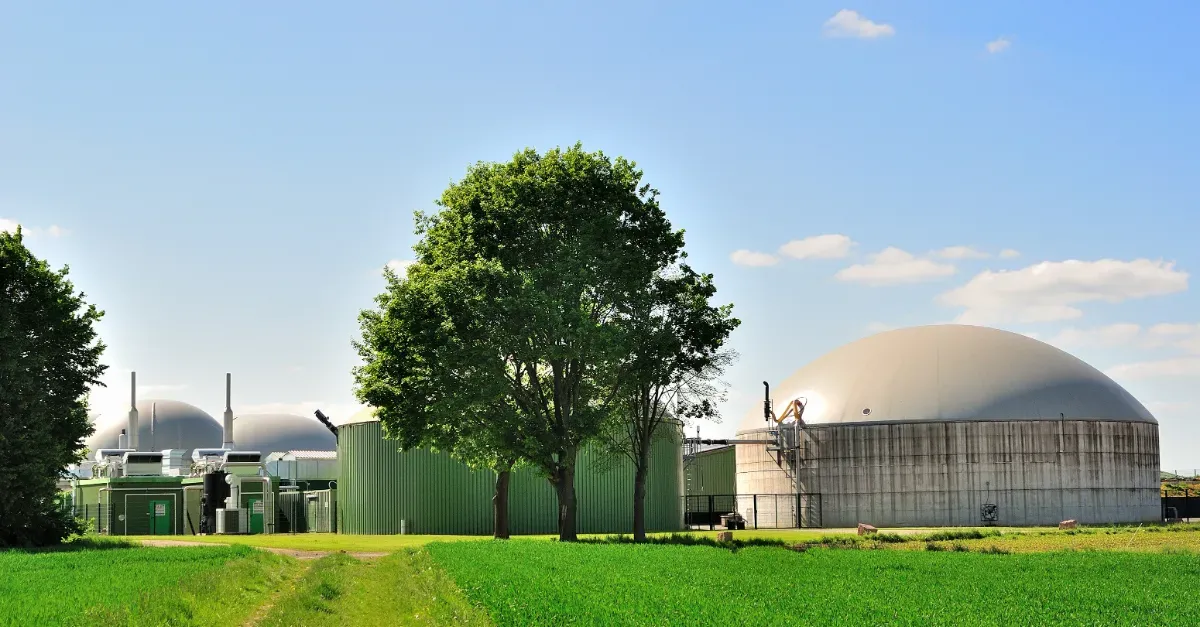
Finally, according to some, production would entail a series of environmental problems in the areas where the production plants are located, such as bad smells, polluting emissions, lorry traffic to supply the plants, and the growth of pathogenic bacteria.
However, it can be said that in recent years these problems have been overcome by more modern and well-established technologies, which make it possible to build plants that work well and prevent the problems listed above. Care must be taken to build the plants (such as those for the organic fraction of municipal solid waste, or OFMSW) in the right way and in the right place, managing the whole supply chain correctly.
Italy, with its 2,000 plants (80% of which are in agriculture), is the second-largest biogas producer in Europe and the fourth in the world. Remember that biomethane is biogas that has undergone a refining process. There is, however, ample room for growth.
According to the Italian Biogas Consortium, only 15% of livestock effluents are currently treated in digesters that produce biomethane, and over the next ten years this percentage could rise to 65%, taking annual production from 1.5 billion m3 of biomethane to 6.5.
But attention is also on ‘urban raw material’ to feed the supply chain, given the chronic problems with disposing of our waste. Separate collection of municipal waste stands at 64% and the organic fraction accounts for about 40% of total separately collected municipal waste. According to the latest report by the Italian Composting Consortium, there are 359 plants in Italy (294 composting plants and 65 that include an anaerobic digestion section), whose authorised capacity available for treating food and green waste amounted, in 2020, to approximately 9,300,000 tonnes a year.