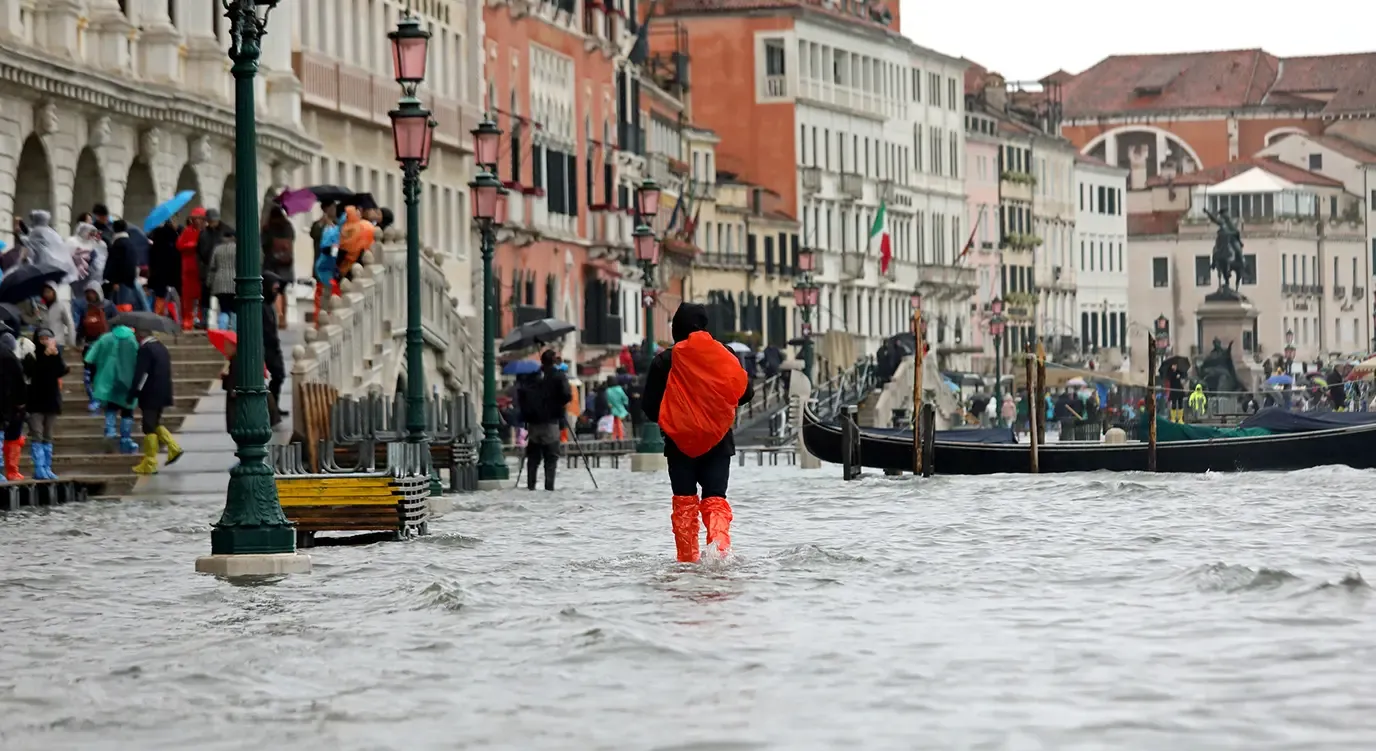
For the United States, this trend is even more pronounced. A recent study by the has indicated that, by 2050, sea level could rise by 10-12 inches (about 25-30 centimetres), almost double the global average for the same period. Some regions, such as the Gulf of Mexico, are at even greater risk, with rises of up to 16-18 inches (over 40 centimetres) forecast.
…The land is sinking
Complicating the situation further is the phenomenon known as ‘subsidence’, that is, the natural lowering of the ground, which affects many US coastal cities. According to a recent study published in the journal Nature Cities in May 2025, 28 American metropolises, including New York, Houston, Chicago and Seattle, are undergoing ground subsidence that can exceed 2-4 mm a year. In plain words, this means that while the sea rises, the land sinks, increasing the risk of chronic flooding, damage to infrastructure and loss of habitable areas.
The effects are already noticeable: coastal neighbourhoods flooding even without storms, salt water rising into aquifers, beach erosion, and economic damage that falls above all on the most vulnerable communities.
If greenhouse gas emissions are not drastically reduced, the worst-case scenarios for 2100 point to a sea-level rise of up to 2.2 metres. In this context, coastal communities risk not only material damage, but also the loss of entire territories and of cultural identities tied to the sea. It is a shame that some people still deny that climate change exists…
Blue deserts: the new frontier of the ocean crisis
At the same time, a study carried out in recent days by the agency ENEA, which in 2024 signed a collaboration agreement with the CNR for joint research activities, has brought to light another side of the crisis: the one taking place beneath the surface of the oceans.
Over the past 20 years, the area of ocean regions poor in nutrients – and therefore in biodiversity – has, sadly, almost doubled, rising from 2.4% to 4.5% of the global ocean.
This phenomenon, called ocean desertification, is caused primarily by global warming: the lighter, warmer surface water prevents vertical mixing with the nutrient-rich deep waters. The result? Less food for phytoplankton, the primary link in the marine food chain and one of the key organisms for removing atmospheric CO₂. The northern Pacific is particularly affected, where the desertified area is growing at a rate of 70,000 km² a year.
Ocean desertification, of course, already has repercussions on the lives of many coastal communities. If this pace continues, however, fishing and, consequently, our food security would be completely compromised.
An intertwined destiny: oceans and climate
The rise in sea level and ocean desertification are two sides of the same coin: global warming. As temperatures rise, glaciers melt and the water level goes up. At the same time, the chemical, biological and physical balances of the oceans are altered.
The consequences do not stop at the coasts or the seabeds: they concern all of us. Indeed, since our enormous impact on the planet is the cause of the problem, it is up to us to find the solution, not only through political choices, but also through small everyday actions. Reducing emissions, rethinking economic models and valuing marine ecosystems as allies in the fight against climate change is now more urgent than ever.