Europe responds, Italy keeps pace
F-gases have no natural origin. They are produced entirely in the laboratory, built to be stable and reliable. And it is precisely in this stability that their danger lies. These are gases designed to last, and so they do, in the air. From 1990 to 2014 their emissions more than doubled, while emissions of other greenhouse gases slowed or even fell thanks to international policies. This divergence has put F-gases in the spotlight. They are still talked about far too little, but from Brussels to Tokyo, the measures to contain them are becoming stricter.
EU Regulation 2024/573 is the latest of these: it aims squarely at a gradual phase-out of F-gases by 2050, favouring alternative solutions such as natural refrigerants (CO₂, ammonia, hydrocarbons). It is a policy that looks far ahead, but it has to reckon with a present that is still too steeped in these gases. And with an industry that often struggles to find economically sustainable alternatives.
Meanwhile, Italy is following the European trend. According to ISPRA, F-gases account for 2.5% of total emissions. Little, on the face of it. But that “little” weighs like lead when you consider the cumulative effect on the climate. And it is on the national front that some encouraging news comes: in 2024, Italy’s total greenhouse gas emissions fell by 3% compared with 2023. A significant result, the combined outcome of the decarbonisation of the electricity sector, greater energy efficiency and stricter controls on the use and disposal of F-gases. A small sign, certainly, but a real and concrete one. And above all, achieved in just one year.
A glimmer of hope for the future
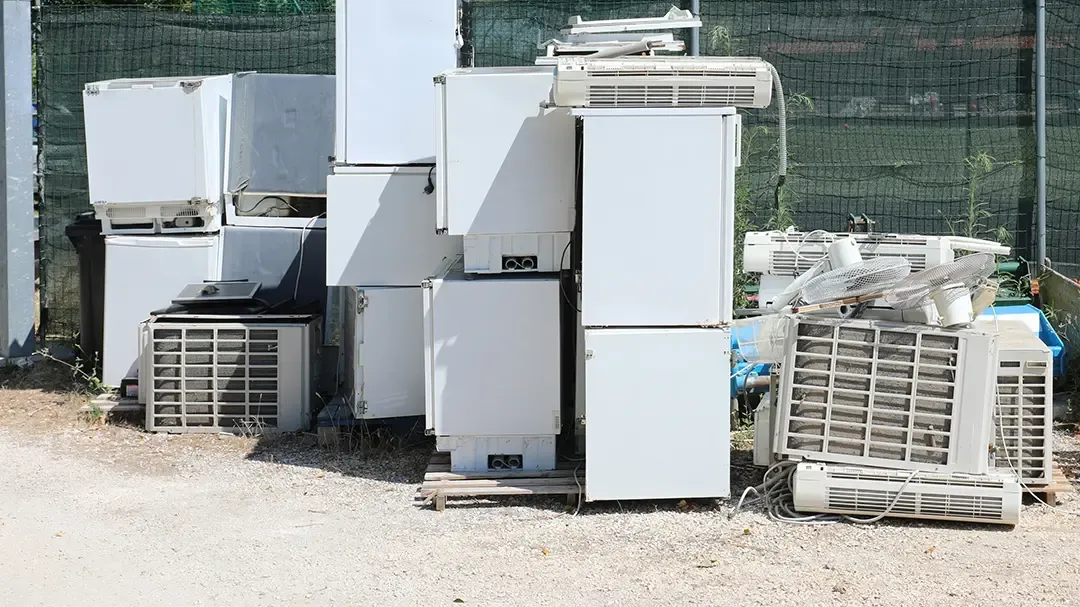
The paradox of F-gases is that, although they are essential to contemporary daily life – from the car air conditioner to the household freezer – they are also one of the least considered threats to the climate. Yet, in the great puzzle of the ecological transition, we can no longer afford to ignore them. The challenge is not only technological but also cultural: replacing not just the product, but the whole logic of consumption that made them indispensable. It takes time, of course. But it also takes determination.
In light of the most recent results, it is legitimate – and perhaps even our duty – to nurture a certain optimism. The effectiveness of the measures adopted, the resilience of European regulations, and the first signs of improvement in Italy show that it is possible to act even against the most silent and persistent threats. If the goal of climate neutrality by 2050 is truly being taken seriously, then we will have to learn to look also where the eye – and public opinion – struggles to reach. The tools are there. And, step by step, so are the results.
Further reading:
European Environment Agency (EEA) – ‘What are fluorinated gases and why are they
ISPRA – Italian Institute for Environmental Protection and Research – ‘Inventory of atmospheric emissions, 2024
EUR-Lex – ‘Regulation (EU) 2024/573 of the European Parliament and of the Council
European Parliament – ‘Climate change: greenhouse gases that cause global warming