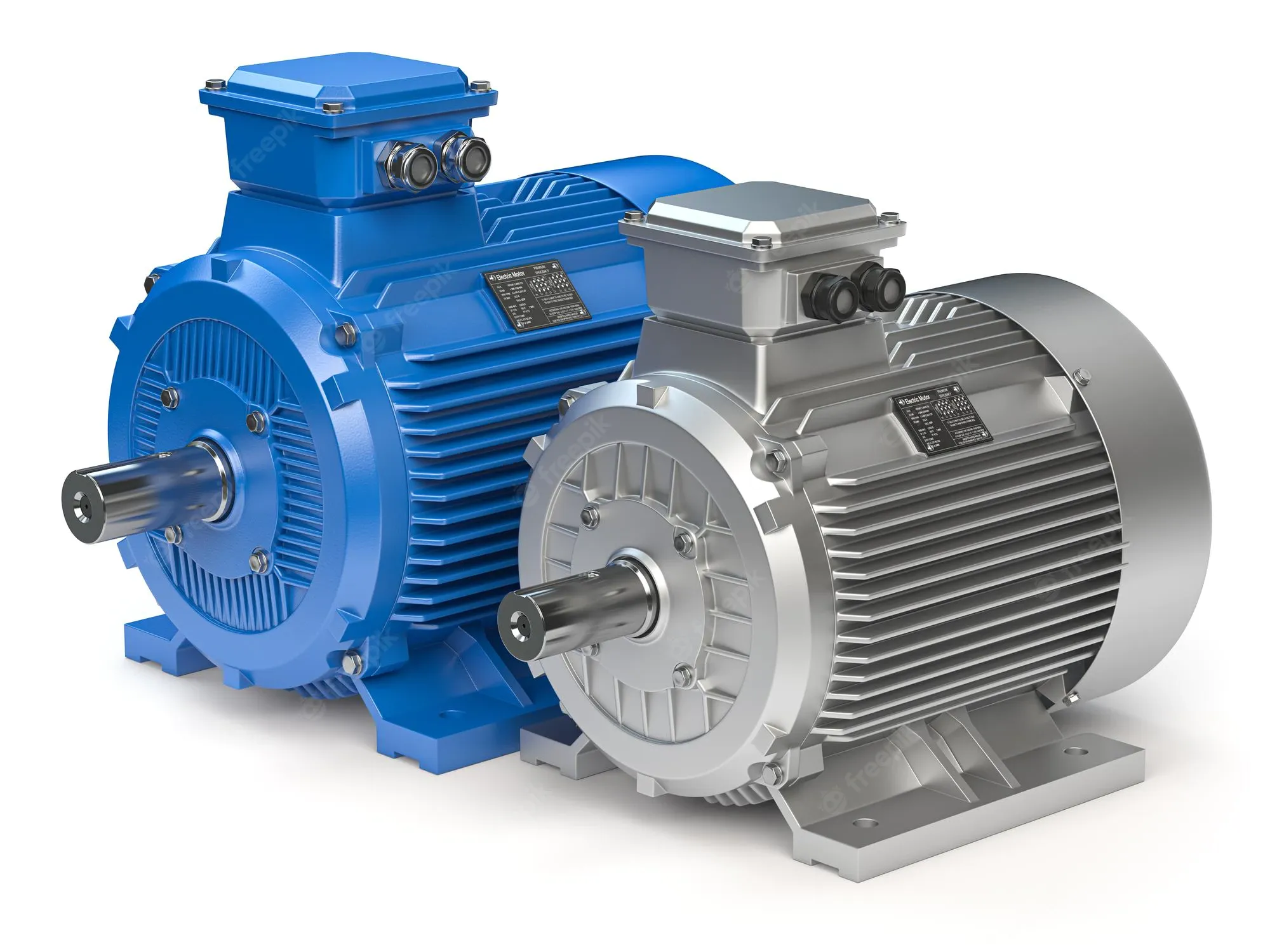
Electric motors can be divided into two main categories: direct current (DC) motors and alternating current (AC) motors. DC motors are designed to run on a direct power source, such as batteries, while AC motors are designed to run on an alternating power source, such as a household power socket.
A little history
Electric motors were invented in the late 19th century by Michael Faraday and Joseph Henry. Faraday discovered that a metal wire wound around a magnetic core can generate an electric current when subjected to a moving magnetic field. Henry discovered that a metal wire wound around a magnetic core can generate a mechanical force when supplied with an electric current. On 1 May 1888, Nikola Tesla was granted the first patent on the electric motor, covering an ‘electromagnetic motor’.
Inventors found a way to use this technology to create electric motors that gradually replaced internal combustion engines in vehicles. The first electric vehicles were introduced in 1890 and remained a popular mode of transport until the early 20th century. Think, for example, of the trolleybus. However, their popularity began to decline with the introduction of more efficient internal combustion engines.
Applications
Electric motors are used in a wide range of applications, from industrial machinery to household appliances. They are widely used in cars, aircraft, ships, trains and spacecraft. Electric motors can also be used in lifting devices, such as cranes, lifts and escalators.
Electric motors are also used in many consumer electronics devices, such as computers, mobile phones, televisions and radios. They are also used in many manufacturing and assembly applications, such as automatic machines, industrial robots, machine tools and packaging machines.
Advantages over the combustion engine
Electric motors have numerous advantages over internal combustion engines. First, they are more efficient, with efficiencies of up to 90%, compared with the average efficiency of an internal combustion engine of 35%. Moreover, electric motors produce no emissions, unlike internal combustion engines, which are responsible for 40% of greenhouse gas emissions worldwide.
Electric motors are also quieter and low-maintenance. Internal combustion engines require frequent lubricants and oil filters, whereas electric motors need no maintenance. Furthermore, electric motors can be controlled with precision, offering finer control and greater power.
The future in the automotive sector
Electric motors are set to become the main source of power for vehicles in the near future. Governments around the world are investing in electric vehicle technologies, including hybrid and battery-powered vehicles, to reduce greenhouse gas emissions.
Moreover, electric motors are cheaper in the long run, since they need no maintenance and can be powered by renewable sources, such as solar and wind energy.
Electric motors are also faster than internal combustion engines, since they can deliver all the available power in a short space of time. This will help make vehicles faster, more efficient and more enjoyable to drive.
Innovation
Scientists are working on numerous innovations in electric motors to increase efficiency, reduce size and increase power. One recent innovation is the use of lighter magnetic materials, such as neodymium, which can increase efficiency and reduce size.
Scientists are also developing new materials that can increase the power of electric motors by up to three times compared with current motors. These materials can also increase motor efficiency to as much as 99%, compared with the current average efficiency of 90%.
Testing and development of electric motors
To ensure that electric motors are safe and efficient, they must be carefully tested and developed. Motors must undergo laboratory and field tests to verify that they meet all safety requirements and work correctly, and they must also undergo endurance tests to verify that they can operate reliably for extended periods. Motors must also undergo vibration tests to verify that they do not wear out or break under external vibrations.
Components and design
Electric motors consist of a coil of wire wound around a magnetic core. The wire is a metal conductor, such as copper or aluminium, wound around a magnetic core, such as steel, in a certain number of turns.
Motors can be designed in various ways to meet the specific needs of a particular project. For example, the shape and size of the coil can be modified to improve efficiency. In addition, the resistance and inductance of the coil can be adjusted to obtain a specific power or a desired rotation speed.
Maintenance
Electric motors require maintenance to ensure reliable and safe operation. For example, it is necessary to make sure that cables and connections are tight and to inspect the motors periodically for any signs of damage.
It is also necessary to make sure that the motor temperature is appropriate. If the motor is subjected to high temperatures, it must be fitted with an adequate cooling system. It is also necessary to make sure that the motor is well lubricated with oil or grease.
Conclusions
In the context of environmental sustainability, electric motors offer numerous advantages over internal combustion engines, including greater efficiency, minimal maintenance, quietness, precise control and power. They are set to become the main source of power for vehicles in the near future. Let us remember that an electric motor is clean only if the source of the electricity is clean: if we produce energy from coal, the advantage will be only partial, linked solely to lower direct emissions compared with the combustion engine. We therefore need to produce clean electricity if we want a truly sustainable energy cycle. For this reason, the development of hydrogen cars could be the most immediate technology for achieving this result.