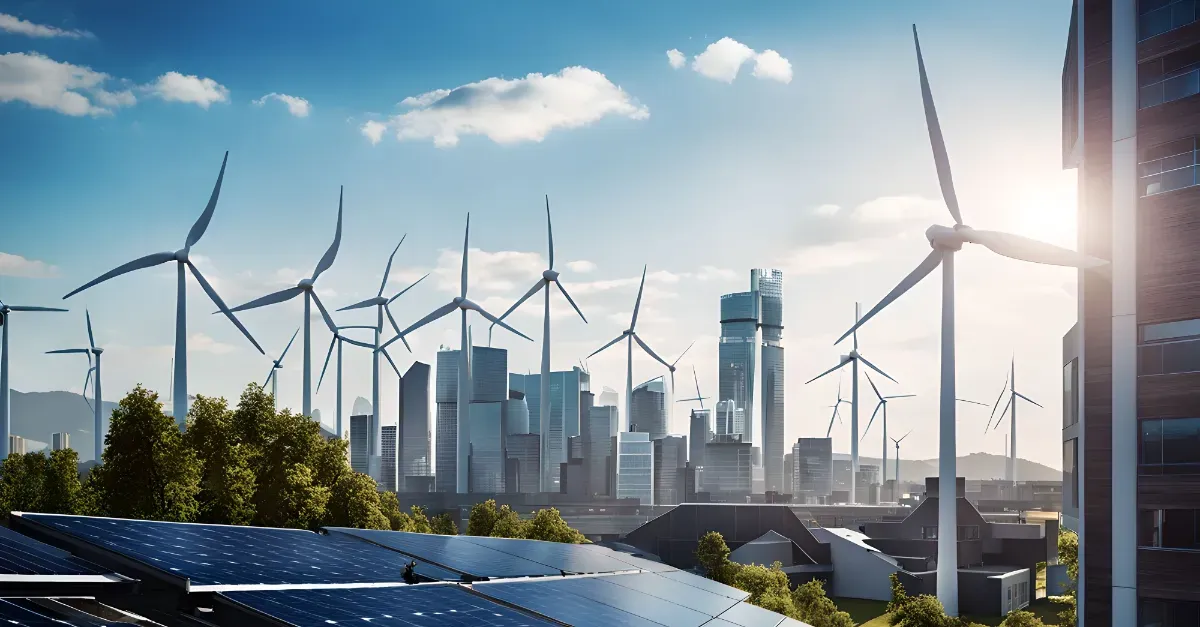
Certainly positive results. But not fully satisfactory, according to the IEA. They were achieved on the basis of the current policies of governments around the world, which fall largely short of the goals and commitments made on paper.
If countries delivered their national energy and climate commitments on time and in full, progress in clean energy would be even faster. And even that would not be enough: stronger measures would be needed to keep the goal of limiting global warming to 1.5°C alive.
‘The transition to clean energy is happening worldwide and it is unstoppable. It is not a matter of “if”, it is only a matter of “how soon” – and the sooner the better for all of us.’ These are the clear words of IEA Executive Director Fatih Birol. ‘Governments, companies and investors need to support clean energy transitions rather than hinder them. The benefits on offer are immense, including new industrial opportunities and jobs, greater energy security, cleaner air, universal access to energy and a safer climate for everyone. Given the current tensions and volatility in today’s traditional energy markets, claims that oil and gas are safe bets for the world’s energy and climate future look weaker than ever.’
The sore point, the IEA notes, once again concerns energy sources represented by fossil fuels.
As things stand, demand for fossil fuels is set to remain too high to achieve the Paris Agreement goal of limiting the rise in global average temperature to 1.5°C.
Bending the emissions curve onto a path consistent with 1.5°C remains possible, but it is very difficult. If we continue at this pace – despite the impressive growth of clean energy based on current policies – global emissions would remain high enough to raise global average temperature by about 2.4°C this century. We are therefore well above the key threshold set in the Paris agreement.
What is to be done, then? The WEO 2023 proposes a global strategy to put the world back on track by 2030, made up of five key pillars.
Tripling global renewable capacity; doubling the rate of improvement in energy efficiency; cutting methane emissions from fossil fuel operations by 75%; innovative, large-scale financing mechanisms to triple clean energy investment in emerging and developing economies; and measures to ensure an orderly decline in the use of fossil fuels, including an end to new approvals of coal-fired power plants.
‘Every country must find its own path, but international cooperation is essential to speed up the clean energy transition,’ said Dr Birol. ‘In particular, the speed at which emissions fall will depend largely on our ability to finance sustainable solutions to meet the growing energy demand of the world’s fast-growing economies. All this underlines the vital importance of doubling down on collaboration and cooperation, not retreating from them.’
To complicate matters, there is now also the dramatic situation in the Middle East, with geopolitical tensions that have reached the brink of open war between states. The difficult situation in the Middle East comes exactly 50 years after the ‘oil shock’ that led to the founding of the IEA, creating further uncertainty in
a global economic picture already unstable because of the effects of persistent inflation and high borrowing costs.