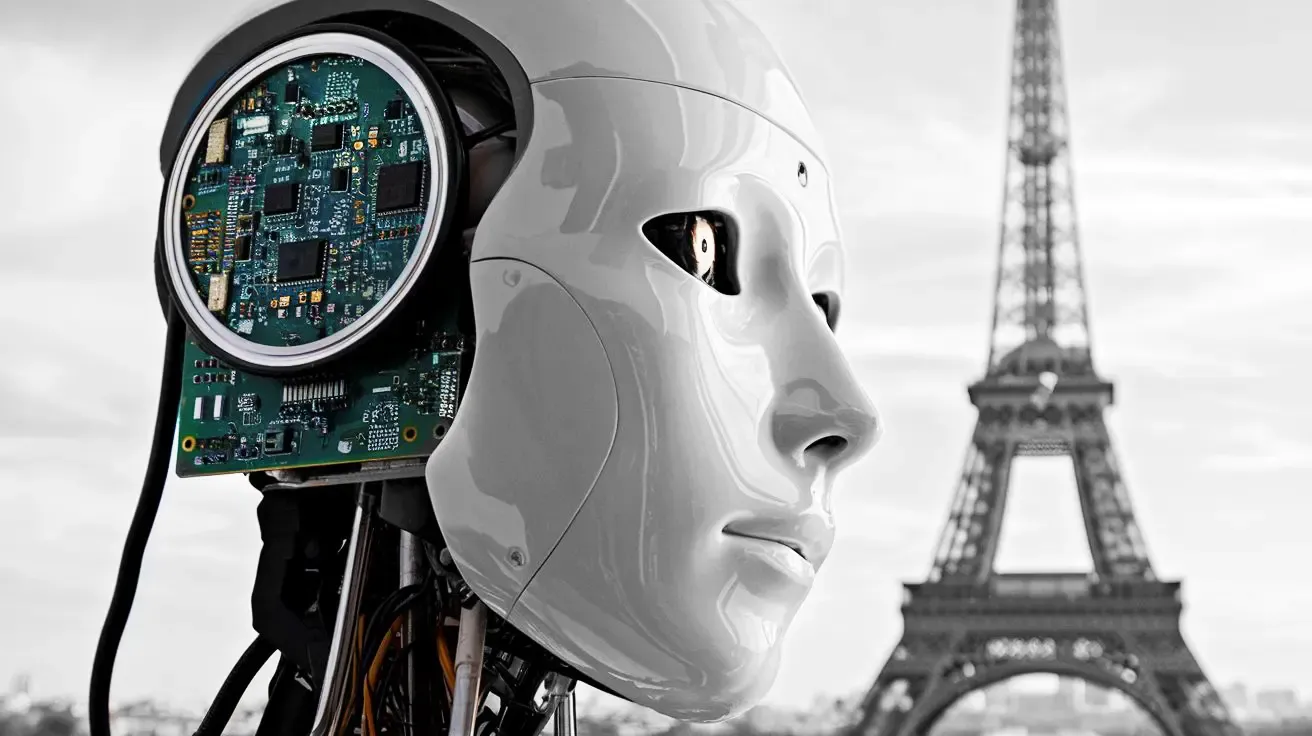
These are words and concepts that are certainly neither unexpected nor shocking.
What is significant to note is that the environmental unsustainability of AI, if not regulated and ‘corrected’ in terms of resources, has finally been proclaimed in public and at an international summit.
It is by now widely known and established that AI chatbots such as those of OpenAI and Google require significant energy resources.
AI’s energy demand has doubled every 3.4 years since 2012, mainly thanks to the development of applications such as machine learning and facial recognition.
It is estimated that by 2027 the data centres powering AI could consume between 85 and 134 terawatt-hours of energy a year. A monstrous amount, around 0.5% of global energy consumption. If we combine these figures with the total for data centres, we get a consumption of 200 terawatts a year, that is 1% of global consumption.
ChatGPT alone consumes over 500,000 kilowatt-hours of electricity a day.
A single AI response requires about three watt-hours of electricity: ten times the consumption of a traditional search.
It is estimated that getting a response from a generative artificial intelligence tool consumes 4 to 5 times more than a traditional web search.
Obviously all this translates into a great deal of additional CO2 produced.
Training advanced AI models, such as GPT-3 or higher, can generate up to 500 metric tonnes of CO2, as well as requiring large quantities of water.
Scientists noticed in good time, and raised the alarm. The cosmologist Max Tegmark is the author of a 2023 letter calling for a pause in the production of powerful AI systems. With a touch of irony – but in reality a tragic irony – he warned that governments and technology companies were unwittingly replaying the ending of the famous film Don’t Look Up. The one with the comet looming over the Earth which in the end, amid the deafness and inertia of those in power, wipes out the planet.
The second major theme of the Paris summit was certainly that of inequalities.
The general secretary of UNI Global Union, Christy Hoffman, warned that without the involvement of workers in the use of AI, the technology risks increasing inequality.
‘Without worker representation,’ Hoffman declared, ‘AI-driven productivity gains risk turning the technology into yet another engine of inequality, putting our democracies under even greater strain.’
This is not a catastrophist thesis. The data show that automation and robotics have already had a significant impact on the condition of human workers, leading to a slowdown in wage growth. Studies have shown that between 1980 and 2016, a significant part of the growth in wage inequality in the United States was caused by automation.
The IMF, the International Monetary Fund, has also expressed concern about the potential disruption to work caused by generative AI, urging governments to take measures to protect their economies.
The roads to follow are already fairly clear. Education and training of workers can increase the chances that they will not be replaced by automation, but will instead find in the new technologies an ally to increase their abilities and skills.
Then the balance of power between companies and workers will certainly need to be redressed, especially in the big technology companies. And here politics comes directly into play, in particular that of nation states.
With the wind currently blowing through the political landscape of the West, there is not much to hope for. At least for the moment.