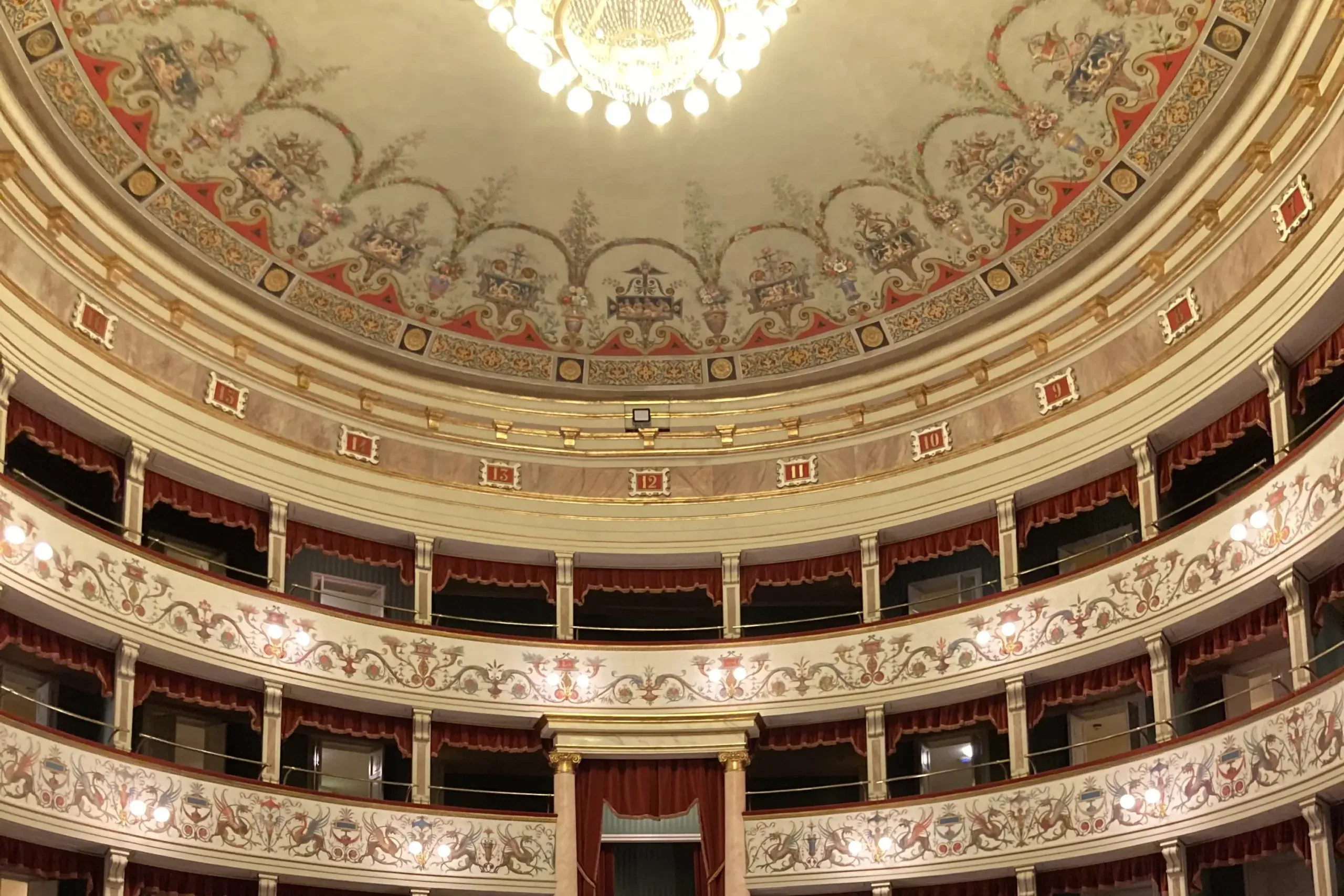
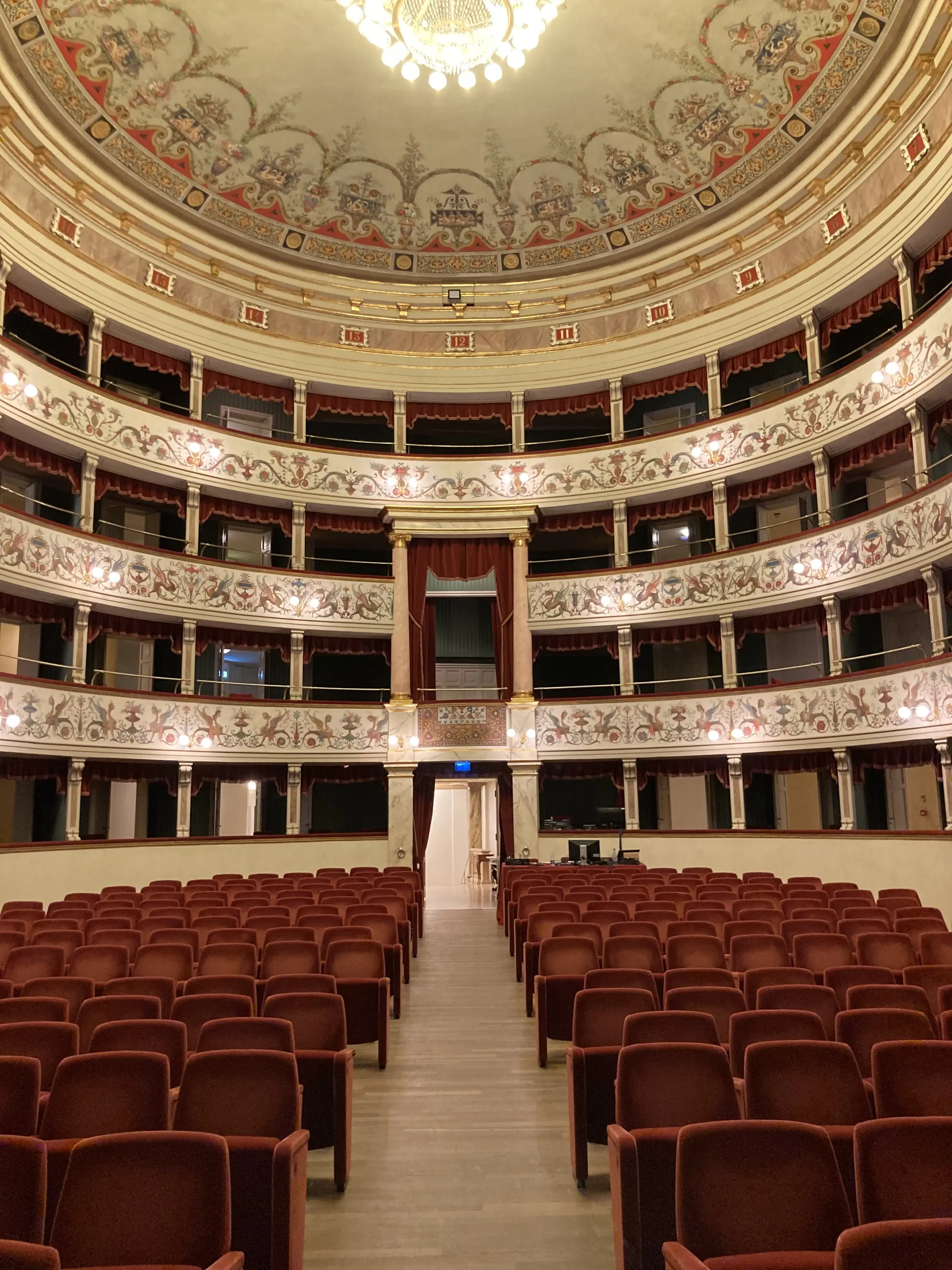
From eliminating paper to planting a forest of 600 trees, the Teatri di Siena are a model of how effective and original ways can be found to have less and less impact on the environment.
“(Im)patti Chiari” is the name of the section dedicated to the commitment to sustainability on the website of the Teatri di Siena (Teatri di Siena - (Im)patti Chiari), a historic city institution that includes the Teatro dei Rinnovati and the Teatro dei Rozzi.
The name alone is promising.
Sustainable theatres
Alongside the metaphorical forest made of performances and actors, of ropes and winches that move the wings and curtain of that fascinating, timeless machine that is the theatre, there has been a real forest for two years now, made up of coffee, mango, lemon and avocado trees scattered across the world, planted and looked after by the Teatri and by their most devoted audience.
The work the Teatri have carried out over the last two years, starting with the artistic direction of Alessandro Benvenuti, to reduce their environmental impact is, in fact, not only noteworthy but also original. Alongside more common solutions, such as replacing the old lighting with the latest-generation LED lamps, which allow considerable energy and cost savings, there are more innovative ideas, such as even bringing a forest to life.
Show moreShow less
Thanks to a collaboration with Treedom, a Florentine company that makes it possible to plant trees remotely, every subscriber of the Teatri di Siena is in fact given a seed, which will be planted in the best possible habitat by local farmers. Online, the person who has been entrusted with the little tree can follow its growth, and its involvement in projects that help the environment and local communities, contributing to making our planet greener.
In two years, the Forest of the Teatri di Siena has grown to as many as 600 trees and, given its success, is set to expand further. The initiative, creative and intelligent, reduces the impact of the CO2 emitted and, above all, raises the audience’s awareness of pressing, topical issues.
But that is not all: the Teatri di Siena have also decided to cut printed paper as much as possible, to avoid the waste that usually occurs. How many times have we picked up a leaflet only to throw it away a few minutes later? We might as well not print brochures or promotional material any more, or print a much smaller number.
This does not mean the Teatri have stopped informing their audience: before every performance, spectators are in fact kindly invited to scan a QR code to read the programme, and the information service is thorough and effective, also thanks to the liveliness of their social media pages.
When the lights go down in the auditorium, however, it is best to switch off mobile phones too, and not only out of respect for the performers and the people next to us, but also out of respect for the planet. As shown by the Carbon Literacy Trust, an organisation founded in 2013 that works to raise people’s awareness of the environmental impact of their actions, even using the phone, through an internet connection, produces pollution (The Carbon Cost of Social Media).
Asking the audience to switch off their phones is therefore not an old-fashioned, pedantic request, but a way of saving resources and of raising awareness of how small everyday gestures, which we often give no thought to, can make a difference.
Another initiative in which the Teatri di Siena take part is M’illumino di Meno, the National Day of Energy Saving and Sustainable Lifestyles (M'illumino di Meno), a now well-known campaign created by Rai Radio 2 and Caterpillar to mark the entry into force of the Kyoto Protocol on 16 February 2005. On this very date, the institutions that join M’illumino di Meno switch off unnecessary lights and organise activities to raise awareness of global pollution and sustainability.
Last year, the Teatri staff offered their audience a small quiz on green topics at the end of a performance: the prize for those who guessed the answer? A tree to look after, and of course to add to the already sizeable Forest of the Teatri di Siena.
The Sienese institution’s commitment to sustainability is, then, constant, and it promises to work ever more in this direction: analysing data and information on environmental impact precisely, in order to reduce it further; tackling waste more thoroughly; expanding the forest; and, as a result, continuing to make the public more aware of its responsibility towards the environment and ecology.
With their ongoing commitment and their promise to develop further green initiatives, the Teatri di Siena ultimately show how history, culture and environmental awareness can go hand in hand, creating a virtuous synergy between past and present, between love of art and love of the planet.
We can only hope that other organisations will follow such an example.