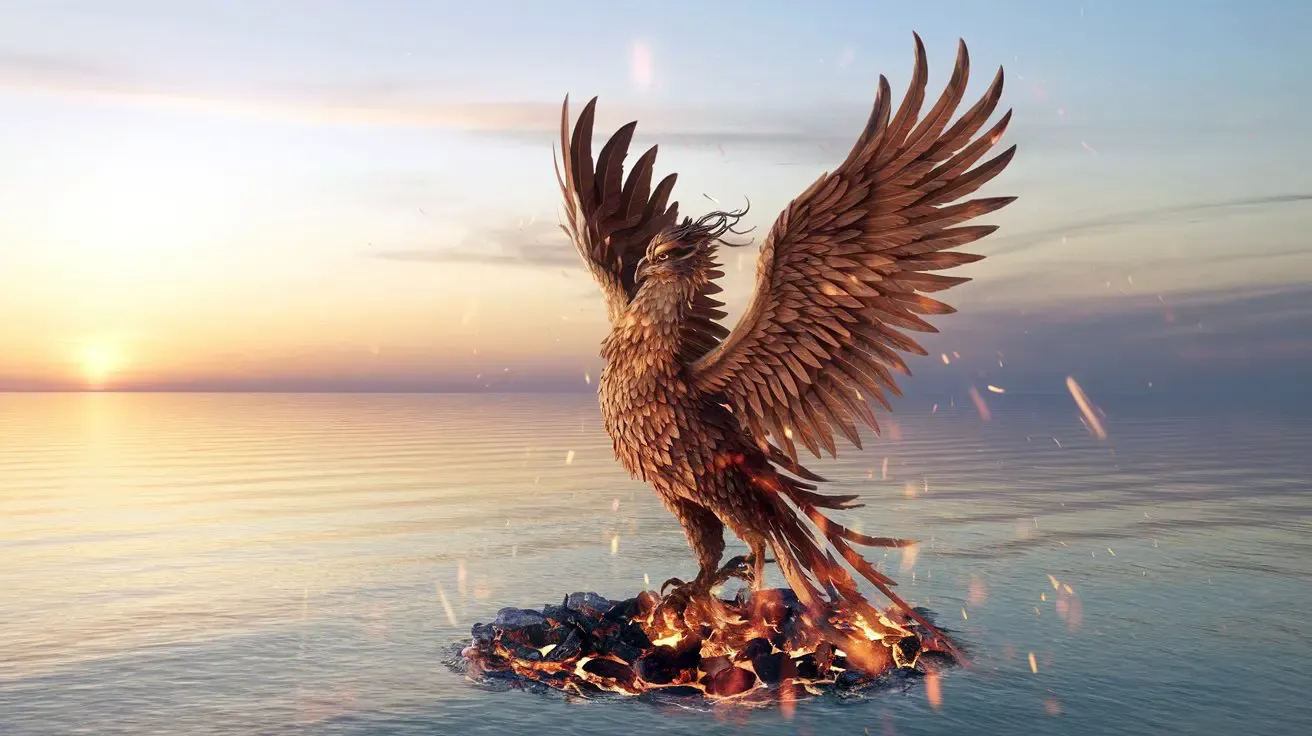
The origins of the legend of the phoenix are lost in the mists of time. References to a sacred bird capable of being reborn after death can already be found in the ancient Egyptian, Greek and Roman cultures.
The Egyptians, for example, associated the phoenix with the cult of the sun god Ra and with the perpetual cycle of birth, death and resurrection of the sun itself. The phoenix was depicted as a heron called Bennu, which regenerated itself on the banks of the Nile, bringing fertility and life.
In Greek mythology, by contrast, the bird takes the name “phoinix” and symbolises the purifying fire that destroys only to allow a stronger, purer rebirth. The Romans too, inspired by earlier traditions, adopted the phoenix as a symbol of eternity and renewal, even using it on imperial coins as a metaphor for the power of an Empire destined to endure through time.
Over the centuries, the phoenix has become a universal symbol, able to adapt to different cultural and religious contexts. In Christianity, for example, the phoenix is seen as an allegory of the resurrection of Christ and of the promise of eternal life for believers. In medieval texts, it represents the purity of the soul and the hope of redemption. Even Dante Alighieri, in his Comedy, mentions the phoenix as a symbol of spiritual transformation and moral regeneration:
“che la fenice more e poi rinasce, / quando al cinquecentesimo anno appressa; / erba né biado in sua vita non pasce, / ma sol d’incenso lagrime e d’amomo, / e nardo e mirra son l’ultime fasce”
(Inferno, canto XXIV)
The message of the phoenix
The symbolism of the phoenix has remained alive in modern culture too. This fascinating myth continues to inspire artists, writers and thinkers, who see in the phoenix a powerful metaphor for the challenges of life and for the human capacity to face them with courage and determination. In a world that changes rapidly and in which difficulties can seem insurmountable, the image of the phoenix reminds us that every ending brings a new beginning, and that resilience is one of the most precious qualities we can cultivate.
This metaphor is particularly relevant at the turn of a new year. The change of calendar symbolically marks the end of one cycle and the start of another, and the phoenix becomes a perfect emblem for reflecting on the importance of personal rebirth. Looking back on the year gone by, with its challenges and its successes, we can draw inspiration from the phoenix to leave behind what is no longer needed and to embrace the future with renewed energy and hope.
The myth of the phoenix teaches us that transformation is not only possible, but necessary. Every experience of crisis, every failure or loss, can be an opportunity for deep renewal. The phoenix does not fear the flames, because it knows that it will be reborn stronger from them.
The phoenix also invites us to reflect on the value of perseverance. Its story teaches us that true strength lies not in avoiding difficulties, but in finding a way to overcome them and turn them into opportunities for growth.
In modern psychology too, the figure of the phoenix is often used as a symbol of inner transformation and healing: rebirth from the ashes represents overcoming trauma and hardship, a process that leads to greater self-awareness and a new inner balance. The story of the phoenix is therefore much more than a simple myth: it is a powerful symbol of hope, resilience and transformation, which invites us to leave behind what no longer serves us and to look to the future with confidence and optimism. What better wish for this new year?