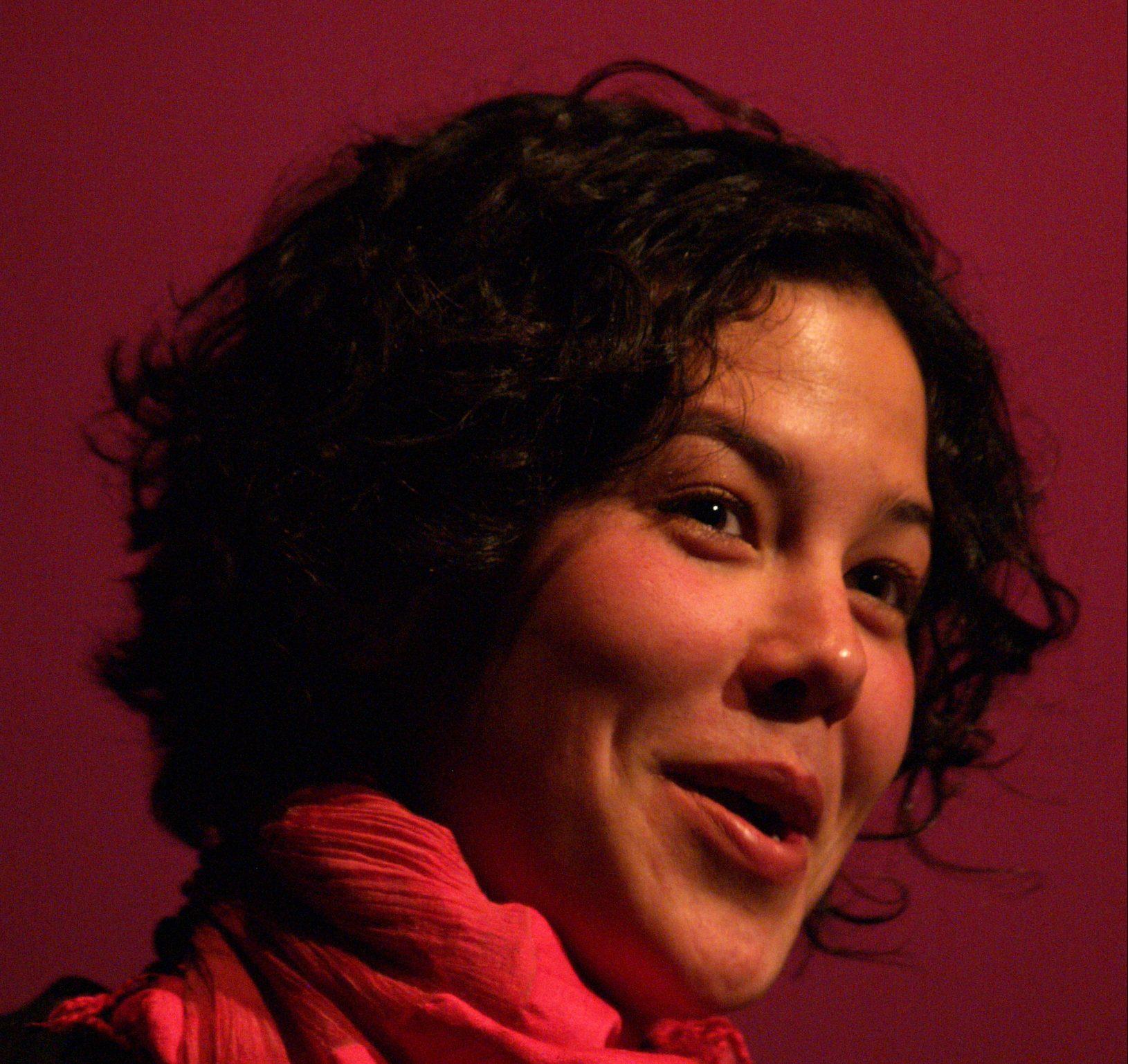
After taking part in the 1992 Rio Summit, she was awarded the Global 500 Roll of Honour by the United Nations Environment Programme the following year. Also in 1993 she published a book on environmental protection, Tell the World.
After attending Yale University, Cullis-Suzuki co-hosted the children’s television programme Suzuki's Nature Quest on Discovery Channel.
In 2002 she was invited to the World Summit on Sustainable Development in Johannesburg, together with the other members of the Skyfish project she had created. She has also worked with the Sloth Club in Japan and with the post-Fukushima Million Mothers Movement, an association of mothers who reject nuclear energy.
Severn has contributed to several documentaries, such as La voix de nos enfants (The Voice of Our Children). Besides Suzuki's NatureQuest, on television she made the series Samaqan: Water Stories, produced for four seasons.
She is married and lives with her husband and their two children in Haida Gwaii, the former Queen Charlotte Islands, in British Columbia (Canada).
Severn Suzuki: speech at the United Nations Conference on Environment and Development, 1992, Rio de Janeiro, Brazil
Hello, I’m Severn Suzuki, speaking on behalf of ECO – the Environmental Children’s Organization.
We are a group of 12- and 13-year-olds trying to make a difference: Vanessa Suttie, Morgan Geisler, Michelle Quigg and me. We raised all the money ourselves to come here, to travel 5,000 miles and tell you adults that you must change your ways.
Coming here today, I have no hidden agenda. I am fighting for my future. Losing my future is not like losing an election, or a few points on the stock market.
I am here to speak for all generations to come.
I am here to speak on behalf of the starving children around the world whose cries go unheard.
I am here to speak for the countless animals dying across this planet because they have nowhere left to go. I am afraid to go out in the sun now because of the holes in the ozone. I am afraid to breathe the air because I don’t know what chemicals are in it.
I used to go fishing in Vancouver, my home, with my dad, until just a few years ago we found the fish full of cancer. And now we hear about animals and plants going extinct every day, vanishing forever.
In my life, I have dreamt of seeing great herds of wild animals, jungles and rainforests full of birds and butterflies; but now I wonder if they will even exist for my children to see.
Did you have to worry about these things when you were my age?
All this is happening before our eyes, and yet we act as if we have all the time we want and all the solutions. I’m only a child and I don’t have all the solutions. And maybe you don’t either.
You don’t know how to fix the holes in our ozone layer… You don’t know how to bring the salmon back to a dead stream… You don’t know how to bring back an animal now extinct… You can’t bring back the forests that once grew where there is now desert… If you don’t know how to fix these problems, please stop causing them.
Here you may be delegates of your governments, business people, organisers, reporters or politicians. But in reality you are mothers and fathers, sisters and brothers, aunts and uncles – and all of you are someone’s child.
I’m only a child, yet I know we are all part of a family of five billion people. In fact, 30 million species make up our family – and I know that neither borders nor governments will ever change that. I’m only a child, yet I know we are all in this together and should act as one world towards one single goal.
In my anger, I am not blind; and in my fear, I am not afraid to tell the world how I feel. In my country we make so much waste, we buy and throw away, buy and throw away. And yet the countries of the North will not share with those in need. Even when we have more than enough, we are afraid to share; we are afraid to let go of some of our wealth.
In Canada we live a privileged life. We have plenty of food, water and shelter of every kind. We have watches, bicycles, computers and television sets. The list could go on for two days. Two days ago, here in Brazil, we were shocked when we spent time with some children living on the streets. This is what one child told us: ‘I wish I were rich, and if I were, I would give all the street children food, clothes, medicine, shelter, and love and affection.’
If a child on the street who has nothing is willing to share, why are we who have everything still so greedy?
I can’t stop thinking that these children are my age, that it makes an enormous difference where you are born; that I could be one of those children living in the favelas of Rio. I could be a child starving in Somalia, or a victim of war in the Middle East, or a beggar in India. I’m only a child, yet I know that if all the money spent on war were spent on finding environmental answers that end poverty, and on making agreements… what a wonderful place this Earth would be.
At school, even in kindergarten, you teach us how to behave in the world. You teach us not to fight with others, to work things out, to respect others, to clean up our mess, not to hurt other creatures, to share, not to be greedy. Then why do you go out and do the things you tell us not to do? Do not forget why you are attending these conferences, who you are doing this for. We are your own children. You are deciding what kind of world we will grow up in.
Parents should be able to comfort their children by saying: ‘Everything is going to be all right; it’s not the end of the world, and we are doing the best we can.’ But I don’t think you can say that to us any more. Are we even on your list of priorities?
My father always says: ‘You are what you do, not what you say’. Well, what you do makes me cry at night. You adults say you love us. But I challenge you – please – to make your actions reflect your words.
Thank you