According to the statement from the ministry headed by Giuseppe Valditara, the resources will support projects in sport, music, theatre and environmental themes, as well as subject reinforcement and simple recreational activities. Teachers will be able to take part on a voluntary basis and will be paid according to the resources available for the teaching modules activated. The ministry has also urged schools to “enrich the offer” through collaboration with local authorities, universities, voluntary and third-sector organisations, or families.
When added to further funds – such as the 750 million allocated by the PNRR to tackling early school leaving and bridging regional gaps, and the 600 million, also from the PNRR, for actions to strengthen skills in science, technology, engineering and mathematics – the total resources could reach between 800,000 and 1.3 million students. It is estimated that they could offer up to 1.714 million hours of additional activities.
Environmental education, a “Cinderella” to be strengthened
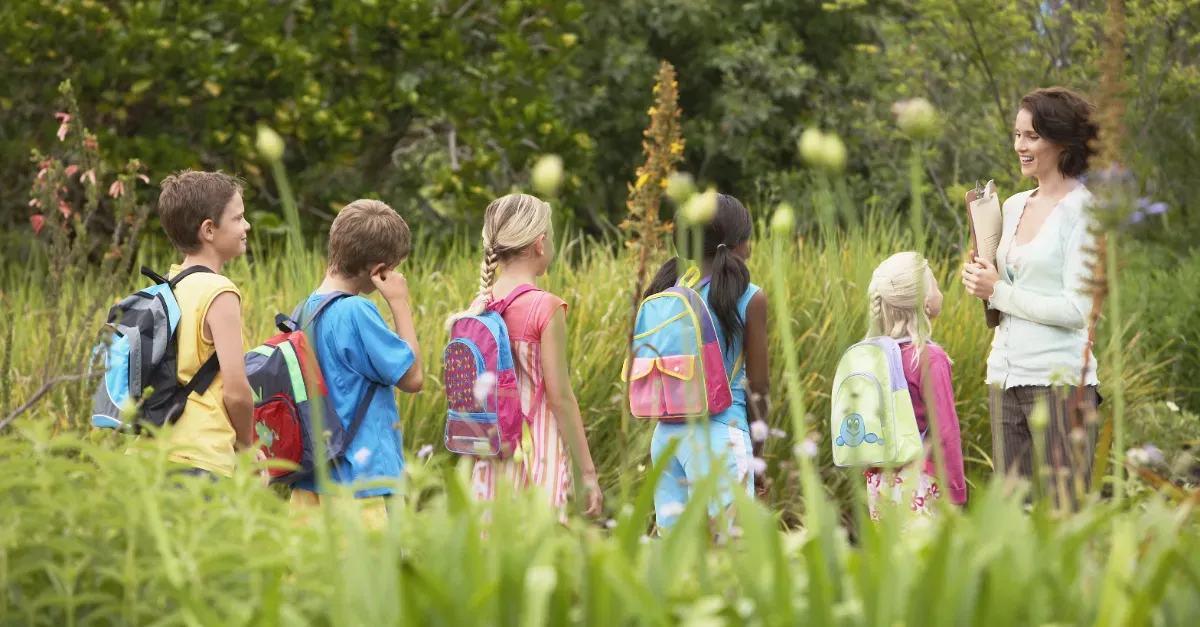
The ministry’s decree explicitly encourages schools to organise outdoor activities that educate about sustainability and care for the environment.
But what is the current reality of environmental education in Italian schools?
As often happens in our country, declarations of principle (which cost nothing) struggle to be followed by concrete and incisive action on the subject.
In theory and in principle, in fact, Italy was the first country in Europe to introduce environmental education as a subject of study in the curricula of every level of schooling.
And yet environmental education is not conceived and taught as a subject like the others with a dedicated teacher, but rather as an interdisciplinary cultural “backdrop” against which to place values such as sustainability, environmental protection and biodiversity.
This means that teachers’ real preparation on these topics is difficult, if not impossible, to certify and monitor.
“Teacher training is fundamental: today it is unthinkable that both students and their teachers do not know, for example, what the UN’s 17 goals are, or what ecological transition means”, Enrico Giovannini explained not long ago. He is a former Minister of Infrastructure and Sustainable Mobility in the Draghi government and now scientific director of ASviS (Italian Alliance for Sustainable Development), which in recent years has worked with the Ministry of Education to try to close the gap in environmental education in schools.
ASviS is, in fact, the most active partner at national level among those who care (or should care) about an effective educational and training offer in environmental and sustainability education.
“We are working to include these topics in textbooks for primary and lower secondary schools, or to bring into force a training obligation for teachers”, Giovannini adds.
Environmental education, however, is also done in practice, through concrete choices. The Green Schools Network is emerging, not without difficulty: those institutions that are working to cut CO2 emissions in their school environment.
How, then, can serious environmental education be carried out within the 33 hours a year of Civic Education set by the ministry in 2019 (there are 35 school weeks, so work out the sum for yourselves…), without it being lost in a cauldron of more or less civic subjects (digital citizenship? Bullying?) and without specific teacher preparation?
The hope is that help will come from the memoranda of understanding that the ministry is putting in place with national and international organisations, bodies and sector associations on environmental education, sustainability, cultural heritage and global citizenship. Memoranda have already been signed with Legambiente, WWF, the Carabinieri and FAI.
From here should come the skills needed for serious teaching and training on a “subject” that is now the main subject of our lives.