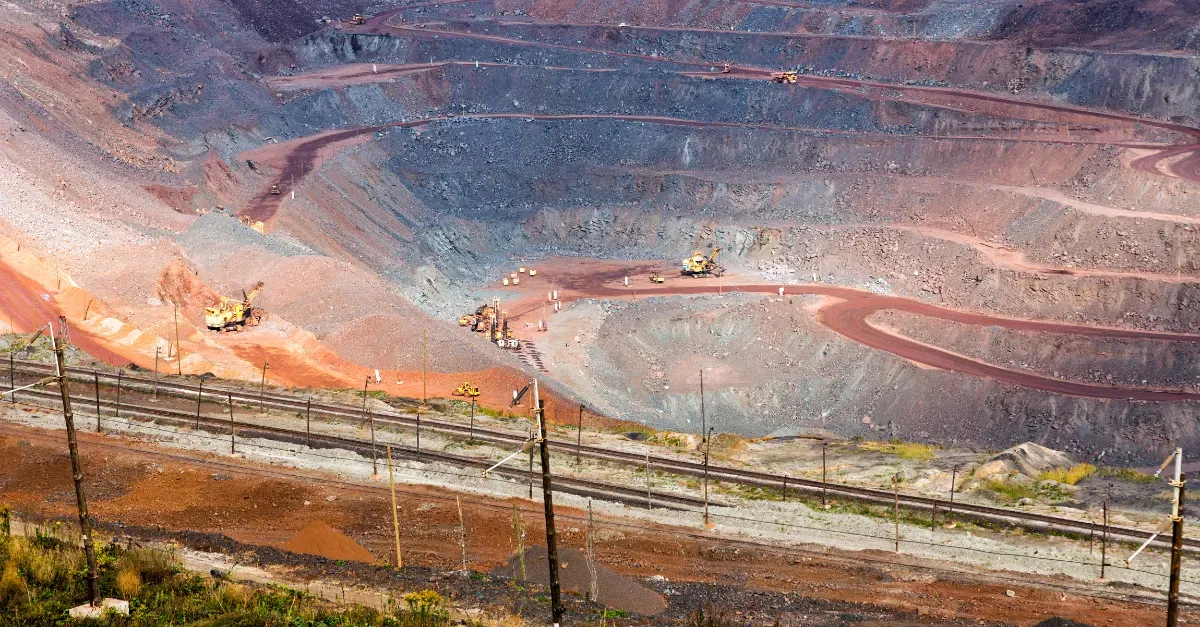
Where do rare earths come from and who holds the reserves?
The major producers include China, Australia, the United States, Myanmar, Russia, India and Thailand, which in practice hold almost the entire market.
As for reserves
Japan has discovered enormous reserves on the ocean floor, particularly near the island of Minamitori (Minamitorishima), about 1,850 kilometres south-east of Tokyo. These undersea reserves are particularly rich in elements such as neodymium, dysprosium, yttrium and europium, which are fundamental to many advanced technologies. But there is a significant cost. Extracting these resources presents considerable technological and environmental challenges. Undersea mining operations are complex and could have a dramatic impact on marine ecosystems.
African countries such as South Africa, Burundi, Mozambique and Tanzania are the ‘lucky’ owners of rare earth reserves, but with the exception of Burundi, extraction is still at the early project stage. Some influential countries worldwide have already bought extraction licences.
Countries such as Canada, Greenland, Norway, Sweden, Turkey and Vietnam also have reserves, as do Mongolia and Kazakhstan. Vietnam, for example, has significant resources of europium, used to make phosphors for LEDs, TV screens and fluorescent lighting, while Kazakhstan has large reserves of scandium, used in the production of alloys for the aerospace sector.
After this long list of reserves of these elements around the world, they might now seem more common. But that is not the case.
The extraction and production of rare earths
Having rare earth resources and being able to extract them effectively are two different things. While many countries have rare earth reserves, only a few are able to develop the infrastructure and technology needed for extraction and processing. Not only because this requires a significant financial investment in mining infrastructure and specialised technical expertise, but also because there are environmental drawbacks.
China, the world’s largest producer of rare earths with over 60% of the market, has managed to develop a complete supply chain for extracting and processing rare earths, while many other countries are still at the exploration or development stage and have not yet started large-scale production.
Government support, the availability of funding, and significant environmental issues and the regulations governing them mean that extraction is, in practice, possible only in certain areas of the world.
For the reasons set out above, it is clear that having reserves does not mean being able to exploit them immediately.
Who controls rare earths?
China is the main holder and producer of rare earths, controlling over 60% of world production. Other nations with significant reserves include Brazil, Vietnam, Russia and India, but their production capacity is much lower than China’s.
Here is a table showing the nations with the largest rare earth reserves in the world:
| Country | Share of world reserves |
|---|
| China | 36% |
| Brazil | 18% |
| Vietnam | 18% |
| Russia | 10-15% |
| India | 6% |
Countries with the largest reserves
China dominates with 36% of world reserves, but other countries such as Brazil and Vietnam are also emerging with significant reserves.
Who is the largest producer of rare earths?
At present, China is the main producer, controlling about 60-70% of global production. Remember the difference between having reserves and extracting them. For example, Brazil, despite holding large reserves, extracts very little. Conversely, Australia, although not among the top five countries for reserves, is one of the largest producers after China. The table below makes the concept clearer.
| Country | Share of global production |
|---|
| China | 60-70% |
| Australia | 10-15% |
| United States | 12% |
| Myanmar | 8% |
| Russia | 1-2% |
Largest producers in the world
China is the undisputed leader in the production and refining of rare earths, making the world heavily dependent on its exports.
Many ‘green’ products depend on rare earths
Rare earths are fundamental to many products we consider ‘green’, such as the permanent magnet (PM) motors used in 95% of electric vehicles, in wind turbines and in many other sustainable technologies:
- PM motors in electric vehicles: They use neodymium and dysprosium to improve the efficiency and power of the motors.
- Wind turbines: Permanent magnets improve the performance of wind turbines, reducing the need for maintenance. They use neodymium and dysprosium.
- Consumer electronics: Smartphones, tablets, LED screens and laptops use rare earths such as europium, terbium, yttrium, neodymium, dysprosium, gadolinium, lanthanum, praseodymium and cerium to improve colours and battery life.
- LED lighting: Rare earth phosphors such as europium and terbium are used in LEDs to produce white light.
Rare earth extraction has significant environmental impacts, including:
- Soil and water contamination: The use of acids and toxic chemicals can contaminate groundwater and the surrounding soil.
- Production of radioactive waste: Some rare earth minerals contain radioactive materials such as thorium and uranium.
- High energy consumption: Refining rare earths requires a great deal of energy, contributing to greenhouse gas emissions.
The lack of a clear LCA for electric motors
The electric motor, a fundamental component of electric vehicles, is considered one of the symbols of the ecological transition. But if we try to analyse the entire production chain, starting from the extraction of raw materials, doubts remain.
The life cycle assessment (LCA) of electric motors, particularly permanent magnet (PM) ones, is still incomplete. Although PM motors improve efficiency and reduce emissions during use, the benefits must be weighed against the environmental impact of the extraction and production phases. The lack of comprehensive studies makes it difficult to assess whether the net benefit is truly positive in the long term.
Alternatives to rare earths: imperfect solutions?
The question arises naturally: ‘Are there alternatives to rare earths?’
The answer is yes, but each has its limits:
- Iron-nickel magnets (tetrataenite): Still under development, they could replace neodymium magnets, but they are still less powerful.
- Ferrite and samarium-cobalt magnets: Used in applications that are less demanding in terms of power.
- Reduced use in designs: Some manufacturers are designing motors and components that require fewer rare earths or none at all, such as induction motors.
Rare earths are essential to many modern technologies, but their extraction and use pose clear environmental problems, with equally significant geopolitical impacts.
Although more sustainable alternatives and strategies are being developed, the transition to new technologies could prove complex or even unattainable in the short and medium term.
Legislative approaches in some nations, which favour the production of these elements without paying sufficient attention to the environmental consequences, could have significant long-term impacts, and not only in the producing countries.
This could make international collaboration necessary to balance growing technological demand with the need to protect our planet. However, this will require strong political will and a shared commitment at global level.
Table A: Use of rare earths and reserves of the top 5 nations
| Element | Main uses | Nation with the largest reserves | Nation with the second-largest reserves | Nation with the third-largest reserves | Nation with the fourth-largest reserves | Nation with the fifth-largest reserves |
|---|
| Scandium | Aerospace alloys, lamps | China | Russia | Ukraine | Kazakhstan | Philippines |
| Yttrium | Phosphors for displays, lasers, ceramics | China | Australia | India | Brazil | Malaysia |
| Lanthanum | NiMH batteries, catalysts | China | Brazil | Australia | USA | India |
| Cerium | Catalysts, glass polishing agents | China | Brazil | Australia | USA | India |
| Praseodymium | Permanent magnets, high-temperature alloys | China | Brazil | Australia | Russia | India |
| Neodymium | Permanent magnets for electric motors | China | Vietnam | Brazil | Russia | Australia |
| Promethium | Nuclear batteries (radioisotopes) | Not present | Not present | Not present | Not present | Not present |
| Samarium | Permanent magnets, nuclear reactors | China | Brazil | USA | India | Malaysia |
| Europium | Phosphors for LEDs, TV screens, fluorescent lighting | China | Brazil | USA | Vietnam | India |
| Gadolinium | MRI (contrast agents), alloys for nuclear reactors | China | Brazil | USA | Russia | Australia |
| Terbium | Green phosphors for displays, permanent magnets | China | Myanmar | Brazil | Russia | India |
| Dysprosium | Permanent magnets (stability at high temperatures) | China | Australia | Brazil | Russia | USA |
| Holmium | Magnets, lasers, nuclear reactors | China | Russia | Brazil | India | Malaysia |
| Erbium | Optical amplifiers, medical lasers | China | Brazil | USA | Russia | Australia |
| Thulium | Portable lasers, medical equipment | China | Brazil | USA | Russia | India |
| Ytterbium | Infrared lasers, alloys for special steels | China | Brazil | USA | Russia | Australia |
| Lutetium | Scintillators, catalysts for petroleum cracking | China | Brazil | USA | Russia | India |
Table A: list of rare earths, main uses and nations with the largest reserves