The Great Pompeii Project
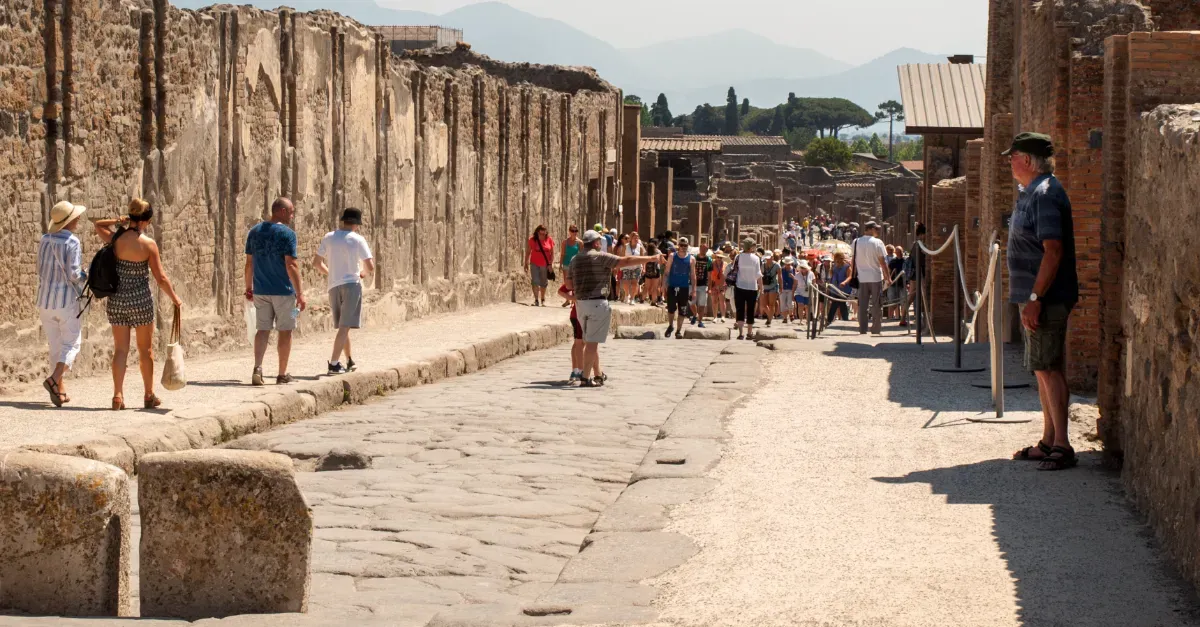
In the wake of the disaster, the condition of the excavations was revealed in all its criticality, to the point that the then President of the Republic, Giorgio Napolitano, called the case ‘a shame for Italy’. The need to remedy this worrying event immediately and to restore the entire park comprehensively, which has also been protected by UNESCO since 1997, gave rise to the ‘Great Pompeii Project’, coordinated by Massimo Osanna, who later also became director of the site.
The work carried out, now complete, is in the view of many an exemplary case of restoration and enhancement. In fact, the project was not limited to upgrading the areas already on view, but also opened new excavation sites, which over the years have brought to light very rich domus and finds of inestimable value, setting off a virtuous circle of research projects that are still under way. Numerous dwellings, previously closed because they were unsafe, have been returned to the community; there has also been a reorganisation of the storerooms and, where possible, the finds have been returned to the places where they were discovered, an operation that has given them back their meaning.
All this has had a number of positive consequences, including an increase in the number of staff hired; an exponential rise in the number of visitors; greater usability and accessibility of the excavated areas, thanks to the creation of routes for people with different abilities; and a very active research programme, which also touches on the fields of sustainability and ecology.
A sustainable archaeological park
One of the main initiatives has concerned the reduction of environmental impact, through the introduction of technologies for energy saving and for the sustainable management of water resources. For example, photovoltaic panels have been installed that look in every respect like terracotta tiles and therefore generate renewable energy used to light frescoes and mosaics without affecting the setting. The measure has, moreover, allowed the park to save considerable financial resources, which can be used in other areas.
Perhaps the most curious and unusual choice, made by the current director Gabriel Zuchtriegel, was however the hiring of special ‘workers’ specialised in preventing the growth of tall grass and weeds: a flock of no fewer than 150 sheep! By grazing freely in the areas surrounding the excavations, they stop vegetation from proliferating, at practically no cost and without affecting the environment.
‘Sometimes the greatest innovation is a return to our roots: from today a flock of 150 sheep is helping us maintain the green areas of Pompeii, a service that would otherwise consume financial resources and energy.’ This is how Zuchtriegel announced the news on his social media pages a few months ago [here on Instagram: https://www.instagram.com/p/ClWDeH7NyhF/], going on to update his followers on the progress of this experimental eco-grazing project, and also announcing the birth of the first lamb within the excavations. [https://www.instagram.com/p/Cl8bzPtMfa_/]
Socio-cultural sustainability too
The idea immediately attracted media attention, making the sheep of Pompeii famous, valuable helpers who contribute to routine maintenance without damaging the excavations in any way, and indeed protecting them, in a ‘green’ manner. Sustainability, however, goes beyond the environmental aspect, extending into the socio-cultural sphere: Zuchtriegel has in fact stressed that his aim is also to make Pompeii a living and, in some way, inhabited city, recreating the rural environment that surrounded the site in Roman times.
The park’s former director, Massimo Osanna, had already promoted activities of this kind by involving local businesses, restoring the vineyards where they once stood, and promoting a grape harvest in the Roman manner, as it was done two thousand years ago. The highly rated wines of Pompeii are therefore the fruit of synergy between the park authority, local businesses and the Soprintendenza, which was involved in studying the carbonised grape bunches found during the excavations.
Protection, research, sustainability, ties with the local area and community involvement have proved to be winning elements in transforming Pompeii from ‘Italy’s shame’ into a cutting-edge archaeological park. All this not only guarantees the preservation of the site for future generations, but also helps to raise awareness of the importance of our history and our heritage, and of the possibility of managing it intelligently and sustainably.