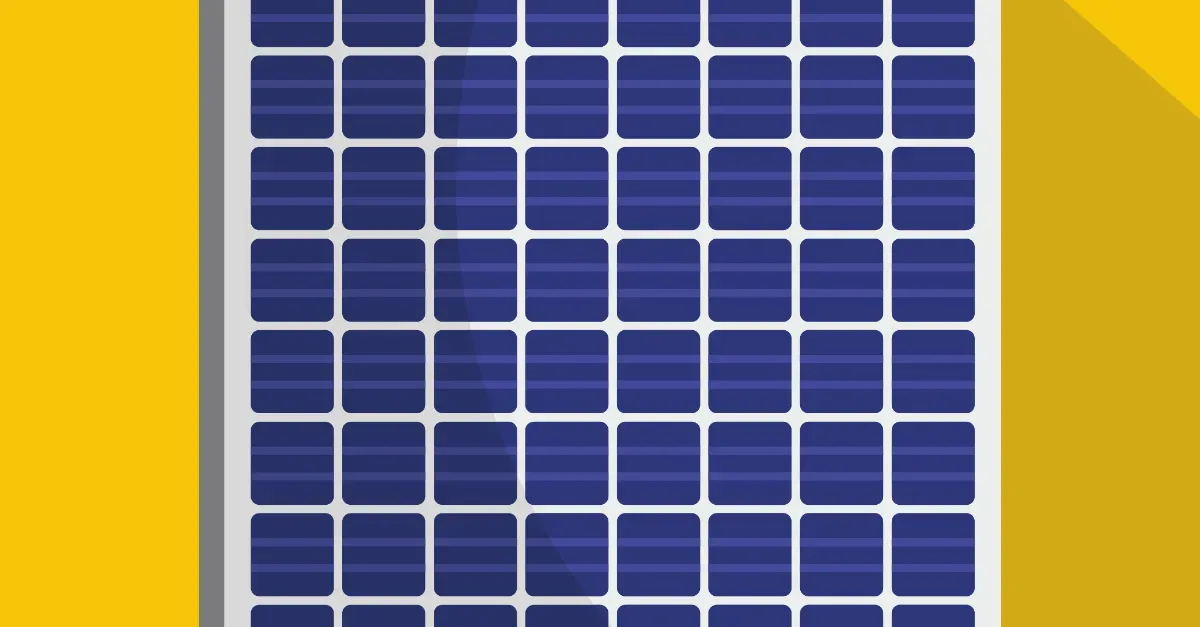
A photovoltaic panel is a system capable of producing electric current when exposed to sunlight. The principle is based on the operation of photovoltaic cells that are positively and negatively charged by photons, generating, by means of a difference in charge, a physical reaction capable of creating a direct-current electric field. The direct current must be converted into alternating current in order to be used in our homes and industries. The conversion is carried out by a device called an alternator, which converts direct current into alternating current.
The raw material
At the heart of the photovoltaic panel is silicon, which does not exist in nature in a pure, usable form and therefore has to be processed before it can be used in the panel. Silicon can be monocrystalline, polycrystalline or amorphous. Monocrystalline is the most efficient, followed by polycrystalline and then amorphous. By efficiency we mean the surface area of panels needed to produce 1 kW/h. Monocrystalline produces the same energy with a smaller surface area.