Understanding what they are and where they come from is the first step towards understanding and tackling the climate emergency.
The gases that warm the planet
Of them all, methane (CH₄) is one of the most insidious. It is over 30 times more potent than CO₂ over a 100-year period. It is released by intensive livestock farming, landfills, and gas and oil fields. It has a shorter life than CO₂, but its effect is immediate and brutal: a true accelerator of global warming.
Then there is nitrous oxide (N₂O), a gas that is not particularly well known but is devastating for the climate: it has a global warming potential 273 times greater than CO₂ over a 100-year period. Where does it come from? Mainly industrial agriculture, in particular nitrogen fertilisers. We cannot see it or feel it, but it is altering the Earth’s thermal balance with astonishing speed.
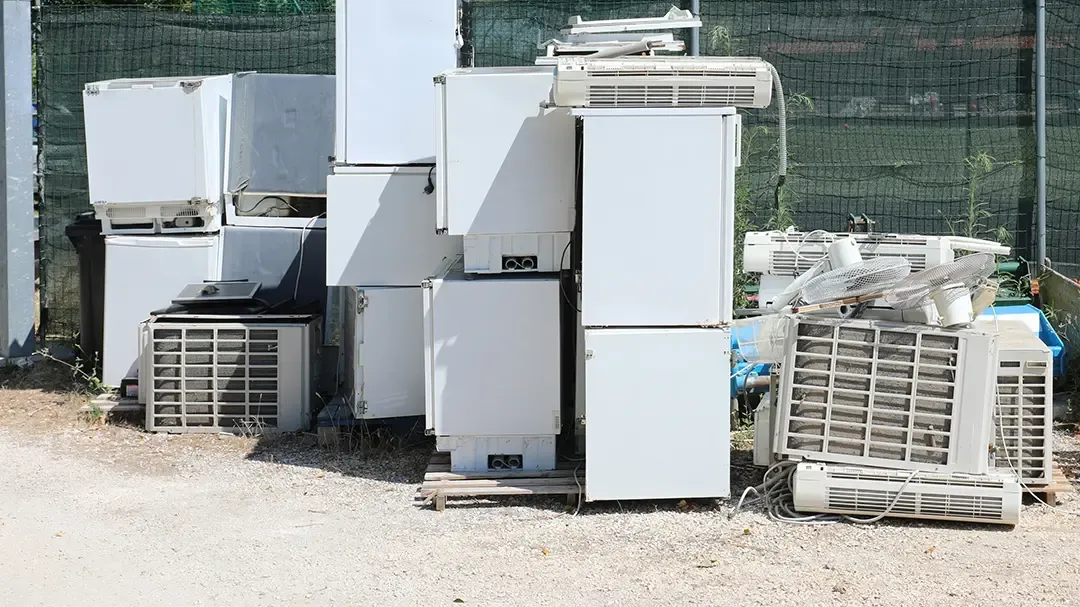
Among the other elements are the fluorinated gases, a mix of substances created by humans for refrigerators, air conditioners and the electronics industry. Among these, sulphur hexafluoride (SF₆) is the worst of all: its greenhouse effect is roughly 23,500 times greater than that of CO₂. Although their concentration in the atmosphere is lower than that of the other gases, their impact is clearly monstrous.
But the climate is a complex machine, and natural elements such as water vapour also play a crucial role. It is not a greenhouse gas produced directly by human activity, but its increase is a direct consequence of global warming: the more the Earth heats up, the more moisture the atmosphere holds, amplifying the problem even further. A domino effect that risks getting out of hand.
Finally, there is tropospheric ozone. Known more for its effects on human health than for its effects on the climate, it forms close to the ground as a result of pollution from traffic and industry. But it is not only a problem for the lungs: it is also a powerful greenhouse gas that contributes to global warming.
Changing course: a global challenge
If one thing is clear, it is that climate change cannot be tackled with a single solution. CO₂ must be reduced through the energy transition, methane requires a rethink of agriculture and livestock farming, and nitrous oxide demands a revolution in the use of fertilisers. And fluorinated gases? They must be replaced with less harmful alternatives. In this regard many companies, especially in Europe, have taken action, but worldwide the issue is still pressing.
The European Union is already adopting measures to limit the use of some of these gases, but it is not enough, because global warming knows no borders. Today’s emissions, wherever they are produced, affect the entire planet and do not stop at walls. Every national strategy is useful, but without coordinated action at global level, the problem remains unresolved. The latest decisions by the United States, for example, make one doubt that there is a real will to take “the bull by the horns” worldwide. China and India continue to contribute significantly to greenhouse gas emissions, and together with the USA they account for 64.1% of global emissions. (2023 data)
| Country | Million tonnes of CO₂ eq. | % of world total |
|---|
| China | 15,944 | 39.2% |
| United States | 5,961 | 14.7% |
| India | 4,134 | 10.2% |
| European Union | 3,222 | 7.9% |
| Russia | 2,672 | 6.6% |
| Brazil | 1,300 | 3.2% |
| Indonesia | 1,200 | 3.0% |
| Japan | 1,041 | 2.6% |
| Iran | 997 | 2.5% |
| Saudi Arabia | 805 | 2.0% |
| Canada | 748 | 1.8% |
| Mexico | 712 | 1.8% |
| South Korea | 654 | 1.6% |
| Turkey | 606 | 1.5% |
| Pakistan | 572 | 1.4% |
| Australia | 532 | 1.3% |
| Vietnam | 524 | 1.3% |
| South Africa | 522 | 1.3% |
| Thailand | 441 | 1.1% |
| Nigeria | 385 | 0.9% |
| United Kingdom | 379 | 0.9% |
| Argentina | 366 | 0.9% |
| Iraq | 363 | 0.9% |
| Egypt | 336 | 0.8% |
| Malaysia | 325 | 0.8% |
| Kazakhstan | 320 | 0.8% |
| Taiwan | 308 | 0.8% |
source: EDGARD - Emissions Database for Global Atmospheric Resarch - Website 1EU
Time is not on our side. The rise in the planet’s average temperature has already exceeded pre-industrial levels, and the 1.5°C limit set by the Paris Agreement is getting ever closer, so the problem must not be underestimated.
further reading:
EU website