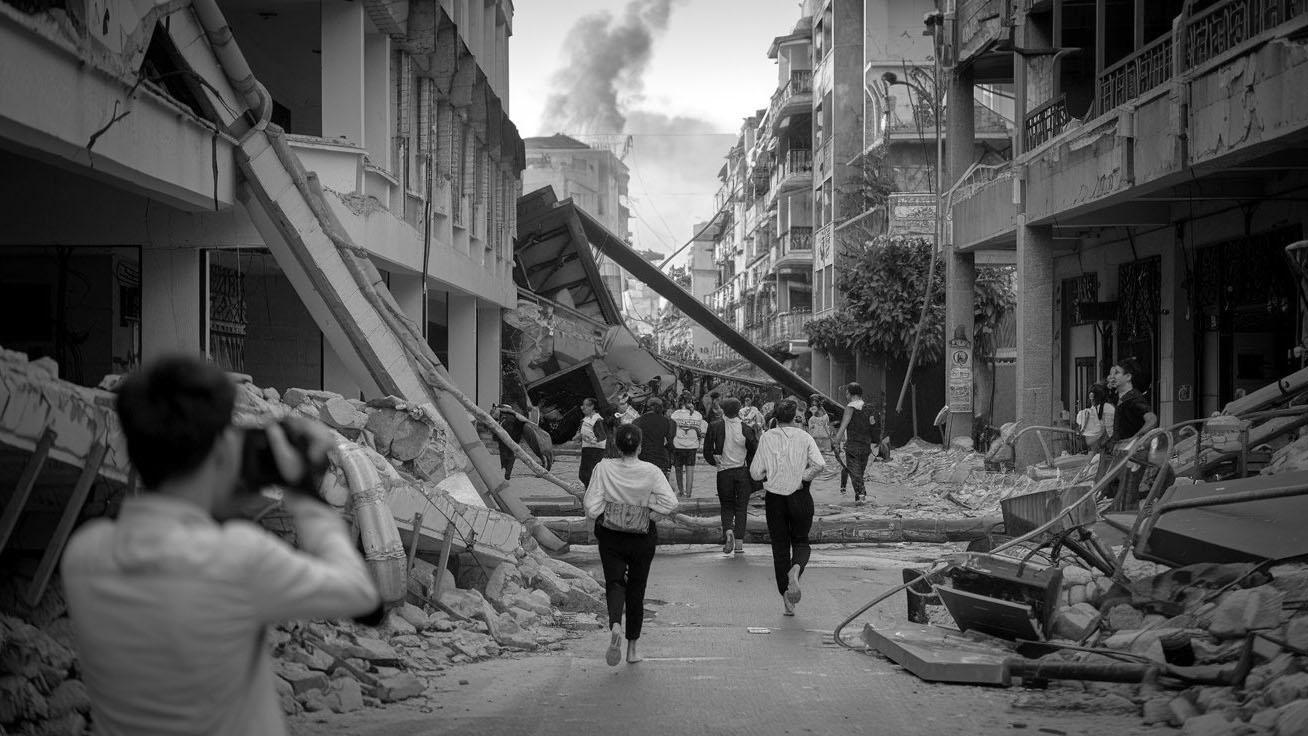
It is neither an isolated case nor a tragic twist of fate. Myanmar has historically been vulnerable to major seismic events. The Sagaing Fault, which cuts through the country from north to south, is where the Indian and Burmese plates graze and push against each other in a slow but inexorable process of energy accumulation. And when this energy is released, it does so with a violence that spares nothing. As early as 1839, the city of Ava (present-day Inwa) was razed to the ground by an earthquake estimated at between 7.9 and 8.3 in magnitude. A century later, in 1930, it was the turn of Bago, where thousands of victims were counted.
Then came Sagaing again, hit hard in 1946 by two tremors a few hours apart, and finally Bagan, its centuries-old temples disfigured first in 1975 and then in 2016. Bagan is the most eloquent image of how vulnerable culture and history can be in the face of the force of nature: hundreds of religious structures, many dating back to the 11th century, damaged or collapsed. And each time, as in a script that repeats itself, people return to talking about restoration, reconstruction and resilience.
There is, however, one element that has helped, at least in part, to limit the human consequences of earthquakes: traditional timber and bamboo homes, common in rural areas, tend to withstand tremors better than the concrete and brick buildings that dominate newer urban areas. But this is not enough. Disorderly building expansion, often without seismic criteria, continues to increase the vulnerability of many communities. And meanwhile, the shadow of the fault remains there, beneath our feet, silent and ever waiting.
Investing in safe construction, strengthening early warning systems, promoting a culture of prevention: these are the actions that can make a difference, so that the memory of the past does not remain merely a list of dates and disasters. Every tremor tells a story that is not only geological, but profoundly human. And listening to it, at last, could be the first step towards changing the ending.
The earthquake of 28 March is the latest, but it will not be the last. Myanmar’s geography is what it is: a living, active system that leaves no room for illusions of stability. Perhaps the next earthquake cannot be avoided, but we can — and must — work to limit its consequences.
Sources and links:
Istituto Nazionale di Geofisica e Vulcanologia (INGV) - terremoti.ingv.it
Historical seismic data – Global Earthquake Model Foundation
UNESCO and UNESCO Bangkok reports – Earthquake Risk Reduction
UNDRR Regional Office for Asia and the Pacific
#birmania #terremoto #myanmar #sagaingfault #mandalay #bagan #sismopolitica #resilienzaurbana #patrimonioculturale #geologia #faglieattive #emergenzasismica