Tiamat. Mother Goddess. Mazu, goddess of the seas. Tefnut. Thalassa.
These are the names that, among all the great civilisations of the Earth, the Great Goddess of the waters has taken over the centuries and millennia.
The principle of water, its creative and regenerative force, are essentially feminine in the conception of peoples and civilisations. The motion of the seas and the inner motion of the feminine, mythically bound to the cycles of the Moon and the cosmos, share a single rhythm and breathe together: they are the sign of the great cosmic power whose wing rests upon the Earth.
The ancient Greeks absorbed this intuition in a felicitous synthesis: in their most archaic mythology, the Mother Goddess was Thalassa, the very name of the sea.
In the Mediterranean world, the Goddess of water created, and watches over, the extraordinary natural and biological heritage of the sea, with its infinite wealth of species and its marvellous, multiform habitat. But human presence too, and the finest expressions of ingenuity and civilisation, have on several occasions “returned” to the sea, to its primordial matrix.
Over the millennia, the water has taken back a part of earthly civilisation, in some of the places where that very civilisation flourished in its highest manifestations. The west coast of the city of Naples is one of them.
Cuma, Baia, Pozzuoli, the Archaeological Park of the Campi Flegrei. And then the island of Gaiola, opposite Posillipo.
In these two areas, unique in the world for the historical, archaeological and natural treasures they preserve, the first two – and so far the only – Italian Submerged Parks were born. They are places that can offer unrepeatable experiences of contact with History and Nature: within them, over time, an exceptional symbiosis has formed between man-made artefacts and the creatures that inhabit the marine environment. A super-environment of incomparable allure.
The Submerged Parks, however, are little known to the tourists and visitors who flock to the Neapolitan area from all over the world. The reasons are objective and lie first of all in how difficult it is to access a natural and human environment lying below sea level. Can this incomparable allure be made enjoyable to the widest possible number of visitors, Italian and international, and to the young generations of students in our schools, who need “powerful” experiences to learn to love History and the values of culture?
The Submerged Park of Baia: a Pompeii under water
It has been nicknamed “the Atlantis of the Romans”. It was the ancient and splendid city of Baia, today a district of Bacoli, in the north of the Gulf of Naples. Even today, the precious finds lying beneath the surface of the water and the excellent state of preservation of mosaics, traces of frescoes, sculptures, street layouts and columns make it a submerged archaeological site of unique value in the world.
The Submerged Park of Baia was established and given the status of a marine protected area in 2002.
It includes at least 14 sites with ancient submerged structures, 6 ancient wrecks and 11 isolated finds, which make the Campi Flegrei the area with the highest concentration of underwater and coastal archaeological evidence in Italy.
Of ancient and splendid Baia, one of the most “chic” maritime and thermal centres of antiquity, thanks to the quality of its sulphurous waters, excellent for health problems, the remains of the street layouts, shops and patrician villas, and the statues that adorned houses and streets, are still perfectly visible beneath the sea. Prominent figures such as Cicero, Nero and Caesar most probably visited these baths, and as many prestigious figures of the Rome of those times had their sumptuous “second homes” here.
Of the submerged park, the domes, which still bear traces of frescoes, inspire particular wonder. Popular belief considered them the remains of temples. And they are still called that.
There is the Temple of Diana, which was actually a thermal structure, frescoed with hunting scenes.
The Temple of Mercury, which is actually a frigidarium. That of Venus, another thermal building overlooking an open-air pool.
Worthy of note is the Villa del Protiro, in the south of the archaeological park of the submerged city. The villa, of which the mosaic floors of one of the rooms are visible, was surrounded by taverns and shops. It lies at a depth of 5 metres: for diving enthusiasts, it can be visited by free diving.
The natural continuation of the submerged city is Baia in the sunlight, the hilly part of the city, which today lies at the same level as the sea.
Well known is the Temple of Serapis, so called because the statue of Jupiter Serapis, an Egyptian deity, was found inside it; it was once adorned with precious marbles and frescoes.
The heart of Baia above the sea is certainly the Castle, which dominates the Gulf of Pozzuoli from a strategic position.
Its Museum, opened in 1993 in the north-west tower, houses among other things the plaster casts of Baia, 60 fragments from the Roman era that reproduce masterpieces of the classical and Hellenistic periods of Greek art; marble cippi found in the Sacellum of the Augustales of Miseno, with the reconstruction of the Sacellum’s façade and statues attributable to the gens Flavia.
On the upper floor is the reconstruction of the Nymphaeum of Punta Epitaffio, from the age of Claudius, the original of which lies seven metres deep in the Submerged Park.
The Submerged Park of Gaiola
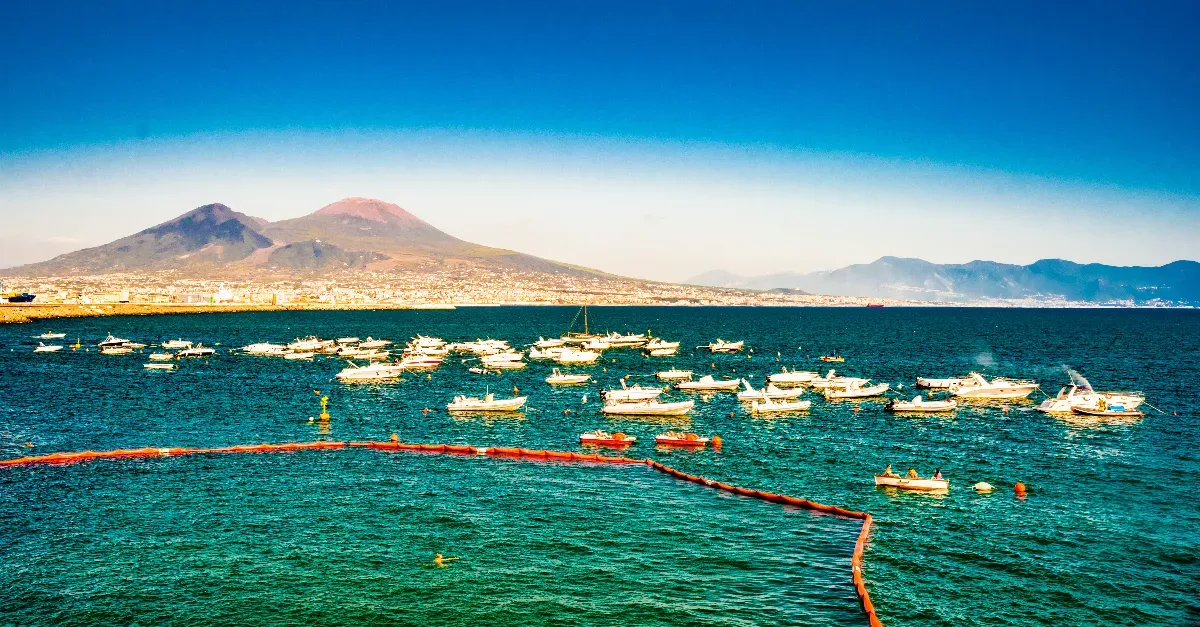
The enchanting stretch of Posillipo coast, with the majestic bay of Trentaremi and the small islets of Gaiola, are guardians of history, myths and legends and have an inestimable natural, scenic and archaeological value. In little more than 4 hectares, starting from the picturesque village of Marechiaro and below the archaeological park of Pausilypon (where the Grotto of Seiano is found), there follow one after another the remains of seaside villas, majestic tuff quarries, landing places, nymphaea and fishponds, above and below the surface of the sea.
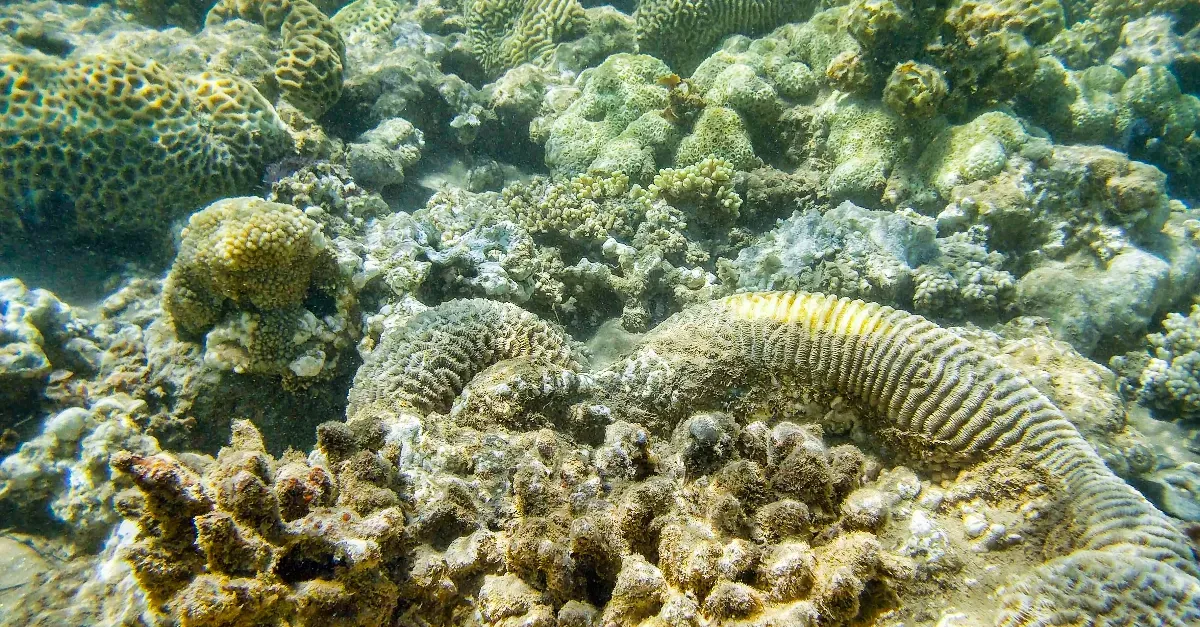
The extreme geomorphological complexity of the seabed and the favourable circulation of marine currents have allowed a rich and varied biological community to settle in a few hectares of sea, which today fills with life and colour what the history of the earth and that of man have created. Here too, as at Baia, it is possible to admire a scene unique in the world, but only with fins, mask and snorkel.
The Submerged Park of Gaiola is bounded by rocky ridges and high cliffs of yellow Neapolitan tuff, reshaped by sea and wind and cloaked in the colours of the Mediterranean scrub. Precisely because of the pleasantness of the place and the beauty of the landscape, from the 1st century BC sumptuous villas of the Roman aristocracy were built on this coast. The most important was certainly that of Pausilypon (“place where sorrows end”) which, built by Publius Vedius Pollio and becoming an Imperial villa upon his death (15 BC), occupied a large part of the coastal strip of the present Park.
The Discesa della Gaiola, the only way to the sea, passes through lush, well-kept villas and private gardens, with long flights of steps that descend directly to the clear waters.
As well as being an incredible marine paradise immersed in a submerged archaeological park, Gaiola is also one of the most beautiful places to go to the sea in Naples, and a place of mystery, cloaked in a macabre shadow. When it was still connected to the mainland, the Neapolitans used to call it the cursed island. At the beginning of the nineteenth century, when it was owned by the archaeologist Guglielmo Bechi, a hermit nicknamed “the Sorcerer” lived there, surviving on alms from fishermen.
After his death, the beautiful villa, still visible today, was built on the island; among others, it was owned by Norman Douglas.
The lives of the owners who followed one another in the twentieth century seem to confirm the villa’s sinister reputation. Lastly, the island belonged to Gianni Agnelli, who suffered the loss of many family members, and to Paul Getty, whose grandson was kidnapped in those years. In 2009 the Campania Region entrusted ownership of the island to the Archaeological Superintendency (the managing body of the Submerged Park of Gaiola).
How can these inestimable treasures of environment and culture be enhanced?
Today the Submerged Parks can be visited directly by boat and through guided snorkelling and diving inspections.
A wonderful opportunity, but certainly not within everyone’s reach. Indeed, it is feasible only for small groups, and for those few who have experience and confidence in diving.
But digital technologies, augmented reality and AI, with the new horizons they have opened up in recent years – a field of activity, the digital one, in which the city of Naples is a leader in Italy – could offer us the possibility of creating, in an area like the Submerged Parks, an innovative and unique multisensory experience: a virtual full immersion in the submerged world of the Parks, while staying on land. A proposal along these lines already exists. It is a project entitled TIAMAT – THE MOTHER GODDESS. For now only on paper, it awaits interest from institutions and private parties in order to become reality.
The project
The project envisages a series of digital underwater recordings of the Submerged Parks. The material will be processed with virtual reality and augmented reality (AR) technologies, so as to obtain a reproduction of the marine environment as close as possible to reality, which can be visited from the inside with suitable technological accessories (controllers, headsets, platforms).
In a venue on the Neapolitan mainland, for example a historic palace overlooking the gulf, a large indoor space will be set up to offer the experience of virtual immersion in the Park. Alongside it, other rooms and spaces will offer historical and environmental information, with displays of archaeological and natural materials and other testimonies.
An app, ArcheoDiving, will also be created, so that the virtual immersion can be replicated on personal digital devices. The app would also give access to all the basic information on the Parks. And a docufilm will be made, to be offered to international TV and streaming channels.
The installation will be permanent. It could become a fixture in historical and archaeological tourism tours of the Campania area. Given its novelty, its multimedia nature, its easy and pleasant use – besides the beauty and charm of the places where it would stand – MOTHER GODDESS would be a not-to-be-missed destination, for international tourist itineraries and for school tourism. Young people could experience a genuine virtual immersion in the extraordinary submerged reality, more exciting and fascinating than any video game, traditional exhibition or classroom lecture on ancient history.
Besides the experience, unique in the world, of a virtual underwater archaeological excursion, the journey through the submerged sites would also be an opportunity to promote their responsible and sustainable use.
It would help to create and strengthen in visitors, and therefore in the community, the idea that the archaeological heritage of the Mediterranean is a collective asset to be safeguarded and passed on to future generations; an effective tool for communicating between cultures, for expressing points of view and for representing expectations of growth in relation to that heritage. Because in the mare nostrum, environment, culture and communication between peoples are more than ever an indissoluble triad.