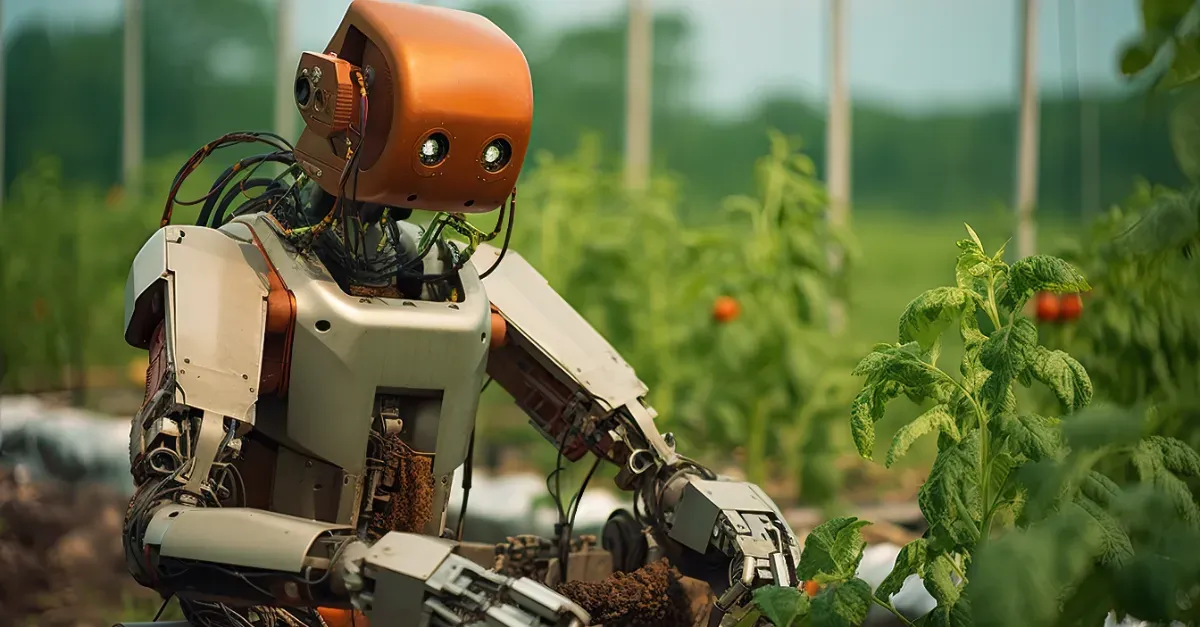
But let us see in concrete terms how AI could be applied to the various sectors of the economy and of environmental management.
Experts have theorised 10 ways in which AI technology can support sustainability:
- Climate modelling and forecasting
- Energy efficiency in buildings
- Wildlife conservation and monitoring
- Air and water quality monitoring
- Waste management and recycling
- Protection of the marine ecosystem
- Disaster preparedness and response
- Carbon capture and storage (CCS)
1. Climate modelling and forecasting
The temperature on Earth has risen by an average of 0.08 degrees Celsius per decade since 1880, and the rate of warming since 1981 is more than double that.
Using artificial intelligence to model and predict climate change, thanks to machine learning algorithms, makes it possible to analyse vast datasets to identify patterns and provide more accurate climate models. It can also draw on an enormous mass of data on temperature, greenhouse gas emissions and ocean currents, something humans alone cannot manage.
2. Renewable energy
Artificial intelligence plays a fundamental role in renewable energy and in the energy sector as a whole. For example, weather-dependent energy production requires an accurate forecast of the weather itself, so that renewable energy plants can anticipate periods of high energy output and plan accordingly.
AI systems are also essential in grid management and in balancing the demand and supply of renewable energy, by predicting fluctuations in energy demand and adjusting supply accordingly.
3. Energy efficiency in buildings
Smart building systems based on artificial intelligence use data from a network of sensors to revolutionise energy efficiency within structures.
They autonomously adjust heating, cooling and lighting, ensuring that resources are used optimally. Real-time adaptation reduces energy consumption, cutting operating costs and greenhouse gas emissions.
4. Precision agriculture
Artificial intelligence could truly revolutionise agriculture. It will enable farmers to make data-driven decisions, thereby optimising crop management and improving both productivity and sustainability.
For example, sensors placed in fields and on machinery will be able to collect a whole range of data, including soil moisture, temperature, nutrient levels and crop health. This real-time data, processed by machine learning models, will give farmers in-depth information on the condition of their crops and soil. Farmers will be able to maximise crop yields and reduce resource use to the necessary minimum.
Another extraordinary advantage will be the early diagnosis of crop diseases and pests. Artificial intelligence can identify signs of disease or infestation in plants well before they are visible to the naked eye. This will allow timely intervention, reducing the need for chemical pesticides and preventing crop loss.
5. Wildlife conservation and monitoring
The conservation and protection of animals and of the ecosystems in which they live, which are declining at an alarming rate, is a crucial issue for our future.
Artificial intelligence is already playing an important role in the conservation of wildlife and its habitats, thanks to AI-enabled cameras and sensors. These are extremely powerful tools designed to monitor, track and safeguard endangered species, providing valuable data on wild populations and their behaviour.
One of the “specialities” of artificial intelligence in the field of wildlife conservation is its ability to collect data in a non-intrusive and continuous way. Human disturbance in natural habitats is kept to a minimum, while conservationists are given a vast and detailed dataset that was previously impossible to obtain. All this will help in making informed decisions on land management and on implementing policies that safeguard our planet’s biodiversity.
1 - To be continued