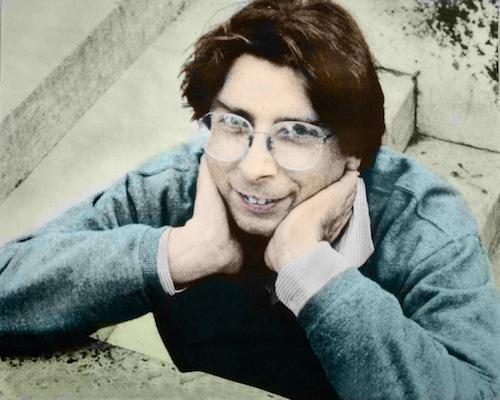
After the fall of the Berlin Wall he increasingly devoted himself to trying to counter the growing demon of nationalism. He supported the forces of reconciliation in the territories of the former Yugoslavia. With the ‘Verona Forum’ he offered a table for dialogue to hundreds of activists for coexistence who met in Verona, Strasbourg, Vienna, Brussels, Paris, Tuzla, Skopje and Zagreb.
On 26 June 1995 he went to Cannes with other members of the European Parliament to bring heads of state and government a dramatic appeal: ‘Europe dies or is reborn in Sarajevo’.
In 1981 and 1991 he refused to take part in the census requiring individuals to declare their ethnic group, which reinforced the policy of ethnic division in his homeland. On this pretext, in May 1995 he was excluded, without much scandal, from standing as a candidate for mayor of Bolzano.
During the 49th Youth Conference at the Cittadella of Assisi, held from 27 to 31 December 1994, Langer gave what is probably his most famous speech.
On that occasion he launched, as a sort of slogan, the motto Lentius, profundius, suavius (Slower, deeper, gentler), in contrast to the Olympic motto Citius, altius, fortius (Faster, higher, stronger).
It was a message clearly at odds with the logic of competition, frenetic speed and strength as muscular display: in other words, with everything that characterises the ideology of post-modern capitalism.
FOUR PIECES OF ADVICE FOR A FRIENDLY FUTURE
31.12.1994, Youth Conference in Assisi, Christmas 1994
Speaking of a possible friendly future, I would like to put to you two aspects above all that I think are important in making the future, and perhaps the present too, friendlier, less hostile and more liveable.
Among the great commitments and the great causes, I believe that reconciliation with nature certainly has a very important place today. Years ago green was fashionable; there was no advertisement that did not need to stress the ecological quality of the products it was trying to foist on us: the ecological car, ecological food, ecological materials and so on. Ten years ago, to win people’s approval you had to say: ‘what we are offering you, what we are selling you is good not only for you but also for nature’.
As a fashion, this has quickly come to an end; unfortunately the fashion has also passed through the world of high politics. Do you remember, two years ago, the great world summit in Rio de Janeiro, where the North and South of the world were to come together to establish how to use, jointly and in a wise and respectful way, the resources of all humanity and the whole planet? Well, the North, which should have tightened its belt a little, simply said that it was not interested, and the summit, apart from a few generic promises (pollute less, cut down fewer trees, exterminate fewer living species), actually ended without any great commitments.
So it seems to me that today there is a need, among those who are not seeking a merely ephemeral commitment, who shout freedom when everyone shouts freedom, who shout justice when everyone shouts justice, who perhaps even shout peace when everyone shouts peace or democracy or solidarity, for particular attention, going against the current and outside fashion, to be paid to the integrity of creation or, if you like, to the reintegration of the biosphere.
A simple life
Many may ask: but what does reintegration, reconciliation with nature, mean? What precepts must I follow? Who gives me reliable guidance on what to do, on which endangered animals to fight for, which trees to preserve?
I believe that the fundamental message of reconciliation with nature that we must set ourselves today, and can put forward without fear of contradiction, is essentially one: that of a simpler life.
When almost two hundred years ago Kant was concerned with finding a kind of moral message for everyone, believers and non-believers alike, that is, what kind of rule to give or formulate so that it would be valid for all and beyond dispute, he finally arrived at this rule: try to behave in such a way that the criteria inspiring your action could be the same criteria that inspire everyone else. In the end this was the most secular and universal formulation he found.
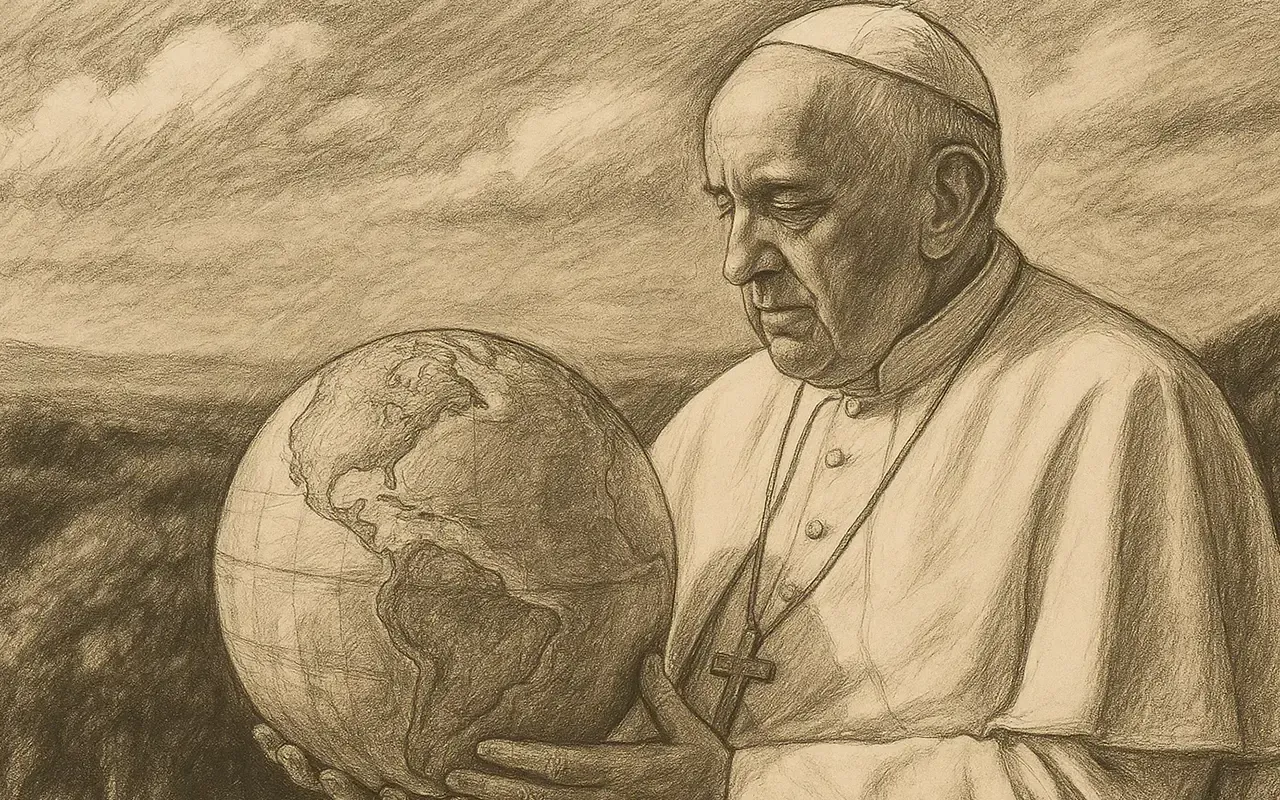
If we look today at the situation of the world, a world populated by more than 5 billion people, we should at the very least say that the criteria inspiring our actions must be multipliable by 5 billion; that is, try to pollute as much as 5 billion people could afford to pollute; try to consume as much energy as 5 billion people can consume; try to deforest as much as 5 billion people can afford to deforest.
Different ‘us’es
So I believe the first and fundamental ecological message that can be given today is simply that of a simple life, a life that consumes little, a life that has great respect for everything we deal with, including animals, plants, stones and the landscape, that is, everything that has been lent to us and that we must hand on to others.
Speaking of a possible friendly future, I would like to put to you two aspects above all that I think are important in making the future, and perhaps the present too, friendlier, less hostile and more liveable.
A first aspect that I venture to offer you as a possible contribution to a friendly future has to do with reconciliation or coexistence. And it is not coexistence with nature but coexistence between cultures, between different ‘us’es, that is, between groups of people who do not identify with one another, even though they live in the same territory.
Today in Europe, and particularly in the big cities, the presence side by side of people of different language, culture and religion, often of different skin colour, will increasingly be not the exception but the rule.
I believe that – to simplify – we have two choices: one is what has lately become famous under the term ethnic cleansing, that is, clearing every territory of others, making a territory homogeneous, exclusive, ethnically exclusive, and therefore saying that whoever there does not become the same as the others, because they want to cultivate their difference, or whoever is simply driven out, not even being allowed to integrate, must leave, by fair means or foul, up to and including extermination.
The other possibility is that we equip ourselves for coexistence, that we develop a culture, a politics, an attitude of coexistence, that is, of plurality, of talking to one another and listening to one another. Now I believe that as long as it cost nothing, as long as it was fashionable, the multi-ethnic and multicultural was also nice and looked chic. For example, Italy was a country in which all the major newspapers were full of indignation at other people’s xenophobia: the Swiss have held another xenophobic referendum, in Germany there have been episodes of xenophobic intolerance, in France, and so on.
Today we realise that this is becoming tragically real here too; perhaps for the simple reason that previously we did not have the others among us, and so it was easy to tolerate them as long as they stayed far away. Once they are here, it becomes less easy. So I believe that promoting a culture, a body of legislation and a social organisation for multicultural, multi-ethnic coexistence is today one of the distinguishing marks of quality of life, one of the conditions for having a liveable future.
I believe that intercultural communication should not take place in a wilful way, almost through gritted teeth as an obligation, but should also become a pleasure. I think that in coexistence between different ‘us’es it is very important that none of these ‘us’es feels in danger, that is, feels threatened. When it feels threatened, the temptation of violence is close, and there is no conflict more engulfing than an ethnic, racial or religious one, which immediately forms fronts and alignments that are then extremely hard to reconcile.
So I believe that today one of the great tasks of anyone who wants a friendly future is precisely to become, in some way, in their own small way, a bridge-builder, a builder of bridges of dialogue and of intercultural or inter-ethnic communication. If there is no intercultural communication, I believe we are heading towards a generalised Yugoslavia, to put it in a telegram that is perhaps a little pessimistic but, I fear, not far from reality.
Criteria for a friendly future
These are two aspects that I wanted to put to you for a friendly future. I would now like briefly to outline four small approaches that can help in this.
The first concerns the credibility of words. I believe that today there is very little faith, rightly, in words, because it is hard to tell news from advertising, reality from fabrication, which, if repeated authoritatively and on television, itself becomes reality.
Whoever can say ‘Come and see’ is credible; whoever has an experience to offer in which everyone can take part, which everyone can share, is credible. Where there is no ‘come and see’ I would be very wary. In this sense television is indeed a ‘see’, but a mediated one, so that no verification is possible.
A second criterion I would call the criterion of the five righteous, and it goes back to the negotiation over the destruction of Sodom and Gomorrah. You will remember that Abraham tried to stop Sodom and Gomorrah from being destroyed by arguing that many righteous people would die in the catastrophe along with the wicked. A long negotiation then begins because the angels say: give us a credible list of the righteous, produce at least five, out with the names, because otherwise we do not believe it.
I think that if we do not want to become prisoners of our illusions, we should carry out at least a minimal check on the five righteous; a check on whether others too consider important the things that seem important to each of us, and join together with others who share them, before going off to shout on television.
Another way of building a friendly and equal future is to conclude pacts, even if quite formally. I believe that today there are many forms of pact, many forms of alliance that can be concluded, and that also restore dignity and justice to those who are apparently on the receiving end.
Think of the great experience of Emmaus, where the so-called human castoffs of the Emmaus communities, regarded as such by many, learned first to restore dignity to discarded things and waste by collecting, sorting and reusing them, putting them back into circulation, and so regained their own dignity as well. I believe that today the model of the alliance, of the pact, of reciprocity is not only a very important condition but can also be pursued very concretely, because we are at a stage of facilitated communication.
The last aspect, which I see as greatly underestimated today, concerns the relationship between the north of the world and, respectively, the south and the east. Today those on the left are enthusiastic supporters of the Third World; those who come instead from a more right-wing tradition pay more attention to the east, because they were long educated in solidarity with those oppressed by communism.
So, even after the fall of communism, we risk reproducing these solidarities on separate tracks, either with the south or with the east. Speaking of alliances and pacts, I think it would be a good path to follow if, in what we do, we tried to have partners in both the east and the south, and also introduced them to one another, not least because they are often in competition, since both of them court us.
I have reached the end and would like to attempt a summary, with a variation on a very well-known motto. You know the motto that Baron de Coubertin revived for the modern Olympics, taking it from antiquity: the motto of citius, faster, altius, higher, fortius, stronger, more powerful. Citius, altius, fortius was in itself a playful motto, a motto for the Olympics, which were certainly competitive but were in some way a game.
Today these three words could well be taken as the quintessence of our civilisation and of its competitiveness: strive to be faster, to reach higher and to be stronger. This is more or less the key message we are given today. I propose the opposite: lentius, profundius and suavius, that is, turning each of these terms upside down: slower instead of faster, deeper instead of higher, and more gently or more softly instead of stronger, with more energy, with more muscle, in short more booming. With this motto no frontal battle is won, but perhaps one has longer staying power.
(text not reviewed by the author)
credits:
Image taken from www.alexanderlanger.org