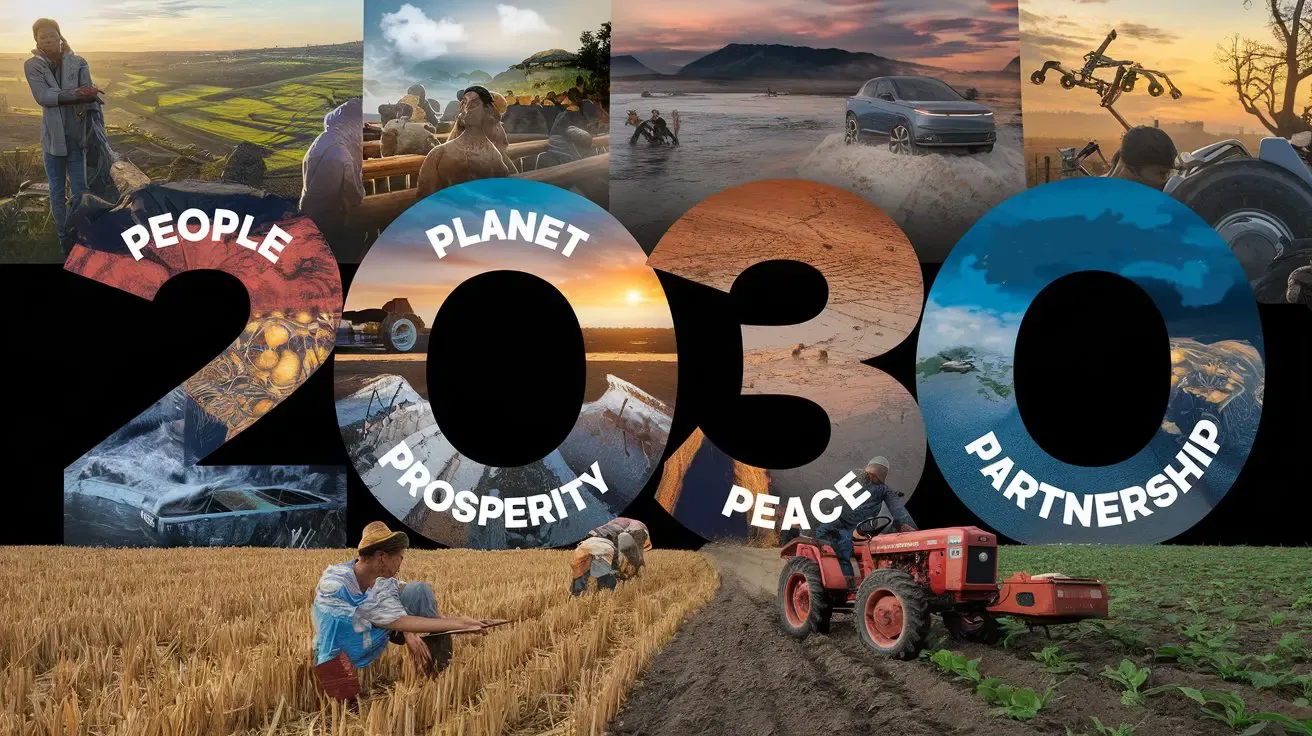
Moreover, the time available is short: 2026 is just around the corner! Certainly, some progress has been made, but where do we stand? Let us try to take stock and understand which goals each of us can contribute to in daily life.
Goal 1: end poverty in all its forms, everywhere
Unfortunately, Covid-19 and the resulting socio-economic crisis have dealt a considerable blow to this goal. According to estimates by the World Bank, before the pandemic extreme poverty was declining, falling from 36% in 1990 to 10% in 2015. However, the health and economic crisis has pushed millions of people back below the minimum threshold: in 2023, the share of the population still living in extreme poverty stood at around 9%, with particularly acute disparities in sub-Saharan Africa.
Goal 2: end hunger, achieve food security, improve nutrition and promote sustainable agriculture
Hunger, sadly, currently affects 735 million people, as confirmed by various international reports, including the 2023 Global Hunger Index, which highlights an increase in the number of undernourished people compared with previous years, largely because of wars, climate change and economic crises. What can each of us do in daily life? We can certainly adopt responsible and supportive behaviour, such as reducing food waste and supporting local, organic and sustainable agriculture, promoting a fairer food system that is more respectful of the environment.
Goal 3: ensure healthy lives and promote well-being for all at all ages
Fortunately, the United Nations estimates that, globally, life expectancy is rising, and improvements have been recorded in reducing maternal and neonatal mortality and deaths from non-communicable diseases. However, progress has been slowed by increasingly intense climate change, growing inequalities, geopolitical instability and obstacles such as the Covid pandemic. Here too, each of us can do our part by adopting a healthy lifestyle and supporting access to healthcare through donating medicines or taking part in fundraisers (provided they are launched by reliable and transparent organisations).
Goal 4: ensure quality, inclusive and equitable education
In recent years Goal 4 has seen progress: school enrolment has indeed increased, as has youth literacy. There has also been an improvement in gender parity, although significant disparities remain in many countries. However, despite the progress, in 2019 around 258 million children and young people still had no access to school. Conflict zones and extreme poverty remain critical obstacles, with 50% of out-of-school children living in war zones (Unstats.un.org). How can we contribute in daily life? First of all, we can support our schools and universities; secondly, we can back local or international campaigns that fight for the right to education in countries at war or in development; finally, we can personally pass on to our children values such as respect for diversity, tolerance and inclusion.
Goal 5: achieve gender equality and empower all women and girls
To get an idea of how hard this goal is to achieve, it is enough to look at the Italian case: the latest data from the Global Gender Gap Report 2024 show that Italy ranks 87th out of 146 nations for gender equality, a step back from previous years (in 2023 we were 79th). Strong disparities in work and pay persist, along with an extremely high rate of gender-based violence: one need only think of the tragic case of Giulia Cecchettin, which unfolded just last November. All of us are called upon to challenge stereotypes and discrimination, teaching the young to show respect.
Goal 6: ensure clean water and sanitation for all
Since 1990, more than 2.6 billion people have gained access to drinking water. However, around 663 million people remain without safe sources and, as for basic sanitation, there are still about 2 billion people without it (unric.org/it). It is therefore important to reduce waste and to use water consciously and responsibly. We should also avoid pouring substances such as used cooking oil down our sinks, as it is harmful to the environment and must be disposed of at recycling centres.
Goal 7: ensure access to affordable and clean energy for all
Globally, significant progress has been made: the number of people without access to electricity fell from 985 million in 2015 to 685 million in 2022 (www.worldbank.org). However, the challenges remain enormous: clean energy produced from renewable sources, for example, is still far too scarce. To contribute in daily life, each of us can reduce household consumption by adopting good practices such as not leaving electrical appliances on standby but switching them off, or limiting the use of heating by setting the thermostat no higher than 20 degrees.
Goal 8: promote sustainable economic growth and decent work for all
Globally, economic growth is recovering after the impact of the pandemic, but the situation remains uneven between countries. Moreover, while global unemployment has shown signs of improvement, youth unemployment and in-work poverty remain worrying figures, and this also applies to Italy, whose youth unemployment rate is very high (www.ilo.org/it). To help achieve Goal 8, each of us can support local trade, favouring the circular and fair-trade economy, which promotes the well-being of local communities.
Goal 9: build resilient infrastructure, promote innovation and inclusive industrialisation
The inefficiency of infrastructure in low-income countries, which prevents fair access to essential services, is still a worrying fact. Moreover, industrialisation, which has started growing again after the pandemic, offers job opportunities on the one hand, but on the other often puts the environment at risk (UNRIC). Adopting new technologies that can make industry less polluting remains a challenge, and significant gaps persist. In daily life, we can use our purchases to support companies that make their goods using clean production techniques or renewable energy (for example, those certified Carbon Neutral).
Goal 10: reduce inequality within and among countries
This goal, too, was dealt a heavy blow by the pandemic, which amplified inequalities, with more marked effects on the most vulnerable social groups. In Italy, the situation has shown signs of improvement: income distribution improved slightly in 2022, but poverty remains a significant issue, especially in the southern regions (ASVIS). To help achieve Goal 10 we can focus on promoting a culture of inclusion and adopting responsible behaviour, for example by taking part in volunteering activities that promote the reduction of inequalities at local level.
Goal 11: make cities inclusive, safe, resilient and sustainable
As regards this goal, the pandemic has undoubtedly highlighted inequalities in cities, especially in the suburbs and less developed areas, but it has also created an opportunity to rethink urbanisation in a sustainable way, aiming for less dependence on cars and more green spaces. However, images of slums and of neighbourhoods where basic services are entirely lacking, because of poverty or war, are before everyone’s eyes every day. There is still a great deal of work to do in terms of sustainability and safety too: think, for example, of the air quality in some Italian cities such as Milan or Taranto, devastated by industry. What can we do? First of all, prefer public transport, bicycles or our own feet to the car. Then, by all means, sort our waste for recycling and dispose of rubbish correctly.
Goal 12: ensure sustainable consumption and production patterns
Global progress in this area includes actions aimed at reducing the excessive consumption of natural resources and preventing waste, with concrete targets such as halving food waste by 2030 and improving waste management through recycling and prevention. Once again, we can do our bit by disposing of waste correctly and avoiding throwing away food: let’s buy less and use leftovers creatively... perhaps in a nice frittata. Let’s also choose products that support the local area and that are as natural as possible, avoiding buying online and feeding, for example, the mechanism of fast fashion.
Goal 13: take urgent action to combat climate change
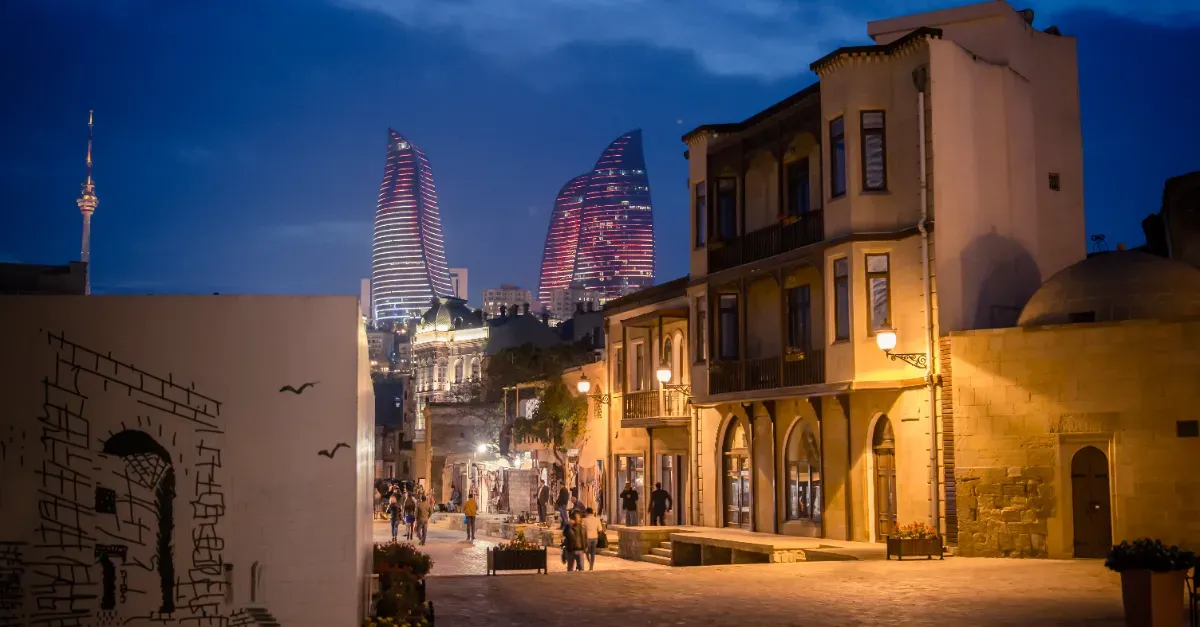
As regards this goal, each of us can see how the small steps forward made over the years are absolutely not enough. Erratic temperatures and extreme weather events are increasingly hitting our planet and, in this regard, the re-election of Donald Trump as President of the United States has raised serious concerns. International efforts continue, as shown, for example, by the recent COP29 in Baku, but do they lead to concrete results? What we can do in our daily lives is try to adopt a lifestyle that is as sustainable as possible, reducing consumption, buying consciously and preventing every kind of waste.
Goal 14: conserve and sustainably use the oceans and marine resources
Goal 14 concerns ‘life below water’, a subject around which significant challenges persist. The excessive presence of plastic in the sea, uncontrolled fishing and rising temperatures that threaten the survival of fish and corals are just some of the problems to be addressed. Admittedly, some progress has been made: for example, scientific research efforts have increased to improve the health of the oceans, and international agreements against illegal fishing have also been signed. One of the most significant is the global agreement on port State measures, promoted by the FAO, which allows countries to deny vessels engaged in illegal fishing entry to their ports, thereby reducing the possibility of marketing illegally caught fish. For our part, we should try to reduce our use of plastic, given that millions of tonnes end up in the sea every year. It is also important to buy fresh, local, seasonal fish.
Goal 15: protect, restore and promote the sustainable use of terrestrial ecosystems
To achieve Goal 15, good practices should be adopted, such as the protection, restoration and sustainable use of ecosystems, forest management, the fight against desertification and the protection of biodiversity. Globally, progress is being made, but the data show that soil degradation, deforestation and the loss of habitat for flora and fauna continue to be urgent problems. According to the most recent data, on average, over the last 50 years, 12 million hectares of forest have disappeared every year: the figure is staggering. To contribute personally to this goal, we can reduce our ecological impact by making more conscious choices, such as buying products certified as sustainable or with a reduced environmental impact.
Goal 16: promote peaceful and inclusive societies
To reduce violence and instability, stronger justice and institutions are needed, and this concerns not only States where rights are not respected or situations of war (in this respect, the work of the UN is fundamental), but also Italy itself, where trust in the judicial system and institutions is low and declining. To realise this, it is enough to look at the disturbing turnout figures for elections: for the European elections, in 1979, 85.6% of the population voted, whereas in 2024 only 48.31% did... less than half of those entitled to vote! Taking an interest in politics, exercising our right and duty to vote and supporting organisations that work for social justice is essential. But so is promoting, starting with our children, a culture of respect and tolerance (let us think once again of the frightening number of femicides that occur every year!).
Goal 17: strengthen the means of implementation and revitalise the global partnership
Goal 17 concerns ‘partnerships for the goals’, that is, international cooperation, the integration of resources and expertise at a global level and the promotion of policies that foster sustainable development through joint work between governments, the private sector, civil society and international communities. Some progress has been made on mobilising resources, above all through international aid intended to strengthen the fiscal capacity of developing countries. However, there is great disparity: not all States have, in fact, improved their ability to attract investment. Some remain outside these dynamics. If we think, for example, of trade, the least developed countries continue to struggle to increase their share of global exports and to gain fair access to international markets (sdgs.un.org/goals/goal17). The recent conflicts in Ukraine and the Middle East also leave more than a few doubts about the ability of States to work in synergy and work together towards world peace and sustainable development.
In conclusion, there is still a great deal of work to do, and it doesn’t take an expert to understand that, barring miracles, we will not manage to complete the Agenda in these 6 years. What matters, however, is not to lose sight of the goal and to keep walking, since stopping is impossible: the survival of our Planet and of all of us is at stake. For this reason, we are all called to contribute: every action, even a small and apparently useless one, can make a difference.