Today is monday 9 november 2026
Webzine of ecological news

From around the world

Will Asian elephants be saved? Bangladesh orders an end to capture and training.

The Asian elephant Elephas maximus was added to the IUCN Red List of threatened species in 2019. Its degree of extinction risk is A2c.

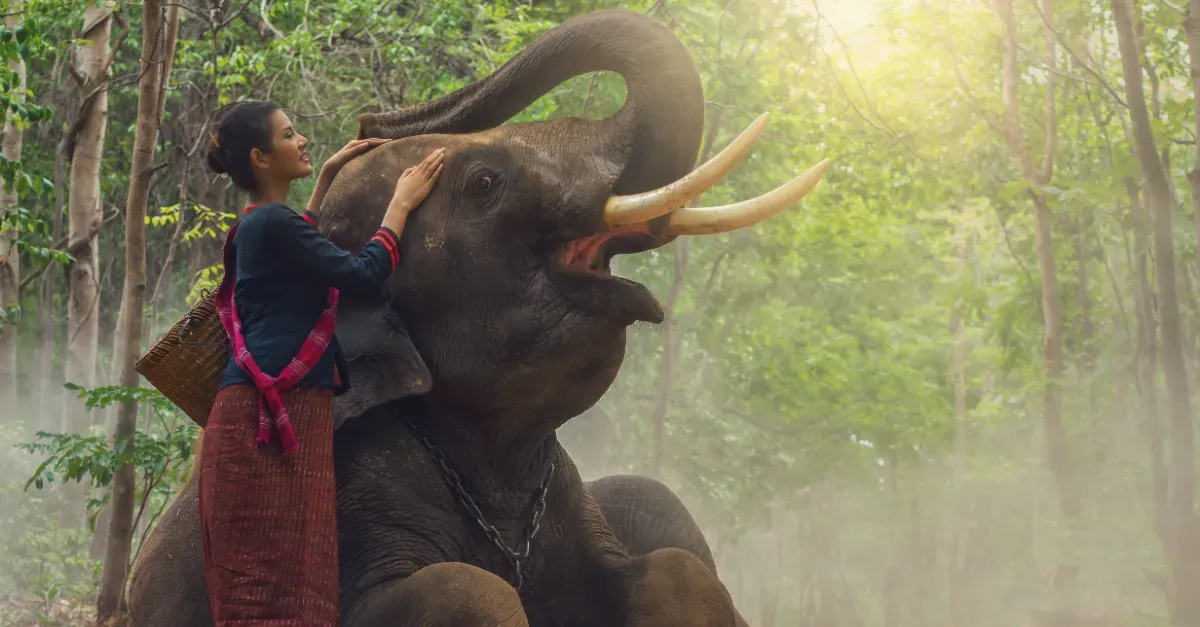
[tzido] © 123RF.com]

Asian elephants – Last Monday saw a historic ruling to stop cruelty to elephants in the name of training. It was issued by a court in Bangladesh: a country that is, of course, fundamental to the preservation of the species.

The important news, certainly not just for Bangladesh, was reported by the English-language newspaper Dhaka Tribune and soon went around the world.

A two-member bench of the High Court of Dhaka, headed by Justice Naima Haider, has suspended the issuing of new licences and the renewal of old ones for the keeping of elephants and other wild animals. The judges essentially turned the question on its head compared with the prevailing mindset in the Asian country, simply asking: ‘Why should it not be declared illegal?’

The case was brought to court by a petition submitted by a local animal welfare group, against the ‘inhumane’ (so to speak) treatment of captive elephants in Bangladesh.
And the judges sided with the activists.


Show more Show less

The continued granting of licences for the use of elephants in private circuses – along with the progressive deforestation of the territory – has in fact serious consequences for the state of the species, which is critically endangered. The Asian elephant is in fact included in the Red List of the International Union for Conservation of Nature, a global body involved in nature conservation.

The Asian elephant Elephas maximus was added to the IUCN Red List of threatened species in 2019. Its degree of extinction risk is A2c.

You can see the List here:

https://www.iucnredlist.org

It is estimated that around 200 elephants still live in Bangladesh. Until now it was possible to obtain a licence to capture elephants for, so to speak, work purposes, that is, to have them carry tree trunks.
Many of the animals, however, ended up in circuses, or even in street performances. Then there are countless episodes of mistreatment, which cause severe stress in the animals, sometimes leading them to behaviour that is dangerous to themselves and to the population.
This brutal type of ‘training’ even has a name: Hadani. And it is precisely the declaration that hadani is illegal that is the good news that animal rights activists in Bangladesh and around the world are welcoming, hoping it will become reality. ‘A historic decision’ is how Rakibul Haque Emil, director of People for Animal Welfare (PAW), a Bangladeshi animal rights group, described it.

It was PAW, together with the well-known Bengali actress Jaya Ahsan, that brought the public interest case against the granting of licences.
‘Private licence holders, including those of circuses, brutally separate elephant calves from their mothers, chain them for months and then torture them to teach them tricks,’ Emil explained. ‘We hope this is the end of hadani in Bangladesh.’

shoulder3

Machine translation

We respect your privacy

When you use this site, we and the third-party providers listed in the preferences may use cookies and similar technologies for the following purposes:

  • Necessary: Core functions: security, session and storing your choices.
  • External services: Embedded third-party content such as videos. It only loads if you allow it: the provider then receives your IP address and may set cookies of its own.

Only necessary cookies are active without consent. Some providers may transfer data outside the EU. You can change your choices at any time from the «Privacy settings» link at the bottom of the page; closing with the X continues with necessary cookies only.

Customise