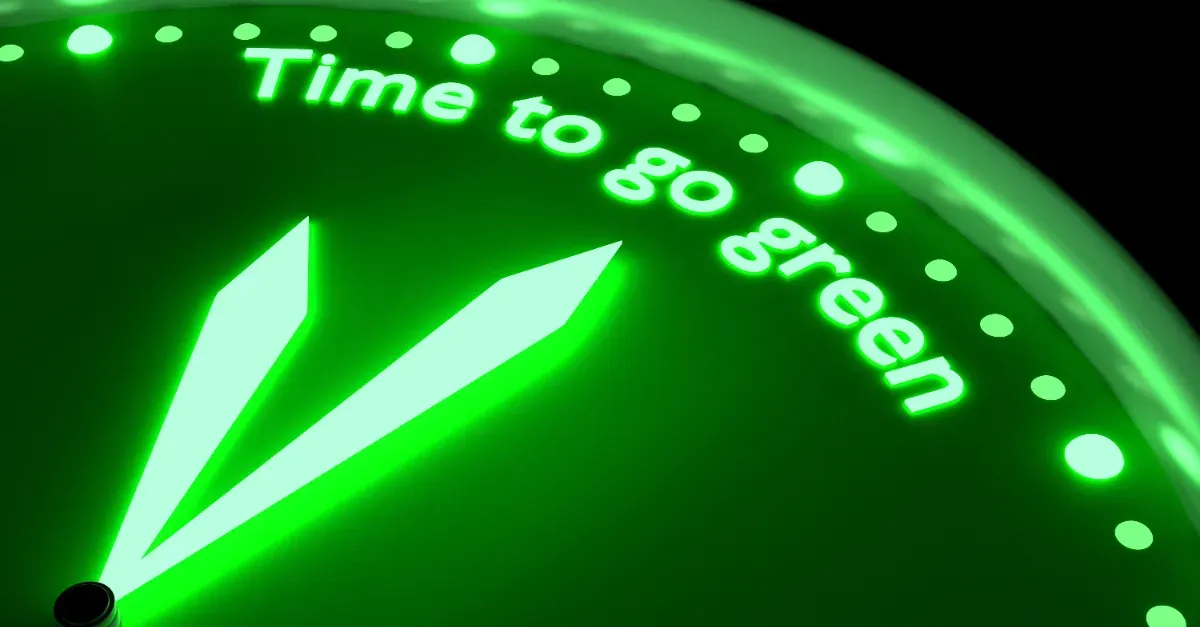
The clock reminds us, with a touch of thrill, just how urgent the situation is. By knowing how much time is left, we can prepare better and speed up the process of change.
How is the climate clock calculated?
Scientists use various models to predict how much CO2 will be emitted by different sources and how much CO2 will remain in the atmosphere, taking into account the action of natural ‘carbon sinks’. In this way they can calculate how much time remains before we exceed the CO2 levels needed to keep temperatures below the threshold.
The most commonly used threshold is 2 °C, which many scientists believe will lead to extreme and irreversible climate change (see What does the climate clock tell us?). It is important to note, however, that 2 °C is only a threshold on a global scale. Different regions will experience different levels of warming, and many places will suffer significant impacts above 2 °C. In fact, some places could suffer devastating effects from as little as 1.5 °C of warming.
What does the Climate Clock tell us?
It is important to remember that the clock only shows how much time is left before a certain temperature threshold is exceeded. It does not indicate how fast we will reach that point. The clock tells us that there are 12 years left until the carbon budget that would keep us below 2 °C of warming is used up. However, if we want to limit warming to 1.5 °C, we have only 7 years left.
Why 2 degrees Celsius is an important threshold
We are dangerously close to the 2 °C threshold, and many scientists argue that exceeding it could have catastrophic outcomes. Many experts agree that going beyond this level will cause permanent changes to the global climate.
The 2 °C threshold has long been a key benchmark in discussions on climate change. The Paris Agreement commits its signatories to pursuing efforts to limit global warming to below 2 °C. Many ecosystems and areas depend on a stable climate that may be impossible to achieve once temperatures reach 2 °C above pre-industrial levels.
Why 1.5 degrees is an even more important threshold
The 1.5 °C threshold is important for a number of reasons.
First, it is more ambitious than 2 °C, which means it requires us to emit even less carbon.
But above all, it could carry a significantly lower risk of triggering irreversible and catastrophic climate change. Most scientists agree that even exceeding the 1.5 °C threshold would have devastating effects, but many argue that the damage would be less than at the 2 °C threshold. Some studies suggest that we could reduce emissions to sustainable levels (that is, within 1.5°) within the next 10 years if we commit to doing so.
When will we use up our carbon budget?
To achieve a temperature rise of less than 2 °C, we must keep CO2 levels below the equivalent of about 800 gigatonnes of CO2. To stay below 1.5 °C, we must keep them below about 400 gigatonnes of CO2. Depending on how quickly emissions fall, we will use up our carbon budget within the next 10-15 years. Once the budget is used up, we can say we have passed the point of no return.
The conclusion may be catastrophic
To sum up. The climate clock is an important indicator that tells us when we will use up our carbon budget. The clock shows us how urgent the situation is and reminds us of what we need to do to avoid catastrophic climate change. Whether we limit warming to 2 °C or to 1.5 °C, we must cut emissions as quickly as possible and invest in clean, sustainable technologies to ensure a liveable planet for future generations.