Today is monday 9 november 2026
Webzine of ecological news

Practical ecology

What are the oldest trees in Italy? And where do they grow?

From north to south, the whole of our peninsula (islands included) preserves specimens that are thousands of years old, which have withstood the passing of time and the offences of man. Here are the most significant.

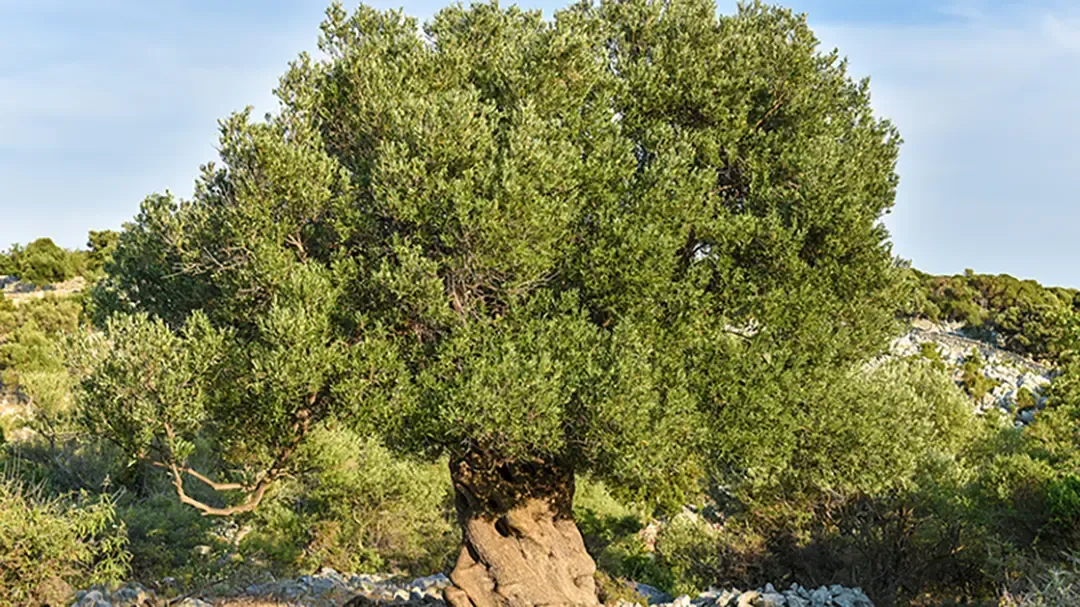
Centuries-old olive tree: image by :[gasparij] © 123RF.com

Trees are sanctuaries. Those who know how to speak with them, who know how to listen to them, perceive the truth.
They do not preach doctrines and recipes; they preach, heedless of the particular, the
primordial law of life.
Hermann Hesse’s famous quotation about trees as silent dispensers of
truth, as living symbols of the dharma, capable of embodying the fundamental law
of life, is by now increasingly familiar even among us ‘moderns’.
It is a sensibility, that regarding the sacredness of the living element that is the tree, which
fortunately we have not entirely lost in the passage from the traditional conception of the world
– the one that humanity shared for millennia, in whatever corner of the
planet it lived – to the contemporary one of homo technologicus, now incapable
of symbolising, of giving meanings to what surrounds him other than merely
utilitarian ones, always bent to his own ends.
Plato’s metaphor of the human being as an upside-down tree is well known: with
roots, that is, drawing from the sky – but also with head and arms firmly planted,
indeed sunk in the earth, symbolising the vital relationship with the ‘low’, that
material dimension that we all too often tend to forget.
And if the image from Plato’s Timaeus is truer and more evocative than ever – though
certainly not original to the great Greek philosopher, but drawn from a
more ancient tradition, certainly Eastern and for which sources are not lacking – the
relationship is just as true if it is turned upside down.
Just as man is a sort of tree, so a tree is, at bottom, an image
strongly comparable to that of a human being.
Above all because we can monitor its growth, from almost its ‘birth’ to
its first development, to full maturity and, naturally, to old age.
Show more Show less

Which, in the case of the tree, appears in all the richness of meaning that the last age
of life brings with it: stable and peaceful strength, quiet wisdom, the capacity for
protection, and so on.
An old or very old tree is always a powerful image: it is as if we
sensed – somewhat obscurely, if you like – that this being stands on the boundary between
earthly life (an adjective never so apt for existence as in this case) and heavenly life.
And so it anticipates, prefigures our inevitable future condition: with
a serenity, however, that is absolutely enviable, a steadfast constancy that we would
so like to have ourselves, when we reach the threshold of this life.
If this is, perhaps, the main fascination of old or very old trees, it is understandable
why they have always been objects of care and even veneration (Hesse’s
sanctuaries, indeed) in just about all ancient civilisations and traditions.
Also, obviously, in our Italic area, as rich in original and
diverse cultures as the peoples who have inhabited it over the millennia have been – before
and after the Roman age.
But which are the oldest trees in Italy still living?
The curiosity is not idle: because, besides the fascination, indeed the thrill, of thinking
of the antiquity of a living being that has grown and breathed right where we see it today
for thousands of years, all these specimens stand in areas that are also rich in human
history, and millennia of it. As if the bond between nature and the remote civilisation that
feared and venerated it with such care had not been entirely extinguished by the passing
of the centuries.
The ‘oldest’ tree in Italy is in fact still considered to be the Olivastro di San
Baltolu. It stands in Luras, in Sardinia, in the heart of the truest, most primitive and
fascinating Gallura. It is estimated to be between 3,000 and over 4,000 years old. Its
circumference is 12 metres: and, naturally, it is still alive.
If in nuragic and ancestral Sardinia there is the olive tree, in Sicily, on the slopes of Etna,
in the area supremely dear to the philosopher Empedocles, we find the Castagno dei Cento
Cavalli (Chestnut of the Hundred Horses).
It stands in the municipal territory of Sant’Alfio (metropolitan city of Catania), whose
civic coat of arms it adorns.
It is certainly the most famous and largest chestnut in Italy, as well as the largest and oldest
in Europe and one of the oldest in the world. The object of study by botanists but also of
visits by many illustrious figures past and present, it is a UNESCO heritage site. Its age

fondo3

Machine translation

Rispettiamo la tua privacy

Usando questo sito, noi e i fornitori terzi indicati nelle preferenze possiamo utilizzare cookie e tecnologie simili per i seguenti scopi:

  • Necessari: Funzioni di base: sicurezza, sessione e memorizzazione delle tue scelte.
  • Servizi esterni: Contenuti incorporati di terze parti, come i video. Si caricano solo se li autorizzi: a quel punto il fornitore riceve il tuo indirizzo IP e può usare cookie propri.

Solo i cookie necessari sono attivi senza consenso. Alcuni fornitori possono trasferire dati fuori dall'UE. Puoi modificare le scelte in qualsiasi momento dal collegamento «Modifica privacy» in fondo alla pagina; chiudendo con la X continui con i soli cookie necessari.

Personalizza