What the ozone hole is
What is the ozone hole? The ozone layer is a natural atmospheric layer, located in the stratosphere, which contains most of the planet’s ozone. The ozone layer protects the Earth from the sun’s ultraviolet (UV) radiation and is therefore important for preventing skin cancer and other diseases, and for ecosystems and human health. Fortunately, there is another type of ozone (O3) in the atmosphere, which makes up about 90% of the total ozone in the stratospheric ozone layer. Ozone is produced in the stratosphere when the sun’s ultraviolet (UV) radiation reacts with oxygen molecules (O2). Normally, ozone levels in the stratosphere are higher in the southern hemisphere than in the northern hemisphere.
The ozone depletion observed in the northern hemisphere is known as the ozone hole. The ozone hole is a large decrease in the amount of ozone in the stratosphere, observed in late spring and early summer in the southern hemisphere. In spring, rising temperatures lead to greater breakdown of ozone through photochemical reactions, while the reduction of UV rays in the atmosphere, due to the shortening of the days, blocks the creation of new ozone. The net effect is a rapid decrease in the amount of ozone in the atmosphere. The ozone hole is observed in Antarctica because of the particular conditions found there, including the fact that the air is very cold, so reactions occur more slowly.
CFCs in our lives
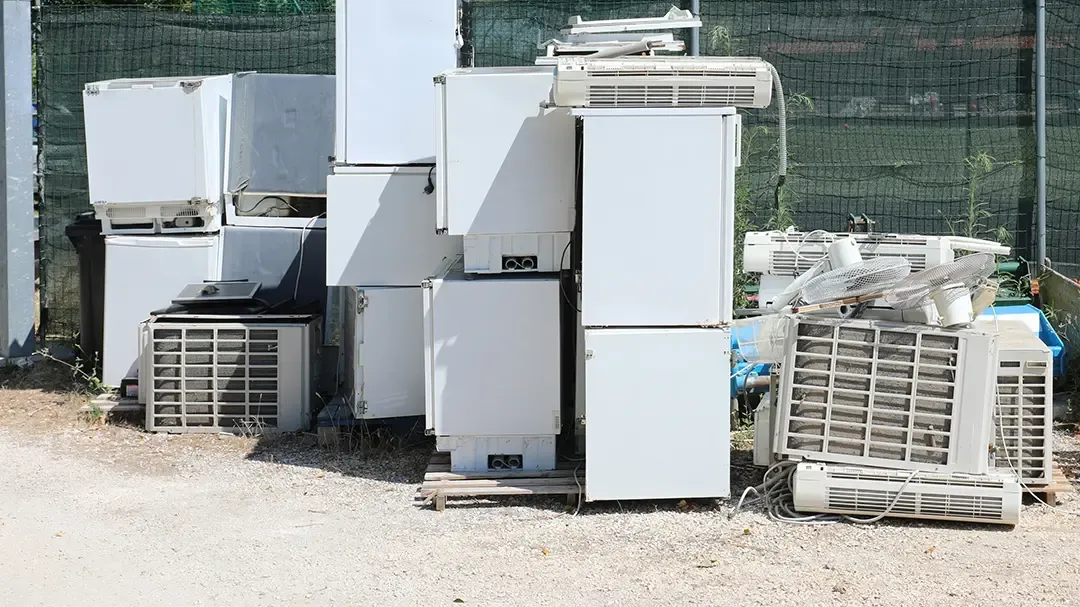
CFCs are gases commonly used as refrigerants and as blowing agents for insulation and other industrial applications. CFCs are greenhouse gases that contribute to climate change and cause ozone depletion worldwide. They are released when products manufactured before the 1987 Montreal Protocol are used, or when old refrigerators or other appliances containing CFCs leak or are disposed of improperly.
CFCs are the main cause of ozone depletion because they are long-lived gases that remain in the atmosphere for decades. CFCs are like vitamins: essential nutrients that keep us healthy. We need them to survive, but an excessive amount can be harmful. CFC levels in the atmosphere have been rising since the 1970s. The increase in CFCs has caused the thinning of the ozone layer in the upper stratosphere and lower mesosphere. Although the Montreal Protocol is widely credited with helping to reverse the damage, CFCs are long-lived gases that remain in the atmosphere for decades.
How will the size of the ozone hole be measured?
The size of the ozone hole will be measured on the basis of the total amount of ozone expected to be lost. The total amount of ozone in the atmosphere will be measured with the Total Column Ozone Mapping Spectrometer (TCOMS) on NASA/NOAA’s Polar-orbiting Environmental Satellite (POES). The amount of ozone in a specific place will be measured with the Ozone Monitoring Instrument (OMI) on NASA/NOAA’s Suomi NPP satellite. The value will be compared with that of the same period in the previous year, and the difference will be used to determine the size of the ozone hole.
How long will it take before recovery can be detected?
It will take 5-6 years for the amount of ozone in the atmosphere to return to normal. The previous ozone holes of 1980 and 1998 were smaller than expected, and current models predict a similar (but larger) ozone hole in 2021.
These previous ozone holes were smaller than expected because the Earth’s ozone layer is constantly changing. The amount of ozone in the atmosphere varies over the course of the year and over decades because of natural cycles of climate variation. In 2021, the ozone hole will probably be larger than in previous years because of the recent record ozone lows in 2017 and 2018 and the fact that temperatures in the stratosphere are currently very cold. The 2021 ozone hole will be the first predicted by a new model developed by scientists from NASA, the National Oceanic and Atmospheric Administration and other partners.
What does this mean for the people and animals that depend on the ozone layer?
The ozone hole has been very large in recent years and a larger one has probably already occurred in 2021. This will cause a greater decrease in the overall amount of ozone in the atmosphere, resulting in increased intensity of UV rays at the surface. The UV index and UV forecasts are tools used to inform people about the risk of UV exposure. The UV index is a daily forecast of the intensity of UV rays at ground level based on measurements of the amount of UV rays in the atmosphere. The UV forecast is a weekly forecast of the UV index based on the amount of ozone in the atmosphere. The ozone hole and UV forecasts are issued daily from October to early April by the UV Analysis and Forecasting Office of the World Health Organization (WHO).
In conclusion
The ozone hole is the result of a natural process that occurs every year in spring. Sunlight increases the production of ozone-depleting chemicals, while the shortening of the day leads to a decrease in the amount of ozone in the atmosphere. Although the chemicals responsible for the thinning of the ozone layer occur naturally, those produced by humans have dramatically increased this process.
The ozone hole in 2022 too is expected to be one of the largest and longest-lasting ever recorded, because of record levels of ozone in the atmosphere. The ozone hole will be measured on the basis of the total amount of ozone expected to be lost, while the amount of ozone in a specific place will be measured with a satellite instrument. The total amount of ozone in the atmosphere will be measured with the Total Column Ozone Mapping Spectrometer (TCOMS) on NASA/NOAA’s Polar-orbiting Environmental Satellite (POES).
*Please note that this article is for informational purposes only and cannot be considered in-depth scientific research. It is therefore unsuitable for school research without further study.