This is what ICOM (the International Council of Museums) tells us, an international organisation associated with UNESCO, founded in 1946, which represents museums and their professionals. From the very beginning ICOM has questioned the identity of the museum, drawing up a sound definition that remained in force until 2022 and in some respects remains unsurpassed.
After so many years, however, a refresh became necessary and ICOM launched an international call for a new definition of museum, more in step with the times. The proposals, which came from all over the world, numbered 267 and, after careful analysis, it was decided at the session of 24 August 2022 in Prague that ICOM’s answer to the question “what is a museum?” is the following:
“A museum is a not-for-profit, permanent institution in the service of society that researches, collects, conserves, interprets and exhibits tangible and intangible heritage.
Open to the public, accessible and inclusive, museums foster diversity and sustainability.
They operate and communicate ethically and professionally, with the participation of communities, offering varied experiences for education, enjoyment, reflection and knowledge sharing.”
[Source: https://www.icom-italia.org/definizione-di-museo-scelta-la-proposta-finale-che-sara-votata-a-praga-2/]
ICOM has therefore established a strong link between the museum and sustainability, since museums, by operating ethically, must promote sustainability and serve the growth of society. As is well known, however, there is many a slip between cup and lip, so the question naturally arises: in concrete terms, how does a museum encourage sustainability?
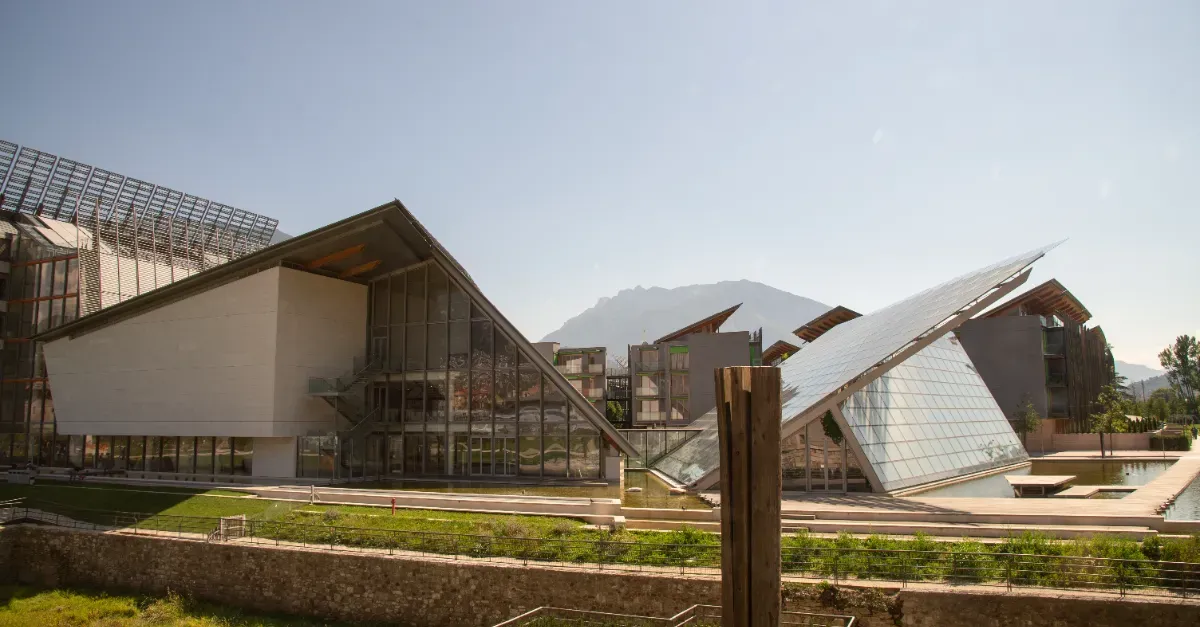
Given how topical and urgent the subject is, various cultural institutions have in fact been trying to make their contribution for some time, and a virtuous example can be found in the MUSE (Museo delle scienze) in Trento, directed by Michele Lanzinger.
As can be deduced even from a quick glance at its website (https://www.muse.it), the institution follows ICOM’s guidelines to the letter, making scientific research, the care of its collections and the enhancement of natural and cultural heritage its priorities, all in the service of society and sustainability. Among the topics studied by the MUSE team are, in fact, the consequences of melting glaciers, natural pesticides and organic farming, biodiversity, and climate change throughout history and hence its projection into the future. All this gives rise to scientific publications, technical reports, shared web portals with geolocated data, public lectures, conferences, outreach activities, radio and television interviews and exhibitions.
The MUSE therefore uses its collections and resources for studies and activities that serve not only the institution itself, but also the entire scientific community and society. All activities also involve museum visitors significantly, in a proactive logic of dialogue with stakeholders, those with an interest in the museum.
Following this logic, the museum institution stops being a closed-off custodian of dead objects and becomes a living body, a driver of research and sustainable development, a place whose importance citizens recognise and of which they feel part, since they are themselves involved in its activities. This is the key for the museums of the future: to put themselves at the service of their public and respond to its needs, promoting ethical and sustainable practices and playing a leading role too in developing new models of development.