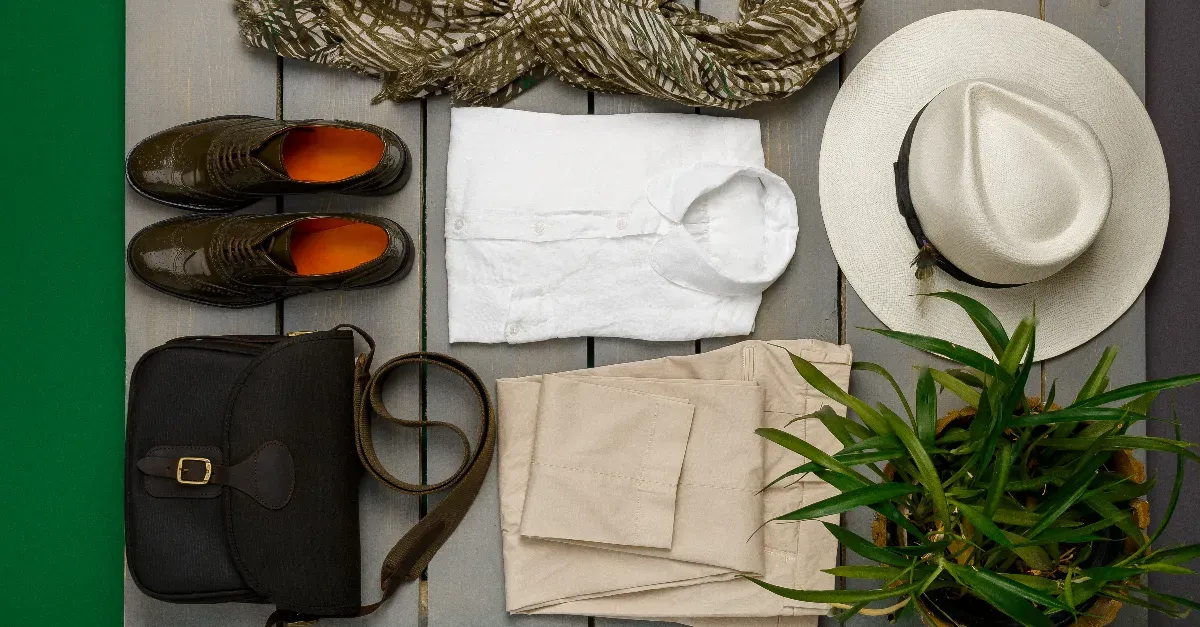
A higher-quality item, for example at 100 euros, can be worn in more situations and you will probably wear it more often. If an item costing 20 euros is worn 5 times, it will have a CPW of 4 euros; if an item costing 100 euros is worn 50 times, it will have a CPW of 2 euros.
The environmental impact of the fashion sector in relation to CPW
When analysing the issue from an environmental point of view, it must first be said that the fashion industry is responsible for 10% of global carbon emissions, second only to the oil industry. The most worrying aspect is that this percentage is growing.
Every year, people buy 60 million tonnes of new clothes, which is a 400% increase compared with the 1950s. It is no surprise that experts estimate that by 2050 the textile industry will be responsible for 20% of global CO2 emissions.
Moreover, garments are generally made of synthetic materials such as polyester, nylon and acrylic, all derived from oil. These materials are not biodegradable and often end up clogging landfills. From the point of view of occupational safety, moreover, the production of these fabrics sometimes involves chemicals that are harmful to the environment and to human health.
We therefore understand that by buying what could be called ‘disposable’ goods, we significantly increase CO2 production, without even considering the use of water, which is considerable.
Water consumption from cultivation to production
Water is an indispensable element in the processing of cotton, from cultivation to production. The water consumed to produce one cotton blouse is about 2,700 litres. The environmental impact of producing this garment is also linked to its energy use and to the air pollution caused by its CO2 emissions.
To better understand how much water we are talking about, consider that in Europe a person uses on average 120–180 litres of water a day to meet their personal needs (hygiene, cooking, laundry). Most of this water comes from the public water supply; the rest comes from private sources, such as wells or aquifers.
Given this figure, it is easy to see that the blouse we have talked about will have an impact equal to about a month of a European’s water consumption. In addition to the CO2 emissions.
In conclusion
Choosing a quality item is more sustainable and more economical over time. We could therefore rewrite the famous saying as: ‘spend more, spend less, and help the environment’.