Some scientists have long coined the phrase ‘age of extinction’ for our era of climate change, naturally referring to the very serious risk of total disappearance that many animal species are facing or will face in the near future.
A new case to add to the already long list of animal ‘mysterious deaths’ is the one that affected Botswana in 2020, a country that since Livingstone’s exploring journeys in the mid-19th century has been considered the ‘kingdom’ of African elephants.
For decades a favoured ground for the most indiscriminate Western ‘big game hunting’, which had put numerous animal species in serious jeopardy, Botswana has, since independence, restricted hunting – though without eliminating it, and indeed creating hunting reserves that periodically return to the ‘honours’ of the news between moratoriums and exemptions – and introduced protected areas of extraordinary value, truly unique on the planet. Such as Chobe National Park, which extends over more than 10,000 km2 on the borders with Zimbabwe, Zambia and Namibia and is home to around 60,000 elephants, with herds of 500 animals (as well as huge herds of buffalo and the largest groups of lions on the whole continent).
Climate emergency · Uncategorised
Remember the 2020 mass death of African elephants? The killer is climate change
New studies of satellite data reveal that toxic algal blooms killed as many as 350 elephants in Botswana.
Show more Show less
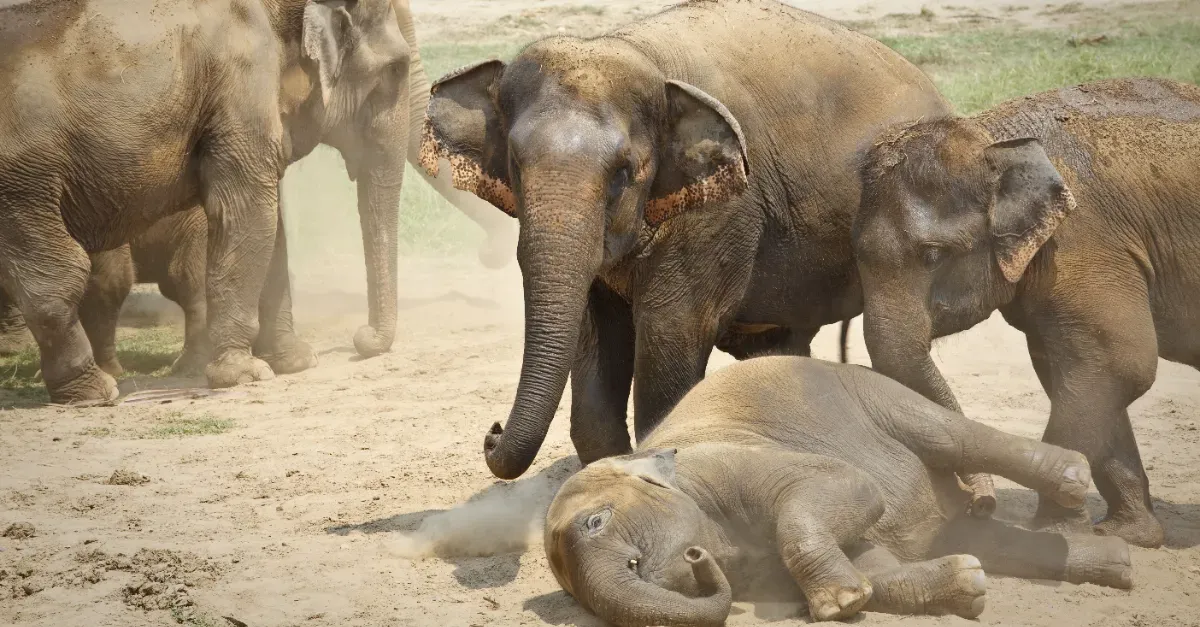
It was Botswana that rose to the centre of world attention in June 2020 because of a disaster of staggering proportions that had struck its elephants.
More than 350 animals had died in wholly mysterious circumstances in the Okavango Delta. The photos had gone around the world, arousing horror and dismay not only among animal rights activists, but among all those with even a minimal awareness of the common fate of humans and animals on this planet.
The animals, of all ages, had been seen walking laboriously in circles before collapsing to the ground and dying. A sight as shocking as any: according to ethologists, it was the largest die-off of elephants whose cause appeared almost entirely unknown.
What had caused this massacre was, indeed, the first and most pressing question. That they had drunk toxic water seemed obvious.
Now, four years later, a new study suggests, with the evidence of data, a credible hypothesis. It was another climate-driven disaster.
The researchers’ work has been published in the journal ‘Science of the Total Environment’. By analysing, with the help of satellites, the distribution of carcasses in relation to watering points, the team of scientists concluded that the elephants generally travelled just over 100 km (62 miles) from the waterholes before dying, within 88 hours of drinking.
Of the 3,000 waterholes examined, it emerged that those with high concentrations of carcasses in 2020 were the same ones where a larger bloom of cyanobacteria had occurred.
The conclusion is that the elephants were poisoned by water containing toxic blooms of blue-green algae, that is, cyanobacteria. The climate crisis is therefore to blame, since it is increasing the intensity and severity of harmful algal blooms.
The trend of sudden climate-induced diseases, scientists warn, is now widespread globally. In that same year, 35 elephants died in neighbouring Zimbabwe because of an unknown bacterium that entered the bloodstream and was linked to prolonged drought conditions. And not only in Africa. In 2015, 200,000 saiga antelopes died in Kazakhstan because of a climate-linked epidemic of blood poisoning, called haemorrhagic septicaemia.
In southern Africa, the two years 2019-2020 were a devastating one-two punch for water resources. 2019 was the driest year in decades, followed by an extremely wet year in 2020.
These conditions led to a greater quantity of sediment and nutrients suspended in the water, which led to unprecedented algal growth.
‘If water availability changes radically from one year to the next,’ the scientists explain, ‘the conditions favourable to the proliferation of bacteria and algae such as cyanotoxins, which are extremely harmful to many animal populations, increase.’
‘With forecasts that the southern African region will become drier and hotter in the coming years, the conditions described could very easily arise again,’ the experts add.
‘It is therefore important to adopt preventive measures as soon as possible, or we will see new and more massive die-offs.’
Ask the article
Beta
It answers only with what is written above and in the related articles of Greentomeet. If a piece of information isn't there, it tells you so.
Hello. I can summarise this article, explain a passage or tell you what Greentomeet has already published on the same topic.
Continue reading
Climate emergency →

NASA and NOAA sound the alarm over the accelerating rise in sea level, particularly along the US coast. …
Machine translation