The largest even has a name: the Great Pacific Garbage Patch, which covers an area of about 1.6 million square kilometres. The mere thought of it is enough to send shivers down the spine…
But how does plastic get into the sea?
How do entire islands of plastic form in our seas, though? There are many reasons: first of all, unfortunately, waste is still sometimes thrown directly into the water. Secondly, plastic that accumulates on land is carried towards the sea by rivers, beaches and wind.
Other causes stem from maritime activities, such as freight transport, tourism and, above all, fishing. Abandoned fishing nets, for example, are one of the greatest threats to the underwater ecosystem, since they continue to trap and, consequently, kill animals.
Finally, industrial activities also play a significant role: often, what ends up in the sea is microplastics from production processes or from the degradation of larger plastic products (such as tyres and synthetic fabrics).
A silent killer
Now, how much damage can all these tonnes of waste ending up in our oceans do? The answer is not reassuring. Plastic is, in fact, a real silent killer for the underwater ecosystem. Paradoxically, if we carry on like this, we will end up with more plastic than fish in the sea!
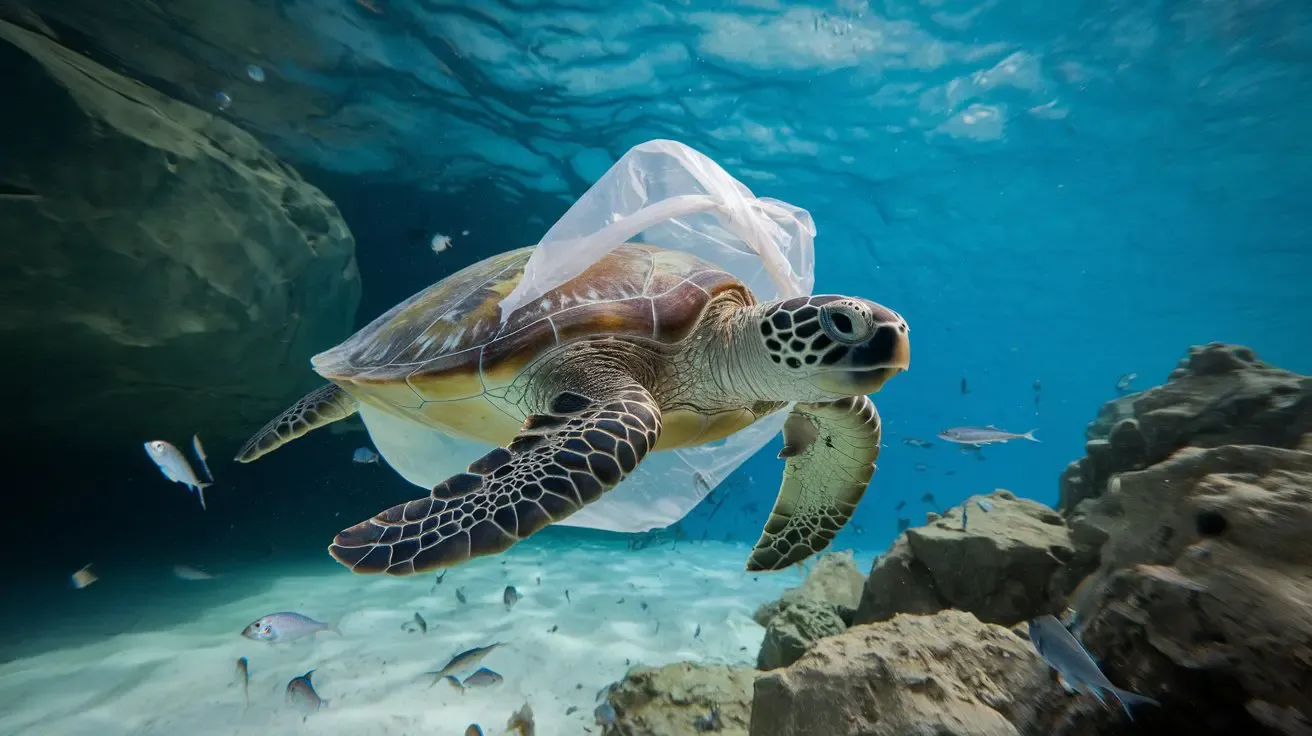
Every year, millions of marine animals die because of plastic, as they ingest it, mistaking it for food. Among the worst affected species are sea turtles, which feed on jellyfish to survive. We all know what a jellyfish looks like. Now think of a plastic bag floating in the water: is it not terribly similar? Unfortunately it is, and it is for the turtles too, which, thinking they are eating a jellyfish, ingest poison instead. At other times, these splendid animals become trapped in pieces of plastic, risking suffocation or injury and infection.
And be careful! It is a mistake to think that all this happens far away from us, in remote corners of the ocean. Along the coasts of our beloved Mediterranean too, thousands of loggerhead turtles (“caretta caretta”) are constantly threatened by plastic. The problem is serious: in recent years, many nature reserves across Italy have set up rescue centres for turtles and marine fauna. A commendable example is the Torre Guaceto Marine Protected Area, in Apulia, which is dedicated to rescuing loggerhead turtles and returning them to the sea.
But that is not all: plastic, unfortunately, also severely damages marine habitats. The ghost fishing nets we mentioned earlier, for example, can destroy coral reefs and Posidonia meadows, a seagrass considered a lung of the sea, fundamental to its balance.
The accumulation of plastic on the seabed also alters the structure of marine sediments, compromising the lives of numerous species that live in them, such as starfish or crustaceans. In short, more and more plastic, fewer and fewer fish…
The consequences for humans
All this, besides destroying our seas, also destroys our health! We are told to eat plenty of fish, given its beneficial properties for humans, but if fish eat plastic, what do we end up eating?
Moreover, if marine biodiversity continues to dwindle because of waste, what will coastal communities that depend on fishing live on?
Finally, will we still be able, in the future, to enjoy a nice swim in clean, crystal-clear waters or to sunbathe on white beaches? Or will we have to slalom between plastic bags and bottles?
What can each of us do?
Although the situation is critical, hope dies last. Clearly, solving the problem of plastic in the sea requires coordinated global action and concrete government measures, but each of us, in our own small way, can also do our part. How?
- By reducing single-use plastic: no more plastic bottles, a reusable flask is better. Doing the shopping? Let us bring a cloth bag from home. There are even foldable ones that fit in the smallest handbags. If we order a drink, let us do without the straw or ask for a biodegradable one;
- By recycling: do we sort our waste? Do we do it properly? If in doubt, let us contact our local council, which usually provides explanatory leaflets;
- By reusing: is the plastic container in good condition? Let us not throw it away, we can reuse it for other purposes;
- By cleaning up: if we find plastic in the sea, on beaches or on the ground, let us not leave it there, but put it in the appropriate bins;
- By raising awareness: if we see someone who does not dispose of waste correctly, let us not look the other way; with tact and courtesy, let us try to make them understand the harm they are doing to themselves and to our planet.
In short, beyond what any government can do to curb the problem, each of us is responsible and, thanks to these small daily gestures, which do not take much effort, can do their part… perhaps one day a turtle will say thank you!