2. Sole and grip
One of the most important features is the sole. The well-known brand Vibram, for example, is famous for its ability to provide grip on any surface, whether slippery or rocky. In addition, some shoes are designed to be compatible with crampons or snowshoes, essential tools for hikes on snow or ice.
3. Support and comfort
Support helps protect the foot from fatigue and injury. A good shoe must properly support the arch and the heel, areas subject to greater stress during hikes. If you suffer from particular problems such as plantar fasciitis, investing in shoes that offer specific support can prevent future discomfort.
Technical shoes: choosing according to conditions
Hikes in cold or snowy conditions
For winter adventures, thermal insulation is essential. Shoes able to withstand temperatures down to -20°C are perfect for those who love hiking on ice or snow. Waterproof, cold-resistant materials, such as Gore-Tex, ensure that your feet stay warm and dry, while specific treads offer stability even on slippery surfaces.
Rocky terrain
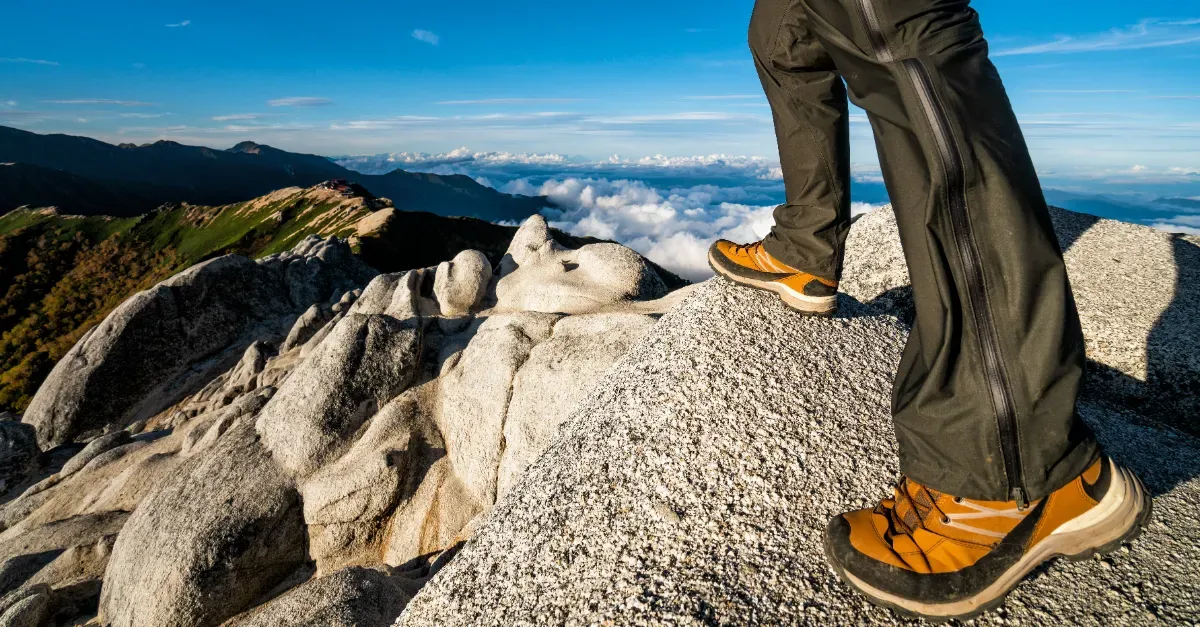
If you walk on rocky routes, choose shoes with a stiffer structure, able to protect your foot from accidental knocks against sharp stones. Here too, good grip is crucial, but it is equally important to choose shoes that are light enough not to weigh down your movements.
Choosing the right size and fit
It is essential to find the right shoe not only in terms of performance, but also of comfort. Always try shoes on with the socks you will wear on your hikes and make sure there is enough room for your toes. This will not only prevent discomfort, but also improve circulation, avoiding problems during long walks.
Looking after your hiking shoes
To make your hiking shoes last a long time, it is important to take care of them. Always air your shoes after each use, especially if they have got wet. Some materials can benefit from regular waterproofing treatments, especially if you use leather shoes or technical fabrics. Avoid washing your shoes in the washing machine: hand washing with specific products is the best way to keep them in good condition.
Which shoe should you choose?
There is no perfect shoe for every type of hike, but the perfect shoe for you will depend on the conditions you will face and on your personal needs. If you are an occasional hiker, you might opt for less technical shoes, but if you often find yourself in difficult conditions, investing in specialist shoes will really make a difference. Stiffer shoes, perhaps winter ones, may be overkill for light summer hikes, just as a summer model may not live up to your expectations in winter.
In conclusion, taking the time to choose the right shoes carefully will allow you to enjoy every step of your journey, whether you are exploring green hills or tackling snowy peaks. With the right precautions, hiking becomes not only a rewarding experience, but also a safe and comfortable one.