Together with their trainer-handlers, Gas and Ira staged a moving morning exercise on a beach, that of Calambrone, which is particularly important for the goal of protecting the sea turtle. The Tuscan coast has been a nesting area for Caretta caretta for years: here in 2017 the volunteers of the Pisa branch found the first nest. In 2023 alone Tuscany hosted as many as 24 sea turtle nests (9 on the islands of the Archipelago, Elba and Giglio, 8 on the coastline between Pisa, Livorno, Piombino and Grosseto, and 7 on the Apuan-Versilian coast). At the start of the 2024 season, 3 nests have already been found (2 on Pianosa and 1 in the province of Grosseto).
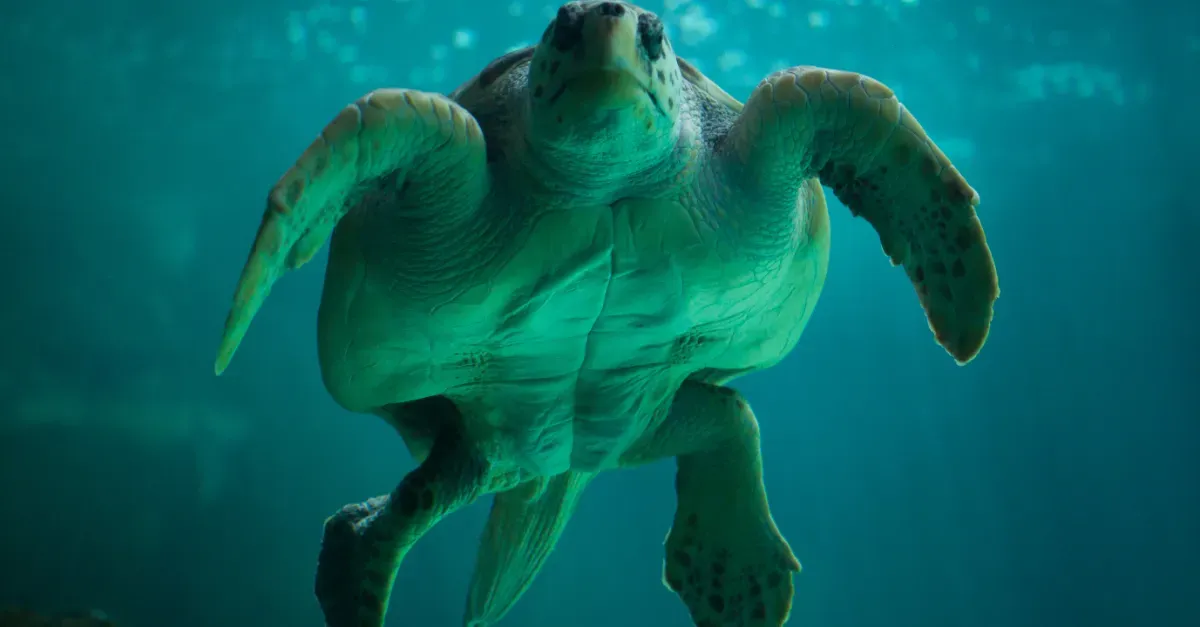
It is worth remembering that the loggerhead sea turtle (Caretta caretta) is the most widespread species in the Mediterranean (although other species are present, such as the green turtle and the even rarer leatherback turtle). In total there are seven species of sea turtle across the tropical and temperate waters of the world’s seas, and all are at risk of extinction, threatened by accidental capture, habitat degradation, human disturbance and climate change.
But Tartadogs like Gas and Ira will not stop at the Pisan coast. From the end of June in Tuscany, Lazio, Campania, Puglia and Calabria, the dog units, each made up of a handler and a specially trained dog, will work alongside expert personnel, authorised by the Ministry of the Environment, who are ready to step in and secure the nest once it has been found. Tartadogs can speed up and optimise nest detection where visual recognition is difficult for the human eye. Indeed, the eggs can be buried up to a metre deep under the sand: a fact that poses no obstacle to the formidable sense of smell of dogs.
The activity is part of the Life Turtlenest project, co-funded by the EU’s LIFE programme and coordinated by Legambiente, with Enci – Ente Nazionale Cinofilia Italiana, a project partner, playing a leading role.
Based on guidelines created by Legambiente and Enci themselves, it is a genuine one-of-a-kind in Europe: the only precedent is an experiment carried out in the United States, in Florida, with a single trained dog, as an article published in the scientific journal Plos One attests. The Italian Tartadogs team is therefore an absolute novelty: it is made up of four dogs, accompanied by their handlers, who were selected beforehand and have undergone specific, regular training for several months.
Naturally, Gas, Ira and their companions must work in conditions of wellbeing and without stress. The dog units will be active only in the very early hours of the day, when temperatures are still mild and suitable for searching. The working methods are also all based on play between handler and dog.
Everything suggests that they will enjoy it too, our priceless friends. As well as carrying out a fundamental ‘conservation’ activity, for which we will see more and more trained dog units in future. On top of all the other priceless and wonderful things they already do for us: asking for no other reward than a little care and genuine love.