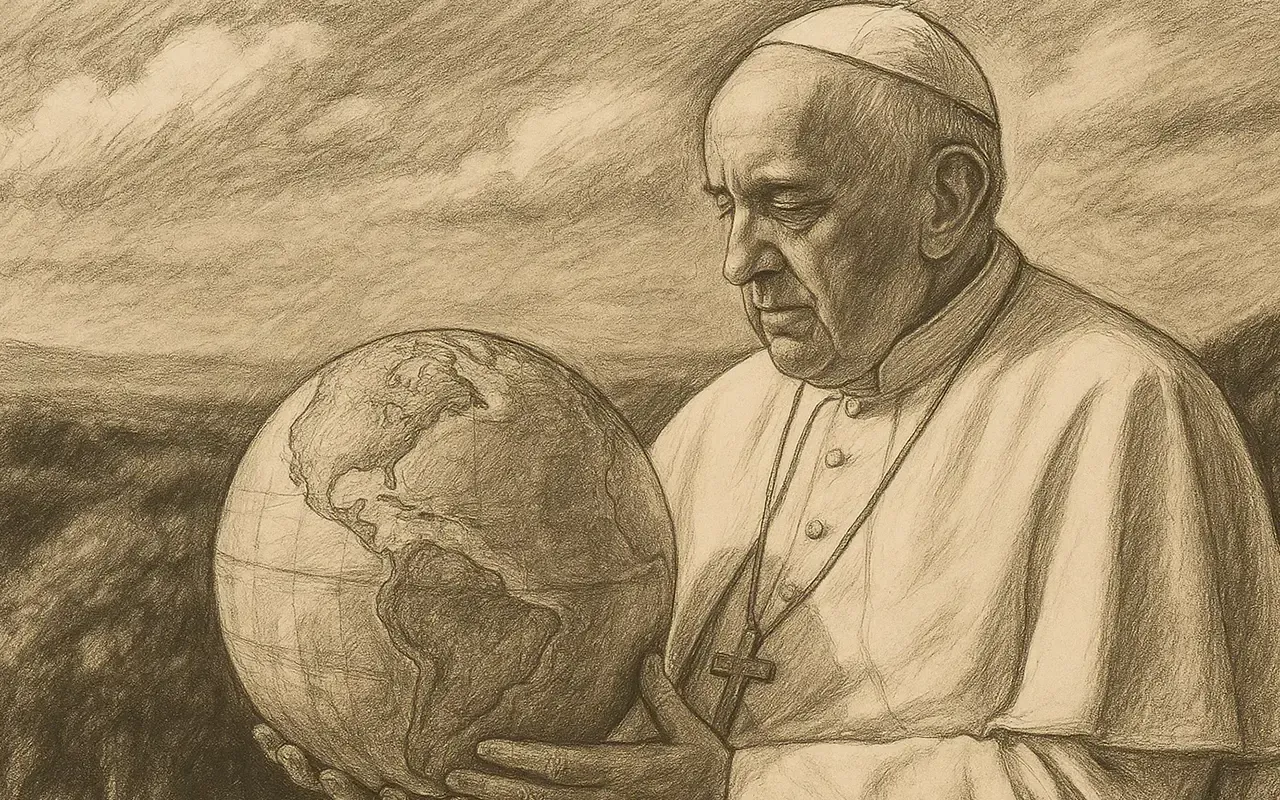
“We must show the majority of the world’s dispossessed that ecology and conservation will not work against their interests but will bring an improvement to their lives”, is Gandhi’s focus and concern. She asks:
“Will there be a fairer sharing of environmental costs and a greater international interest in the accelerated progress of the less developed world?”
Indira Gandhi
Speech to the plenary session of the United Nations Conference on the Human Environment, 1972.
It is truly an honour to speak at this Conference – in itself a new expression of the spirit that gave birth to the United Nations’ commitment to the present and future well-being of humanity. It aims not merely to secure limited agreements, but to establish peace and harmony in the coexistence of all races and with Nature. This meeting represents man’s serious effort to understand his own condition and to prolong his stay on this planet. A great deal of detailed preparatory work has gone into convening this Conference, guided by the dynamic personality of Mr Maurice Strong, Secretary-General.
I was fortunate to grow up with a sense of kinship with nature in all its manifestations. Birds, plants and stones were always my companions and, sleeping under the star-strewn sky, I became familiar with the names and movements of the constellations. But my deep interest in this, our “only earth”, was not for the Earth in itself, but as a fitting home for humanity.
One cannot be truly human and civilised unless one looks not only at all other human beings, but at the whole of creation with the eyes of a friend. All over India, the edicts carved on rocks and iron pillars remind us that 22 centuries ago the Emperor Ashoka defined the duty of a king as not only to protect his citizens and punish wrongdoers, but also to preserve animal life and the trees of the forest. Ashoka was the first, and perhaps until very recent times the only, monarch to forbid the killing of a great many species of animals for sport or for food, foreshadowing some of the commitments of this Conference. He went further: he repudiated the carnage caused by his military conquests and enjoined his successors to find “their only pleasure in the peace that comes from righteousness”.
Together with the rest of humanity, we in India, despite Ashoka, have been guilty of a reckless disregard for the sources of our sustenance. We share your concern at the rapid deterioration of flora and fauna. Some of our wildlife has been wiped out, and miles of forests with beautiful ancient trees, silent witnesses of history, have been destroyed. Although our industrial development is only beginning, and in its most difficult phase, we are adopting various measures to deal with incipient environmental imbalances. All the more so because of our concern for the human being, a species that is also in danger. In poverty the human being is threatened by malnutrition and disease, in weakness by war, in wealth by the pollution caused by his own prosperity.
It seems that, country after country, “progress” must become synonymous with an assault on nature. We who are part of nature and depend on it for every need constantly talk of “exploiting” nature. When the highest mountain in the world was climbed in 1953, Jawaharlal Nehru objected to the phrase “conquest of Everest” because he considered it arrogant. It is striking how this lack of regard and the constant need to prove one’s superiority must carry over into the way we treat our fellow human beings. I remember that Edward Thompson, a British writer and a good friend of India, once told Mr Gandhi that wildlife was fast disappearing. The Mahatma observed: “It is decreasing in the jungles but increasing in the cities”.
We are gathered here under the aegis of the United Nations. We should belong to the same family, sharing common traits and driven by the same fundamental desires, yet we inhabit a divided world. How could it be otherwise? There is still no recognition of the equality of the human being or respect for him as an individual. In matters of colour and race, religion and customs, society is governed by prejudice. Tensions arise from man’s aggressiveness and notions of superiority.
The so-called “big stick policy” prevails and is used not in the cause of loyalty or beauty, but to chase imaginary windmills – to assume the right to interfere in the affairs of others and to arrogate authority for actions that would not normally be permitted. Many of today’s advanced countries reached their present wealth through their domination of other races and countries and the exploitation of their natural resources. They gained an advantage through sheer ruthlessness, untouched by feelings of compassion or by general theories of freedom, equality or justice.
Agitations for the claims of citizens’ political rights and workers’ economic rights came only after considerable advances had been made. The wealth and labour of the colonised countries played no small part in the industrialisation and prosperity of the West. Now, if we strive to create a better life for our people, it happens in a very different context, since today, of course, we are watched “with an eagle eye” and cannot indulge in the old practices even for a useful end. We are bound by our own ideals. It is our obligation to respect the principles of workers’ rights and the norms enshrined in the charters of international organisations. Above all, we are accountable to the millions of politically aware citizens in our countries. All this makes progress more costly and more complicated.
On the one hand, the rich look with suspicion at our persistent poverty; on the other, they warn us against their own methods. We do not wish to impoverish the environment further, and yet we cannot forget for a moment the sad poverty of a large number of people. Are not poverty and need the greatest polluters? For example, unless we are able to provide employment and purchasing power for the daily necessities of the indigenous peoples and of those who live in or around our jungles, we cannot prevent them from combing the forest for food and other means of livelihood, from poaching and stripping the vegetation. When they themselves know they are deprived of everything, how can we call them to the duty of protecting animals?
How can we speak to those who live in villages and slums about keeping the oceans, rivers and air clean when their own lives are contaminated at the source? The environment cannot be improved in conditions of poverty. Nor can poverty be eradicated without the use of science and technology. Must there necessarily be a conflict between technology and a truly better world, or between an enlightened spirit and a higher standard of living? Foreigners sometimes ask us what seems to us a very strange question: whether progress in India does not mean a diminution of its spirituality or its values. Would spiritual quality be so superficial as to depend on the lack of material comforts? As a country we are neither more nor less spiritual than any other, but traditionally our people have set themselves the spirit of detachment and renunciation as a value to be respected. Historically, our great spiritual discoveries were made during periods of relative prosperity. The doctrines of detachment from possessions were developed not as a rationalisation of deprivation, but to prevent comfort and ease from dulling the senses. Spirituality means the enrichment of the spirit, the strengthening of one’s inner resources and the broadening of one’s range of experience.
It is the capacity to be still in the midst of activity and actively alive in moments of calm; to separate the essence from the circumstances; to accept joy and sorrow with equanimity. Perception and compassion are the marks of true spirituality.
I am reminded of what happened in one of our tribal areas. The loud demand of the elder tribal chiefs that their customs be left undisturbed found support among well-known anthropologists. Concerned that the majority should not smother the numerous ethnic, racial and cultural groups of our country, the Indian government largely accepted this advice. I was among those who wholly approved. However, a visit to a remote part of our north-eastern frontier brought me into contact with a different point of view: the protest of the younger elements who, while the rest of India was on the road to modernisation, felt like museum pieces. Could we not say the same to the rich nations?
In the last quarter of a century, we have been engaged in an undertaking without parallel in human history: providing for the basic needs of one sixth of humanity within the span of one or two generations. When we launched into this effort, our first planners faced more gaps to be filled than could have been imagined. There were not enough data and no book that could help them.
There was no experience of other countries to which one could refer, because their conditions – political, economic, social and technological – were entirely different. Planning in the innovative sense that we were experimenting with had never been used in the context of a mixed economy.
But we could not wait. The need to improve the conditions of our people was pressing. Planning and action; the improvement of data leading to better planning and better action; all this has been a continuous and overlapping process. Our industrialisation tended to follow the paths that the more advanced countries had trodden before. With the arrival of the 1960s, and particularly during the last five years, we have met an unexpected series of problems, some due to our own shortcomings, but many inherent in the process and in existing attitudes. There is a growing feeling in us that we should reorder our priorities and move away from the one-dimensional model, which has considered growth only from certain limited angles, which seems to have placed things higher than people and which has increased our wants rather than our enjoyment. We should take a more complete approach to life, centred on man not as a statistic, but as an individual with his many-sided personality. The solution of these problems cannot be confined to isolated phenomena of marginal importance, but must be an integral part of the unfolding of the very process of development.
The extreme forms in which questions of population or environmental pollution are posed obscure the overall view of political, economic and social situations. The Indian government is one of the few to have an officially promoted family planning programme, and it is making progress. We believe that family planning will create a healthier and more aware population. But we also know that no population control programme can be effective without education and without a tangible rise in the standard of living. Our programmes have been successful in urban or semi-urban areas. For the poorest, every child is a gain and a help. We are trying out new approaches, and the family planning programme is being brought alongside those of maternity and child welfare, nutrition and development in general.
It is an oversimplification to blame all the world’s problems on population growth. Countries with only a small fraction of the world’s population consume most of the world’s output of minerals, fossil fuels and so on. So we see that when it comes to the depletion of natural resources and environmental pollution, the addition of one inhabitant in a well-off country, with his standard of living, is equivalent to the addition of many Asians, Africans or Latin Americans at their present material level.
The inherent conflict is not between conservation and development, but between the environment and the reckless exploitation of man and the earth in the name of efficiency. Historians tell us that the modern age began with the individual’s will to freedom. And the individual came to believe that he had rights without corresponding duties. The man who got on in his career was the one who aroused admiration. No questions were asked about the methods employed or the price others had to pay. Industrial civilisation has promoted the concept of the efficient man, the one whose energies are concentrated on producing more in a given unit of time and from a given unit of labour. Groups or individuals that are less competitive and, by this criterion, less efficient are regarded as inferior races: for example the older civilisations, black and mulatto peoples, women and certain professions.
Obsolescence is built into production, and efficiency rests on creating goods that are not really needed and that cannot be disposed of once discarded. What is the price now for such efficiency, and is recklessness not a more fitting term for such behaviour? All the “isms” of the modern age – even those that in theory repudiate the principle of private profit – assume that man’s cardinal interest is acquisition. The profit motive, individual or collective, seems to overshadow everything else. This prevailing preoccupation with oneself and with the present is the fundamental cause of the ecological crisis. Pollution is not a technical problem. The fault lies not in science and technology as such, but in the sense of values of the contemporary world, which ignores the rights of others and forgets the long-term perspective.
Some insinuate the doubt that the discussion of ecology may be aimed at diverting attention from the problems of war and poverty. We must show the majority of the world’s dispossessed that ecology and conservation will not go against their interests but will bring an improvement in their lives. To deny them technology would deprive them of vast resources of energy and knowledge. This is no longer feasible, and cannot be accepted.
The environmental problems of developing countries are not the side effect of excessive industrialisation, but reflect the inadequacy of development. Rich countries may regard development as the cause of environmental destruction, but for us it is one of the main means of improving the environment in which to live, or of providing food, water, sanitation and a home; of making deserts green and mountains habitable. The research and perseverance of the people who have devoted themselves to this have given us a vision that will probably play an important role in shaping our future plans. We see that however much man craves material goods, they can never give him full satisfaction. So the higher standard of living must be achieved without alienating people from their human heritage and without stripping nature of its beauty, freshness and purity, so essential to our lives.
The most urgent and fundamental question is that of peace. Nothing is as futile as modern war. Nothing destroys so instantly, so completely, as the diabolical weapons that not only kill, but maim and deform the living and those yet to be born; that poison the earth, leaving long trails of ugliness, sterility and hopeless desolation. What ecological projects can survive a war? The Swedish Prime Minister, Olof Palme, has already drawn the Conference’s attention to this in strong words.
It is clear that the environmental crisis now facing the world will profoundly change the future destiny of our planet. None of us, whatever our status, strength or condition, can remain unscathed. The process of change challenges international politics. Will the growing awareness of “one earth” and “one environment” lead us to the concept of “one humanity”? Will there be a fairer sharing of environmental costs and a greater international interest in the accelerated progress of the less developed world? Or will it remain confined to a narrow concern, founded on exclusive self-sufficiency?
The first attempts to reduce economic and technological disparities did not succeed because aid policies were made to serve power equations. We hope that the renewed emphasis on self-reliance, brought about by the changed aid situation, will also promote the search for new criteria of human satisfaction. In the meantime, ecological crises should not add burdens to the weaker nations by introducing new considerations into the trade policies of the rich nations. It would be ironic if the fight against pollution were converted into another business, from which a few firms, corporations or nations would profit at the expense of many. Here is a branch of experimentation and research in which scientists of all nations should take an interest. They should ensure that their discoveries are available to all nations, without patent restrictions. I am glad that the Conference has reflected on this aspect of the problem.
Life is one and the world is one, and all these questions are interconnected. The population explosion; poverty; ignorance and disease; the pollution of our environment; the accumulation of nuclear weapons; biological and chemical weapons and agents of destruction: all are part of a vicious circle. Each of these problems is important and urgent, but tackling them one by one would be wasted effort.
(…)
On a previous occasion I spoke of the unfinished revolution in our countries; I am now convinced that it can be brought to its culmination when it is accompanied by a revolution in social thinking. In 1968, at the 14th General Conference of UNESCO, the Indian delegation, together with others, proposed a new and important programme entitled “a project for life”. This is essential in order to grasp all the implications of technical progress and its impact on different sectors and groups. We do not want to turn the clock back or resign ourselves to a simplistic state of nature. We want new directions in the wiser use of the knowledge and tools with which science has endowed us. And this cannot be just a surge, but a continuous search for cause and effect and an unceasing effort to match technology with higher levels of thought. We must be concerned not only with the kind of world we want, but also with the kind of man who should inhabit it. We certainly do not wish for a society divided into those who condition and those who are conditioned. We want thinking people capable of spontaneous, self-directed activity, people who are interested and interesting and who are full of compassion and concern for others.
It will not be easy for large societies to change their way of life. They cannot be forced to do so, nor is government action enough. People can be motivated and urged to take part in better alternatives. In my experience, people who are hostile to nature are cynical towards humanity and ill at ease with themselves. Modern man must re-establish an unbroken link with nature and with life. He must learn again to invoke the energy of growing things and to recognise, as the ancients in India did centuries ago, that one can take from the Earth and the atmosphere only as much as one puts back into them. In their hymn to the Earth, the sages of the Atharva Veda sang, and I quote literally: “What of you I dig out, let that grow quickly; let me not hit your vital organs or your heart.” Thus man himself can be vital, of good will and aware of his responsibility.