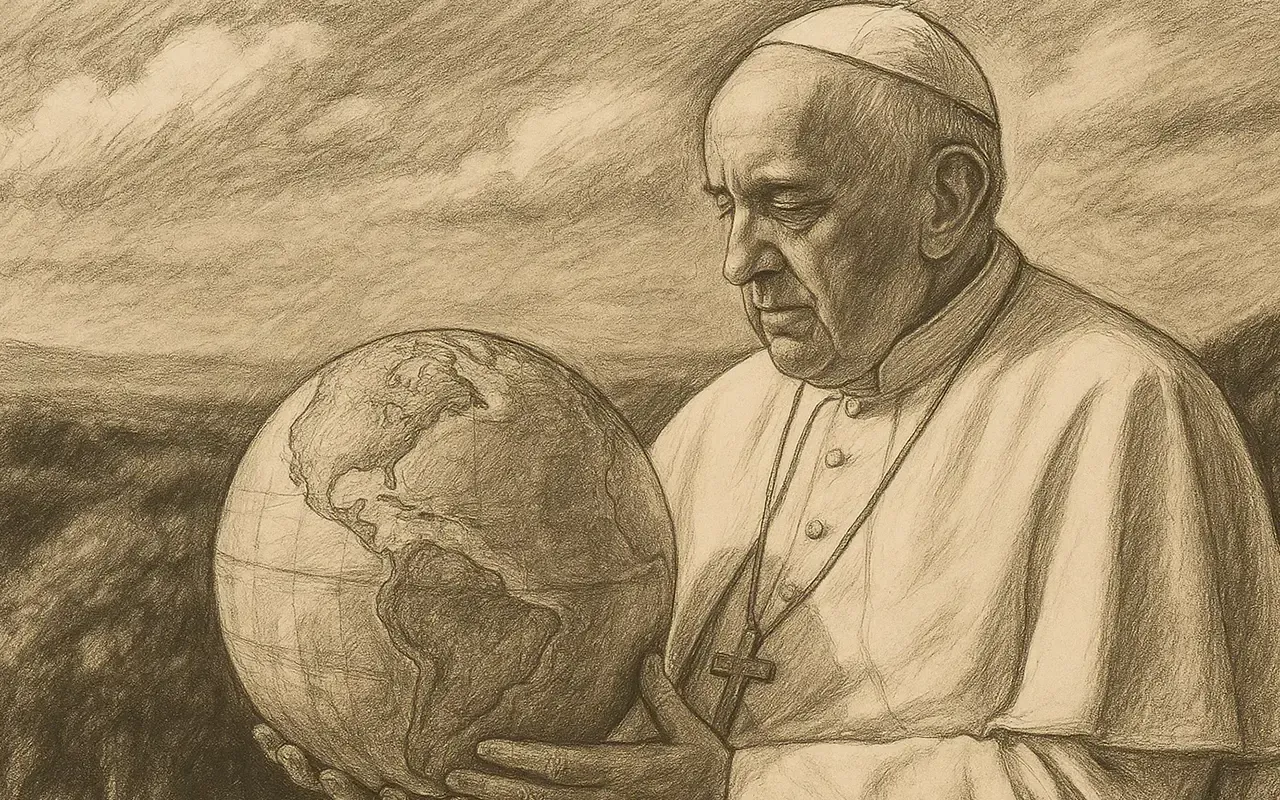
Wars, climate and technology: the three shadows over humanity
Over recent decades, the Doomsday Clock has counted out our approach to the irreparable. In 1991, with the end of the Cold War and the signing of the START I disarmament treaty, the world seemed to have bought itself time: 17 minutes to midnight, the furthest point ever recorded. But since then the situation has deteriorated. In 2015 the clock showed 3 minutes, in 2017 2 and a half minutes, in 2020 just 100 seconds. In 2023 and 2024 we fell to 90 seconds. And today, one more step towards the void.
The lowering of the hands is due to a combination of explosive factors:
1. Nuclear risk
The war in Ukraine has entered its third year and remains a loose cannon that could escalate into a nuclear conflict at any moment. The Bulletin stresses that a single miscalculation or rash decision is enough for the situation to spiral. No less disturbing is the risk that the conflict in the Middle East could widen and involve nuclear powers. Meanwhile, countries with nuclear arsenals are investing hundreds of billions of dollars to upgrade their warheads, while new states consider acquiring atomic weapons, threatening non-proliferation efforts.
2. Climate crisis
2024 set new negative records: melting ice, rising sea levels, extreme weather events. Greenhouse gas emissions continue to grow, while political responses worldwide are insufficient. Despite the increase in renewable energy, governments are not investing enough to slow global warming. The effect of elections in the main industrialised countries is alarming: the environment has been pushed into the background, as if it were a problem that could be put off.
3. Technologies out of control
Artificial intelligence and autonomous weapons are increasingly integrated into conflicts, with no clear rules on who makes the decisions, including lethal ones. The space arms race, with suspected nuclear tests in orbit, increases the risk of global escalation. In the meantime, high-risk biological research laboratories are proliferating without adequate controls, raising the likelihood of a new pandemic. The use of AI to develop biological weapons is already a concrete possibility.
To all this is added an aggravating factor: the uncontrolled spread of disinformation and fake news. The Bulletin condemns the way AI is used to manipulate public opinion, sabotage elections and spread conspiracy theories, eroding the ability of democracies to face global challenges.
Blindly continuing down this road is sheer madness.
The Bulletin issues a direct appeal: continuing on this path without radical change is sheer madness. The United States, China and Russia are the three main players and have a historic responsibility to pull the world back from the precipice. Their leaders must immediately begin serious negotiations on global threats, setting ideological differences aside. The whole international community must tackle the emergencies with concrete and immediate action, because every second lost brings us closer to catastrophe.
The Doomsday Clock metaphor shows, in a way everyone can understand, that time is not infinite. Climate change is now a tangible reality, with extreme events striking every corner of the planet. But to this threat, as the Bulletin stresses, are added dangers that seemed relegated to the past or to some disaster film: the risk of nuclear war, new epidemics and technologies out of control. All of this forces us to consider a bitter possibility: that climate change, however devastating, may not be the ultimate cause of our extinction, simply because other emergencies could overwhelm us first.
SOURCES AND FURTHER READING
Bulletin