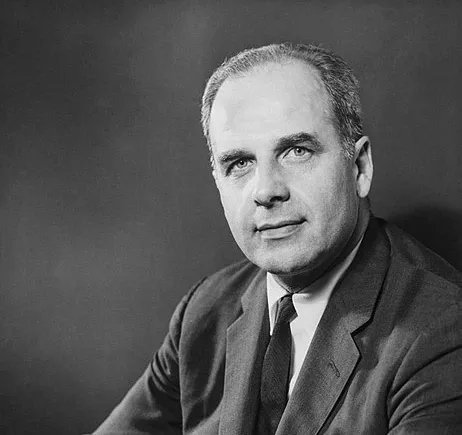
Nelson’s efforts found support among American public opinion also because of the environmental disaster of January 1969, caused by the explosion of a Union Oil platform off the coast of Santa Barbara, California, when over 10 million litres of oil ended up polluting the sea and the beaches along a large stretch of the coast. Thanks to Nelson and other activists such as the lawyer Marc McGinnes and Senator Pete McCloskey, the first environmental protection law was passed, the legal premise for Earth Day. The first one was celebrated on 22 April 1970.
Besides being an environmentalist, Nelson was a staunch defender of consumer rights, a strong supporter of civil rights and one of the first outspoken opponents of the Vietnam War. In 1969 he was one of four senators to introduce a bill to establish the Wisconsin Islands Wilderness.
In his political career he also fought on behalf of small businesses. As chairman of the Senate Select Committee on Small Business, he successfully led efforts to authorise the first modern White House Conference on Small Business. In 1973, Nelson was one of three senators who opposed the nomination of Gerald Ford as vice president.
In September 1995 he received the Presidential Medal of Freedom in recognition of his environmental work.
Nelson’s thought and action were always centred on the idea that economic development should not take precedence over the protection of the environment. In his most important book, Beyond Earth Day: Fulfilling the Promise, published in 2002, he stated: “The economy is a wholly owned subsidiary of the environment, not the other way around”.
Nelson died of cardiovascular failure at the age of 89 on 3 July 2005.
Named after him are the Gaylord Nelson Institute for Environmental Studies (or Nelson Institute) at the University of Wisconsin-Madison, the Gaylord Nelson Wilderness in the Apostle Islands National Lakeshore, which comprises over 80% of the park’s area, and Nelson State Park near Waunakee, Wisconsin.
Gaylord Nelson – Let us build bridges between man and nature
Speech delivered in Denver, Colorado, on the occasion of the first Earth Day, 22 April 1970.
I congratulate you, who by your presence here today show your concern and your commitment to an issue that is more than a simple question of survival. How we can survive: that is the crucial question.
Earth Day is a dramatic proof of a new and broad national concern that cuts across generations and ideologies. It could be the symbol of a new communication between young and old about our values and priorities.
Let us take advantage of this new broad agreement. Let us not let it fall by the wayside. Let us put together a new national coalition, whose aim is to place Gross National Quality on a par with Gross National Product.
Let us campaign nationwide to elect an “Ecology Congress” as the 92nd Congress: a Congress that will build bridges between our citizens and between man and the systems of nature, instead of building more highways and dams and new weapons systems that will intensify the arms race.
Earth Day can – and must – give new urgency and new support to the solution of the problems that still threaten to tear apart the fabric of this society… the problems of racism, war, poverty, today’s institutions.
Ecology is a great science, a great concept, not a loophole. It deals with the whole ecosystem, not just with how we dispose of our cans, bottles and sewage.
The environment is America as a whole, with its problems. It is the rats in the ghetto. It is a hungry child in a land of plenty. It is housing that is unworthy of the name; neighbourhoods unfit to live in.
The environment is a problem that is perpetuated by spending billions a year on the Vietnam War, instead of on our decaying, overcrowded, congested, polluted urban areas that are inhuman traps for millions of people.
If our cities do not work, America will not work. And the battle to save them and to end the division that still splits this country will not be won in Vietnam.
Winning the environmental war is a much harder challenge than winning any other war in human history. It will take 20 to 25 billion dollars more a year in federal money than we are spending now.
Our goal is not just an environment of clean air and water and beautiful landscapes. The goal is an environment of decency, quality and mutual respect for all human beings and all living creatures.
Our goal is a new American ethic that sets new standards for progress, putting human dignity and well-being at the centre rather than an endless parade of technology producing more gadgets, more waste, more pollution.
Are we able to meet the challenge? YES. We have the technology and the resources.
Are we willing? That is a question still unanswered.
Establishing that quality has equal value with quantity will require new national policies that will frankly interfere with what many have considered their right to use and abuse the air, the water, the land, simply because it is what we have always done.
(Text courtesy of the Wisconsin Historical Society)
image: public domain from wikipedia