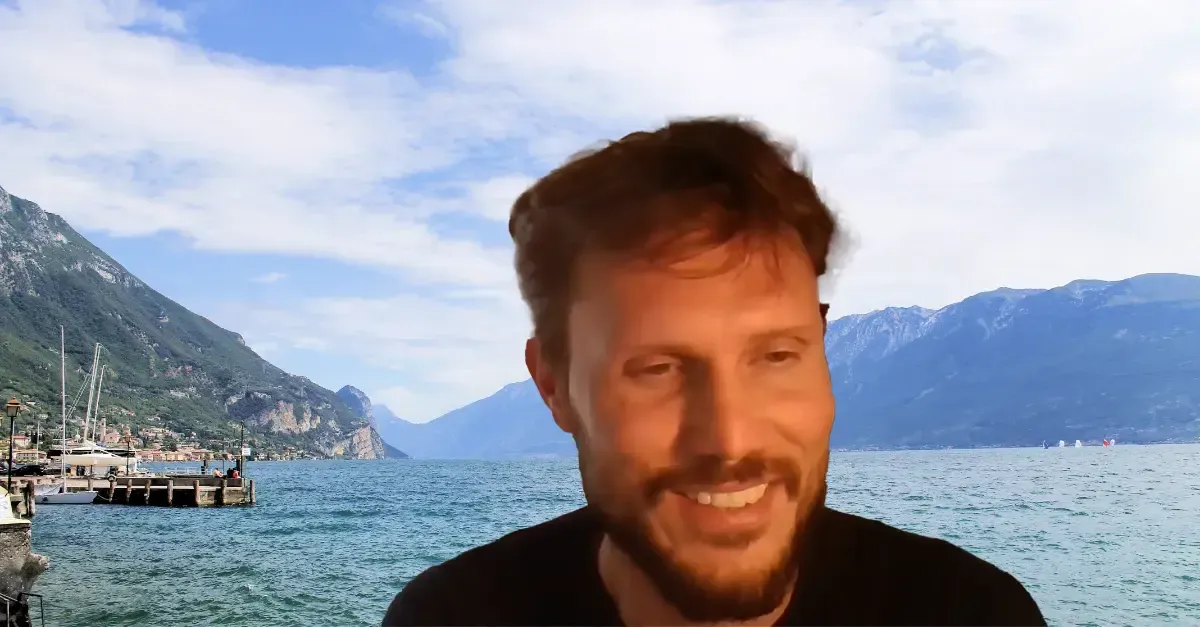
In fact, Mascher questions the management of the project, not only because of the economic oversizing but also because of the cultural and safety implications. The cycle path, built in a geologically fragile area, entails significant risks of landslides, as well as a visual impact on the natural landscape of the lake, which is particularly dear to Mascher and the local inhabitants.
The environmentalist, writer and educator goes on to explain how the project, although intended to encourage cycling tourism, might not adequately serve the needs of the local community. He also raises the question of alternatives. Instead of focusing on grandiose infrastructure, he suggests investing in more practical and urgent improvements, such as sustainable transport systems and essential infrastructure, reflecting the need for a more balanced and considered approach to sustainable development and land use.
A short extract from the interview:
Alessandro Di Nuzzo: Good morning to Mattia Mascher. Thank you for being here; yours is a familiar face to regular visitors of Green to Meet.
Mattia Mascher: Thank you, Alessandro, for having me here at Green to Meet.
Alessandro Di Nuzzo: Some time ago you presented a successful book. Can you tell us more about your latest works, ‘2050, Ritorno al Futuro’ and ‘Nonni con Giudizio’?
Mattia Mascher: Both are the fruit of my commitment in the fields of education and the environment. As an educator and activist, I work a great deal with schools and educational institutions. These books reflect my views on environmental prospects and on our future.
Alessandro Di Nuzzo: Today we would like to talk about an important environmental issue, the so-called Garda cycle path. There is a certain opposition to this project, even though it seems to promote sustainable cycling tourism. Can you explain the reasons for this opposition?
The Garda cycle path is a project that has been under discussion for years and now seems close to the execution phase. Although the idea of a cycle path along Lake Garda seems ideal to environmentalists, it has sparked controversy. Organisations such as Italia Nostra and many environmental activists, myself included, are worried for various reasons. What are these reasons?
Mattia Mascher: First, the cost of the project has increased enormously, from an initial estimate of 64 million euros to almost one billion two hundred million. Moreover, the cycle path would require extensive maintenance work because of the geological fragility of the area, with overhanging rock faces that often collapse. This presents a high hydrogeological risk and, of course, a worrying financial burden.
Alessandro Di Nuzzo: So there are also concerns relating to the landscape?
Mattia Mascher: Exactly. The construction could drastically alter the landscape of Lake Garda, one of the most loved and picturesque. The presence of cantilevered structures with steel pylons is seen as a visual insult, a real eyesore. Just last week there was a large demonstration against the cycle path. We are calling for a rethink of the project, especially considering that there are other priorities for the funds, such as improving local infrastructure and renewing the water treatment systems.
Alessandro Di Nuzzo: So, what alternatives would you suggest?
Mattia Mascher: The alternatives could include improving existing infrastructure for residents, such as safe routes for getting between home, work and school, or investment in public transport such as the tram. I also believe we should focus on a more sustainable vision, one that respects the natural landscape, rather than drastically transforming it for tourism.
Alessandro Di Nuzzo: Thank you, Mattia, for your reflections and for sharing your experience and your ideas with us today.
Watch the full video interview to find out all the details.
Credit
background image [faber1893] © 123RF.com].