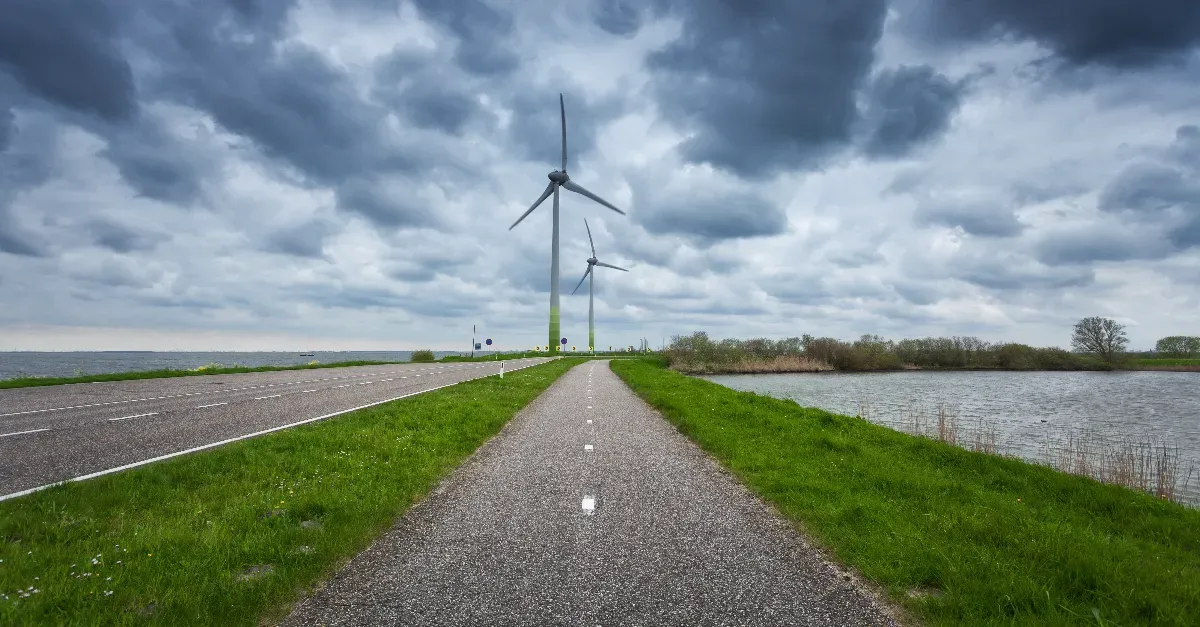
A sustainable motorway? You might think it is a misprint. Or a blatant contradiction. But the possibility of building a ‘sustainable’ motorway really does exist. And it will be Italian. You might think it is a misprint. Or a blatant contradiction. But the possibility of building a ‘sustainable’ motorway really does exist. And it will be Italian.
Two hundred and fifty kilometres of the A4 Turin-Milan will be resurfaced with graphene, recycled hard plastics (from items such as toys, fruit crates and baskets) and 70% recycled asphalt.
According to the operator of the A4, Astm (a group that is among the world’s leading players in the infrastructure sector: the world’s second-largest operator of motorway networks under concession and a leader in the construction of major works and in technology applied to mobility), this project will cut energy consumption by around 90 million kWh (-30%), equal to the annual needs of 30,000 households. CO2 equivalent emissions will fall by 18,350 tonnes, corresponding to the amount absorbed by 115,000 trees. By using hard plastics (1.5 million kilograms), around 23 million kilograms of bitumen and 480 million kilograms of raw materials extracted from quarries will also be saved (-40% of non-renewable materials).
Europe’s first sustainable motorway is Italian: 250 km of the A4 Turin-Milan
You might think it is a misprint. Or a blatant contradiction. But the possibility of building a ‘sustainable’ motorway really does exist. And it will be Italian.
Show more Show less
Umberto Tosoni, chief executive of Astm, said: “We will make the Turin-Milan, the artery linking the two main economic and industrial hubs of north-west Italy, the most modern, most technological and greenest motorway in Europe.”
The technology for the resurfacing is called Gipave and it is Italian. More precisely, it comes from Iterchimica, a company from the Bergamo area present in 90 countries, which developed it together with G. Eco (a company of the A2a group), the University of Milano-Bicocca and Directa Plus, a British supplier of graphene-based products.
“We will be able to cut emissions by up to 38.5% compared with traditional maintenance technologies,” says Federica Giannattasio, chief executive of Iterchimica. Gipave will also ensure greater strength and durability of the road surface, up to 75% more than traditional ones.
The ‘sustainable motorways’ project is part of the Astm group’s Smart Roads plan. In the coming years, Smart Roads will mean new infrastructure-to-vehicle communication systems; the introduction of smart gates with a free flow toll system, that is, without toll booths; new anti-fog systems; wrong-way driving and dangerous goods detection systems; hydrogen filling stations and new electric charging stations.
The other companies involved in the project are part of the Astm group. Itinera, which works on the construction of major infrastructure, will handle the resurfacing. Sina, an engineering firm, designed the production recipe and carried out the checks on the asphalts. Bitux, a bitumen producer, will supply the mixes for the eco-paving.Source: Forbes.it
Ask the article
Beta
It answers only with what is written above and in the related articles of Greentomeet. If a piece of information isn't there, it tells you so.
Hello. I can summarise this article, explain a passage or tell you what Greentomeet has already published on the same topic.
Continue reading
Plans for the environment →
Machine translation