In March 2024, another 23 cities received the EU Mission Label.
The Climate City Contract is a strategic plan that a municipal administration adopts in order to become climate neutral. All sectors are involved, but in particular energy, construction, waste management and transport, together with the related investment plans.
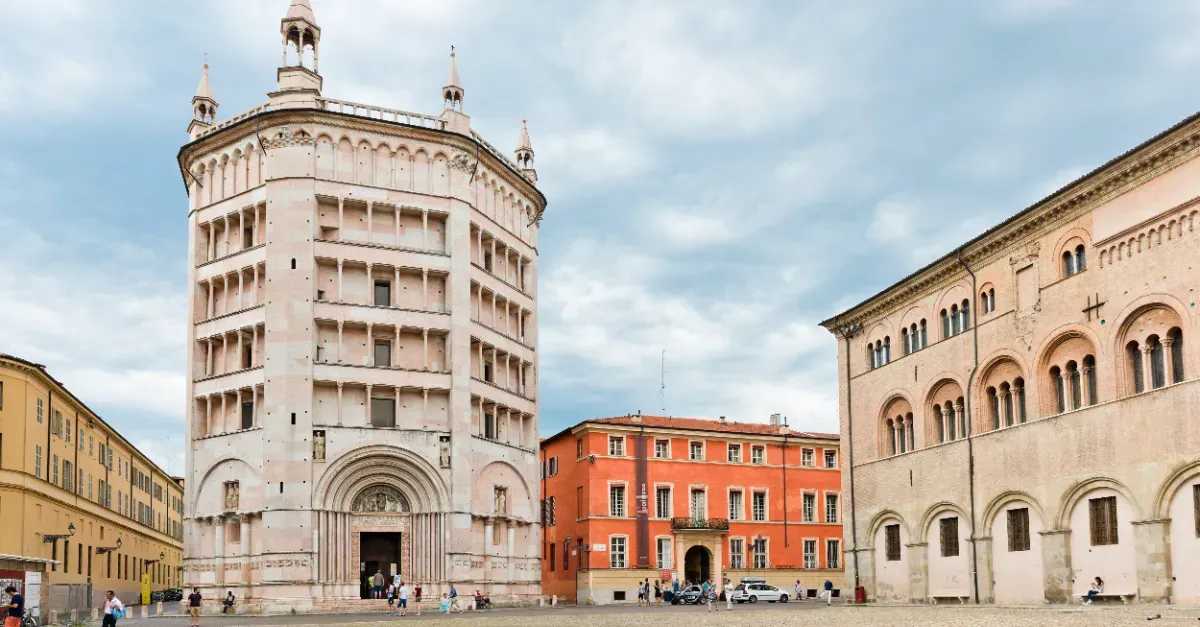
In Parma’s case, 130 actions were identified, divided into 5 key sectors, along with 10 actions relating to governance and raising citizens’ awareness.
Parma’s plan also clearly sets out the investments needed to achieve the goal of climate neutrality by 2030. As the city council’s leadership stresses, private investment is, and will be, fundamental to the implementation process. So far, the council says, 46 companies and organisations active in the area have signed the pact; the aim “is to increase this number significantly in the coming months”.
In terms of concrete strategies for action, Parma’s Climate City Contract identifies the following as the most important: the electrification of the area, green planning, sustainable mobility, the circularity of resources, food policy, urban reforestation, and education and training.
The targets to be reached by 2030 are an 85% overall reduction in emissions, plus a “further 15% reduction to be achieved through offsetting measures or new initiatives that could raise the already ambitious sustainability goals set out in the plan”.
The administration of the Emilian city, in the mayor’s own words, speaks of “great honour and satisfaction” at a recognition that positions it as a model for other European cities, a sort of “green investiture” for the city.
“Almost two years of discussion, planning and integration between public and private sectors, working as a system,” added Gianluca Borghi, Councillor for Environmental and Energy Sustainability and Mobility. “From now on, and for the next 6 years, we will be even more determined in promoting renewable energy production, saving energy, and making buildings and production cycles more efficient. Not because Europe asks us to, but because we want to, together with Europe, taking on the responsibility of choosing, in order to tackle climate change and have a better future for everyone.”
As for Florence, the strategic plan starts from the recognition of certain critical issues and peculiarities of the city. These include its extremely significant historic building stock, which places objective limits on interventions and leads to high costs; the significant presence of tourists and commuters who affect the area; its limited powers over services shared with other municipalities (water and waste management, public transport…); and finally an administrative structure that is complex and bound by national procedures.
In the case of the Tuscan capital, the point of reference is the Smart City Plan, which has long since identified the crucial sectors: planning, public administration efficiency, service efficiency, mobility, ICT (Information and Communication Technology), communication, prosperity and financial instruments.
The target set is “Net Zero” by 2040.
According to Florence’s Councillor for the Environment and Ecological Transition, Andrea Giorgio, the challenge can be won “by not simply imposing decisions from above”. On the contrary, it is necessary “to experiment for the first time in the city with a transformation that is also built from the bottom up, involving citizens, starting with young people who are paying for the faults of those who came before them, and the most vulnerable”.
From Palazzo Vecchio, he assures us, “we are launching a pact in which everyone takes a share of responsibility for a collective change that is necessary and can no longer be postponed, towards an ecological transition that is desirable and fair”