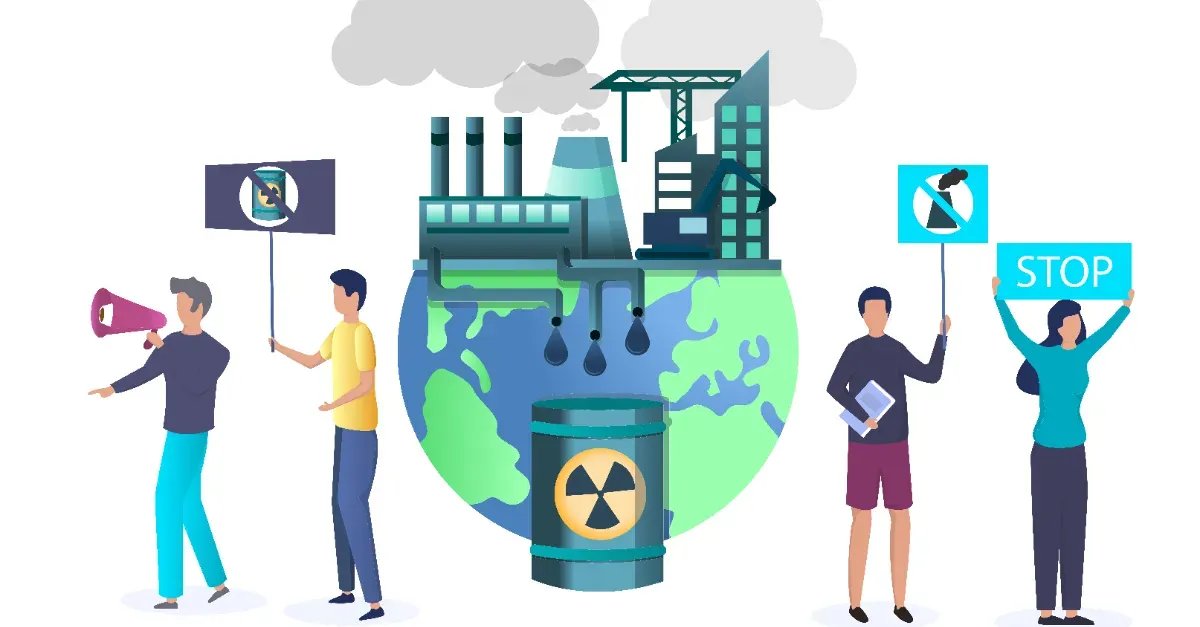
An overview of each aspect will clarify the concept better:
Environmental: this aspect considers the company’s impact on the environment. It includes factors such as greenhouse gas emissions, energy consumption, waste management, the conservation of natural resources, and the impact on climate change.
Social: this criterion assesses how the company manages its relationships with employees, suppliers, customers and the communities in which it operates. Aspects such as working conditions, diversity and inclusion, human rights, and the impact on local communities are considered here.
Governance: this factor concerns corporate leadership, management practices, remuneration, audits, internal controls, and shareholder rights. Essentially, it assesses a company’s transparency, ethics and governance structure.
Companies with high ESG ratings are often seen as more sustainable and responsible in the long term, which can attract investors who are aware of the importance of sustainability or make access to credit easier. In addition, a good ESG score can reduce reputational and regulatory risks and can be indicative of sound, forward-looking business management.
But which companies are affected by this assessment?
Listed companies: for listed companies, the ESG rating is often a critical part of the assessments made by investors and analysts. These assessments can influence investment decisions and are increasingly important for institutional investors and for pension or sovereign funds.
Start-ups and growing companies: start-ups and companies in a growth phase are also increasingly subject to ESG assessments, as investors seek to determine the long-term sustainability potential and social responsibility of these businesses.
Companies operating in sectors with a high environmental or social impact: sectors such as energy, mining, manufacturing and agriculture, which have a major environmental impact, are particularly subject to ESG assessments. The same applies to sectors with significant social implications, such as textiles or electronics, where working conditions and workers’ rights are key issues.
Companies of any size engaged in international activities: companies operating internationally may be subject to particularly rigorous ESG standards, as they have to navigate a variety of regulations and cultural expectations.
Companies involved in partnerships or supply chains of any size, including SMEs: companies that are part of supply chains must take care to maintain a good ESG rating in order to be more competitive as suppliers to large companies. For the latter, it is increasingly important to choose carefully whom they do business with.
If a small supplier adopts unethical or unsustainable practices, this can reflect badly on the reputation of the client company, particularly if consumers or the media become aware of those practices. Large client companies often have ESG policies requiring compliance with certain standards along the entire supply chain.
Working with suppliers that do not adhere to these standards can compromise the client company’s own compliance. Investors and other stakeholders put pressure on large companies to adopt responsible and sustainable sourcing practices, making collaboration with micro-enterprises or SMEs that meet ESG standards not only a choice but a necessity.
SMEs that are not part of supply chains, that is, of systems linking economic or technological entities for the production and distribution of a product or service, also cannot ignore the importance of a good ESG rating, just like large companies. Looking to the near future, the ESG rating could also influence the credit rating.
As entrepreneurs well know, a low rating can make access to credit more difficult. Modern companies, including SMEs, increasingly have to balance the interests of the various stakeholders to ensure not only sustainability for the benefit of the planet, but also the success of their own business, as the saying goes: ‘private vices, public virtues’.