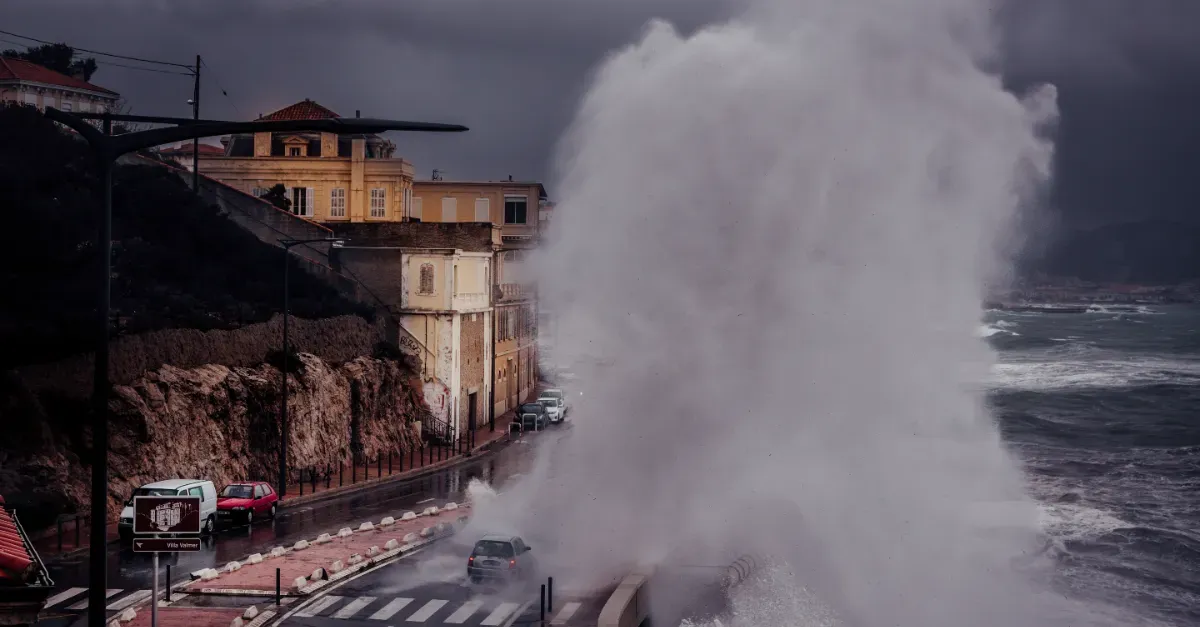
And this changes our priorities and creates new ones. Civil Protection advises people to know their local emergency plans and to identify safe areas in the event of evacuation, as well as those where one must not go. These are essential measures that, in the past, there was no need to know.
For their part, local authorities must act so that the territory acquires more resilient infrastructure. It is necessary to invest in the maintenance of watercourses, restore wetlands and promote controlled expansion projects for rivers, all activities that significantly reduce the impact of flooding.
Plenty of water and mud, but at the same time very little water. In Italy, the drought situation is worrying: water scarcity is turning into a structural crisis. According to ENEA, tackling this problem requires a mix of individual and collective action.
Once again, it is the authorities that should take care of maintaining water systems to avoid waste. Individuals can collect rainwater and farmers can adopt more efficient water-saving technologies. This attitude, too, requires change.
Action is also needed beyond our borders. At the geopolitical level, international cooperation plays a crucial role. As emerged at the recent COP summits, securing funding for the ecological transition in the countries most affected by climate change is a priority. However, delays remain in implementing global agreements.
Environmental resilience
Rethinking the concept of environmental resilience is the key to facing these new and unforeseen challenges. Resilience does not mean merely adapting to the impacts of climate change: it is an invitation to profoundly rethink our relationship with the environment.
In a global geopolitical context in which some countries, such as the United States under the Trump administration, seem willing to backtrack on climate commitments, Europe must consolidate its leading role. As António Guterres, Secretary-General of the United Nations, has stated, “the ecological transition is the only viable path”.
Resilience is not only about containing damage in an emergency, but about building a more aware and prepared society, which requires constant education from schools and the media.
We must not forget that, in every emergency, the weakest people are those who will suffer the difficulties most; for this reason, as highlighted by the University of Bologna, strengthening the most vulnerable communities is not only an act of social justice, but an effective strategy for mitigating the inequalities amplified by climate change.
What awaits us is not a future already decided, but a range of possibilities still open, where every choice can make a difference. Rethinking the way we live, work and produce energy is now an unavoidable duty in order to guarantee a future for those who do not yet have a voice in the political and electoral world, or who, even if they have one, carry no weight: the younger generations.
The responsibility towards the new generations rests on the shoulders of voters, fathers or grandfathers, and of the current ruling classes, who still grip the wheel of the decision-making machine firmly.
In 1992, at just twelve years old, the young Severn Cullis-Suzuki, with her speech at the Earth Summit in Rio de Janeiro, forced the world to stop and reflect, with the force of a sincere appeal that stirred consciences. Her question, addressed to the older generations, was: ‘Are we on your list of priorities?’
Over 30 years have passed since then, and it seems that the decisions taken have not been far-sighted. The answer to this question will therefore be written in the choices we make today. We can no longer ignore the moral and existential weight that accompanies our decisions.