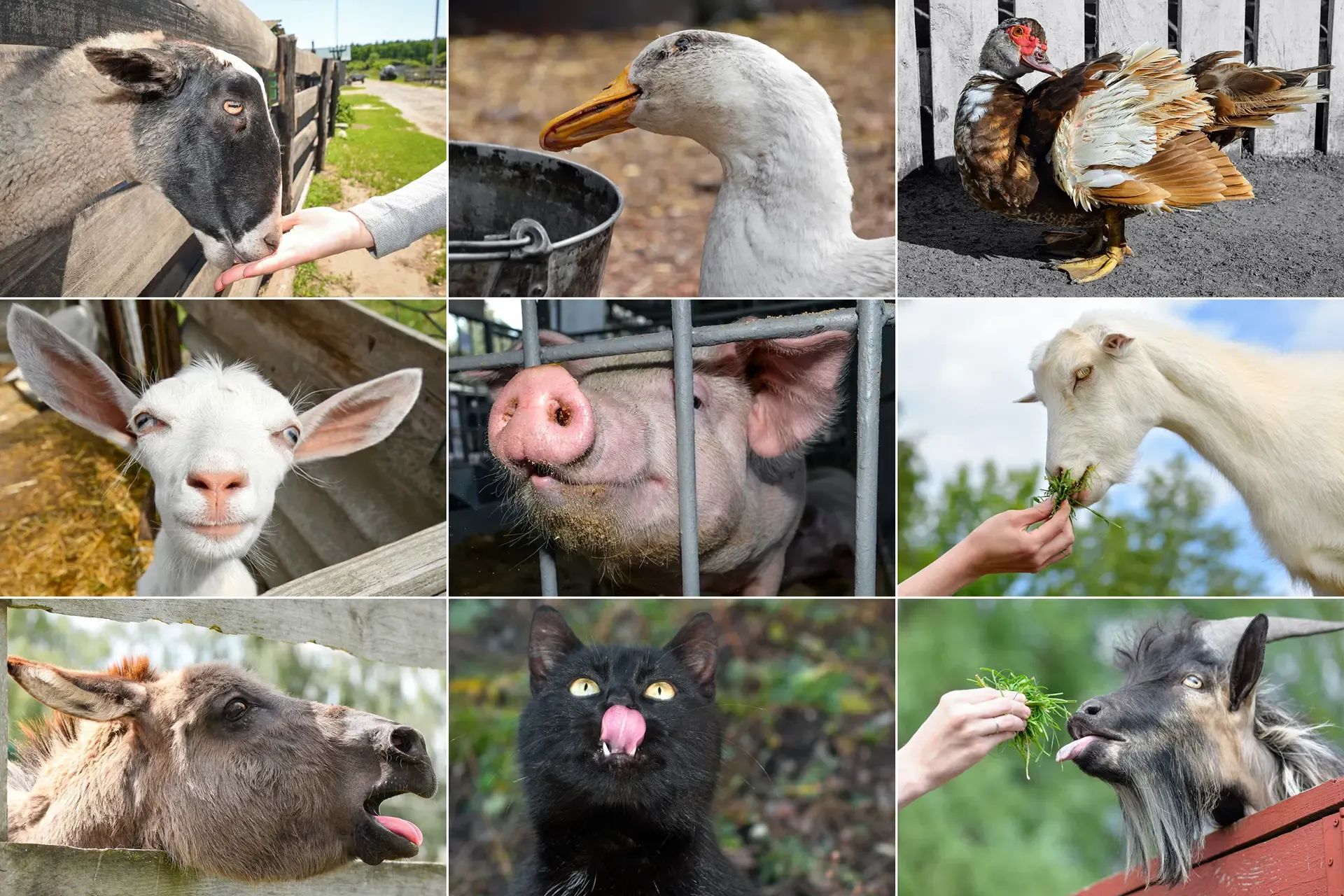
Cattle, pigs and small ruminants are capable of learning, of discriminating between conspecifics and human handlers, and of responding to subtle behavioural cues.
This implies beyond reasonable doubt that they can perceive and react to stress and fear. Which certainly happens in that crucial and highly critical situation, the transport to the slaughterhouse.
So there is, and very much so, a ‘green mile’ for animals too: the walk that those condemned to death take from their cell to the place of execution (remember the beautiful 1999 film with Tom Hanks?).
To this must be added the fact that the last journey, that is, the transport to the slaughterhouse, is certainly not made in comfort. Quite the opposite.
In these circumstances animals almost always endure extreme conditions, such as overcrowding and very high or very low temperatures, and may be deprived of food and water.
All of these conditions can increase stress and fear. Once in the slaughterhouse, the animals may also witness the death of their fellows, which can further heighten their anxiety and fear.
So, if it is true that animals’ capacity to feel fear and pain is well documented, their response in the ‘last corridor’ that leads them to death will inevitably be tied to the stress and fear generated by the adverse conditions described above.
Stunning methods (read: killing)
To ‘alleviate’ this great burden of stress, fear and pain, Regulation No 1099/2009, in Annex I, lists the ‘stunning’ methods that may be used on animals.
The premise is that ‘any avoidable pain, distress or suffering shall be spared to animals during killing and related operations’ (Article 3(1) of the Regulation).
For this reason operators must ensure that animals: ‘have physical comfort and protection, in particular by being kept clean in adequate thermal conditions and prevented from falling or slipping; are protected from injury; are handled and housed taking into consideration their normal behaviour; do not show signs of avoidable pain or fear or exhibit abnormal behaviour’.
Operators must also ‘ensure that the persons responsible for stunning or the staff assigned to that task carry out regular checks to make sure that the animals show no signs of consciousness or sensibility in the period between
the end of the stunning process and death; do not suffer from prolonged lack of food or water; are not forced into avoidable interaction with other animals that could harm their welfare’.
But let us return to the methods of ‘stunning’. The Regulation defines this as ‘any intentionally induced process which causes loss of consciousness and sensibility without pain, including any process resulting in instantaneous
death’. So it is essentially a synonym of ‘painless killing’, given that methods that do not result in instantaneous death (that is, those of ‘simple stunning’) are followed as quickly as possible by a procedure ensuring death, such as bleeding, pithing, electrocution or prolonged anoxia.
Readers who are particularly sensitive are advised to skip the next few lines.
For cattle, the captive bolt is mainly used, which penetrates the animal’s skull by six to seven centimetres (simple stunning). There is also the non-penetrating bolt method.
Maceration is used for chicks up to 72 hours old: it is a crushing process that should cause instantaneous death.
Then there is cervical dislocation: it applies to birds weighing no more than 5 kg, which can be killed by manual or mechanical stretching or twisting of the neck, causing cerebral ischaemia.
Piglets, calves, kids, rabbits, hares, poultry and fur animals up to 5 kg may be stunned with percussive blows to the head: ‘A firm and accurate blow to the head that causes severe damage to the brain’.
It should be made clear that these last two methods, cervical dislocation and percussive blows, are considered under the Regulation to be ‘back-up methods’, that is, usable only where other methods are not available.
Another permitted method of killing is electronarcosis: electric current is applied to the head or to the whole body, generating epileptiform activity.
Only for poultry is there the water bath method, that is, the immersion of the whole body in liquid with the passage of an electric current, so as to cause generalised epileptiform activity or cardiac arrest.
Both of these last two methods should cause ‘simple stunning’.
But they can die sooner (and perhaps that is better)
But farm animals, especially if they are confined in intensive facilities, also die before slaughter.
The most common conditions leading to the premature death of animals on farms include:
- Diseases and infections. About 20% of animals die of disease, often because of dreadful hygiene conditions and overcrowding, which weaken the animals’ immune systems.
- Stress and self-harming behaviour. Chronic stress on farms can lead to aggressive or self-harming behaviour (very frequent, for example, in pigs), increasing the risk of injury and infection.
- Heat stress and drought. Extreme weather events can cause significant deaths, as seen in the United Kingdom and in Canada, where millions of chickens died because of these conditions.
- Transport-related illnesses. As mentioned, transport to the slaughterhouse is often a critical phase for the animals’ health, triggering latent diseases or causing specific conditions due to stress, extreme temperatures, trauma and nutritional deficiencies.
- To these factors are added natural causes and stress linked to specific events. Events such as calving or the first months of life can be particularly critical for early mortality, mainly because of intestinal or pulmonary diseases.
It is now proven that the stress of animals taken to slaughter can have a negative effect on the quality of the meat. And therefore on what we humans, in the end, ingest when we eat their slaughtered flesh.
Transport, pre-slaughter waiting and the slaughter process itself provoke a series of physiological responses that can alter the organoleptic and chemical characteristics of the meat.
The main established effects of stress on meat are:
- Depletion of glycogen reserves. Prolonged stress uses up the glycogen reserves in the muscles, reducing the production of lactic acid and altering the acidification process of the meat. This can lead to meat with a higher pH, which may be less tender and less suitable for consumption.
- DFD (Dark, Firm, Dry) meat. Stress before slaughter can cause the formation of so-called DFD meat. It looks reddish-brown, feels firm to the touch and is dry. This type of meat is less appetising; not only that, it can have storage problems.
- Changes in sensory quality. Stress can affect the brightness, tenderness and flavour of the meat, making it less appealing to the consumer.
- Microbiological contamination. This is the most important factor for the health of those who eat the meat. Stress can increase animals’ susceptibility to infections and microbiological contamination, such as Campylobacter and Salmonella, which can compromise food safety.
To find out more, you can read the European Regulation: HERE