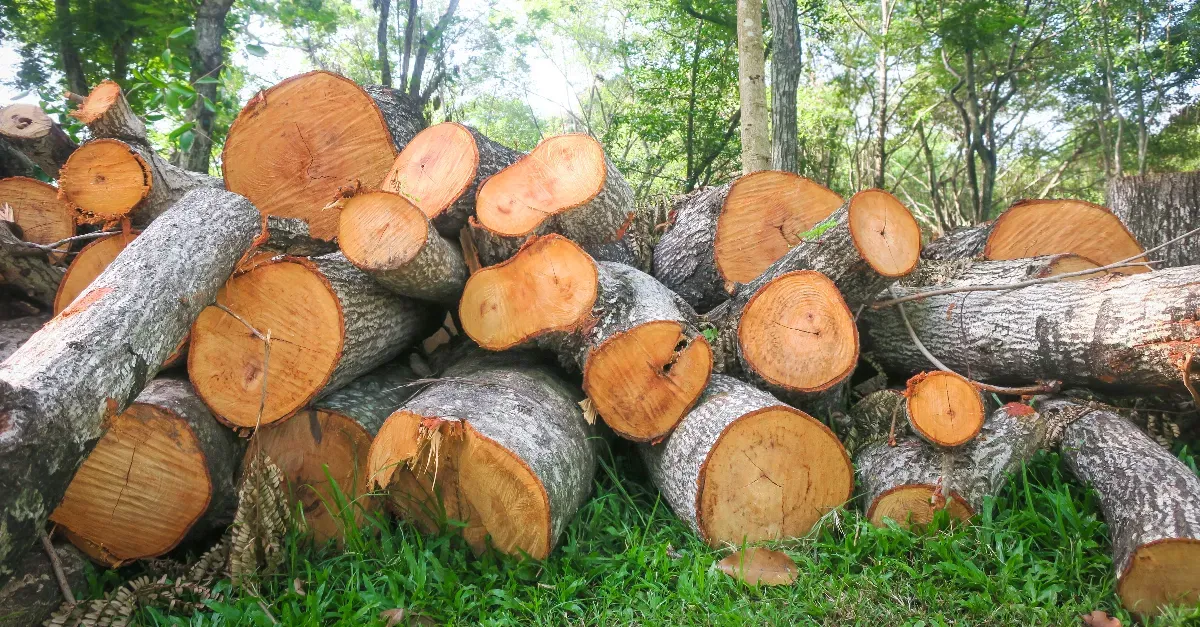
Deforestation: forests, for their part, have to face a growing process of destruction. The causes are to be found in population growth, which pushes to turn them into fields and cities, and in the change in eating habits, which has led to an increase in meat consumption. Moreover, as the climate warms, the portions of forest that dry out and burn increase, in turn emitting considerable quantities of CO2.
According to the French scholar Jancovici, deforestation causes about 10% of global greenhouse gas emissions. The destruction of forests is also very probably to blame for the spread of the most recent epidemics, including the Covid pandemic, owing to humans’ greater contact with the pathogens of wild animals.
As mentioned, deforestation is largely attributable to the crops grown to feed the livestock from which meat is obtained. Professor Joan Sabaté has estimated that producing 1 kg of beef protein requires 18 times more cultivated land, 10 times more water, 9 times more fuel, 12 times more fertiliser and 10 times more pesticides than producing 1 kg of protein from legumes, and three times the resources needed for 1 kg of protein from pork, chicken, eggs or milk.
An omnivorous diet that includes meat generates about twice the CO2 emissions of a vegetarian diet.
There are about 25 billion farm animals on our planet. Most of them are poultry. About 2 billion, however, are cattle, whose rumination, again according to Jancovici, is the main source of methane emissions into the atmosphere.
Meat – largely beef – would therefore be responsible for 14.5% of all greenhouse gas emissions.
A third serious danger linked to the beef industry is the development of bacterial resistance.
In the increasingly intensive farms where they live, animals are treated with strong antibiotics. It is well known that antibiotics, in the absence of disease, favour drug-resistant bacterial mutations, as well as the gradual selection of ever more impregnable strains. Such resistance, of course, has harmful effects on human health too.
To find out more:
AA.VV. The environmental cost of protein food choices, Cambridge University Press, November 2014