Climate inequalities: the thermometer of social justice
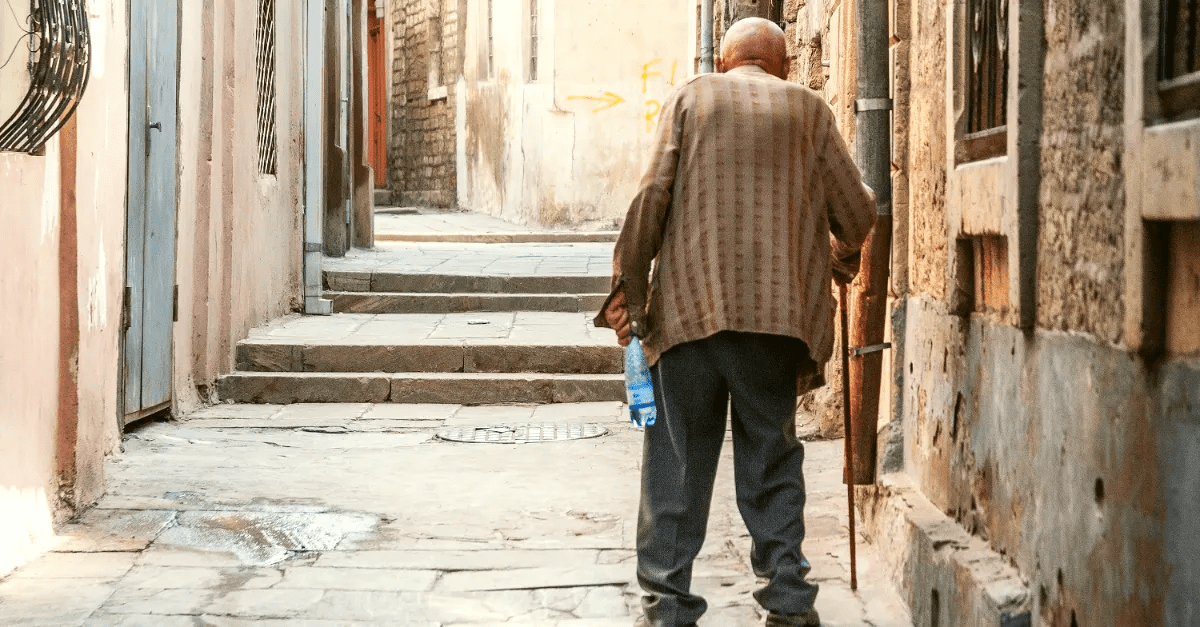
Urban heat maps do not lie: in Madrid the central neighbourhoods, often home to an elderly population, are veritable heat traps. Here, social isolation and the lack of green spaces make the heat even more unbearable. In the south-east of the city, meanwhile, the problem is entangled with poverty. Poorly insulated homes and a limited financial capacity to deal with the heat emergency – such as installing an air conditioner or reaching cool spaces – make the situation worse still.
These data are not just snapshots of the present. Future scenarios, modelled through climate and demographic projections, offer an even more disturbing picture. If we continue on the current path, areas that are already vulnerable will become even more fragile, while inequalities will crystallise. It is the scenario of a two-speed future, in which cities fragment into zones of privilege and forgotten areas.
The study, however, does not stop at pointing out the problem. It also offers an alternative vision. If sustainable development is adopted – investing in education, green infrastructure and welfare policies – the most disadvantaged neighbourhoods can become places of resilience. The message is clear: change is possible, but it requires choices that are sometimes unpopular.
The cities of the future: protect or exclude?
As so often happens, the real crux of the matter is cultural: what do we want from our cities? Are they merely places in which to accumulate infrastructure and economic resources, or can they become places of care, protection and inclusion?
Madrid teaches us that climate adaptation cannot be limited to superficial solutions. Building parks and installing air conditioners is certainly essential, but a structural change is also needed, one that tackles the underlying causes of inequality too. The real challenge is to design cities that protect everyone, starting with the most vulnerable.
There is no shortage of solutions. Some cities around the world are already taking significant steps: in Paris, the network of “cool islands” guarantees a refuge for everyone during heatwaves. Tokyo, meanwhile, is experimenting with innovative materials to reduce the overheating of road surfaces. But every intervention must be accompanied by a social policy that leaves no one behind, above all older people, who now make up a sizeable part of the European population. Because, as Madrid shows, climate vulnerability is first and foremost a question of social justice.
This is the challenge of our time, and it is not certain that we will still be able to face it with the logic of competition and speed. “Slower, deeper, gentler” – to paraphrase Langer, this is the motto that invites us to stop and reflect on what kind of future we want to build in a Europe that is by now different in many respects from that of 40 years ago. Perhaps the heat that is suffocating us is not only a climate issue, but an opportunity to rethink our way of living, because unfortunately ‘the playing field’ has changed and we, probably, are no longer the same players as before.
Sources and further reading:
- Marginean, I., Crespo Cuaresma, J., Hoffmann, R., et al. (2024). High-Resolution Modeling and Projecting Local Dynamics of Differential Vulnerability to Urban Heat Stress. DOI: 10.1029/2024EF004431.
- Alexander Langer: Greentomeet (2023) Alessandro Di Nuzzo 48157895