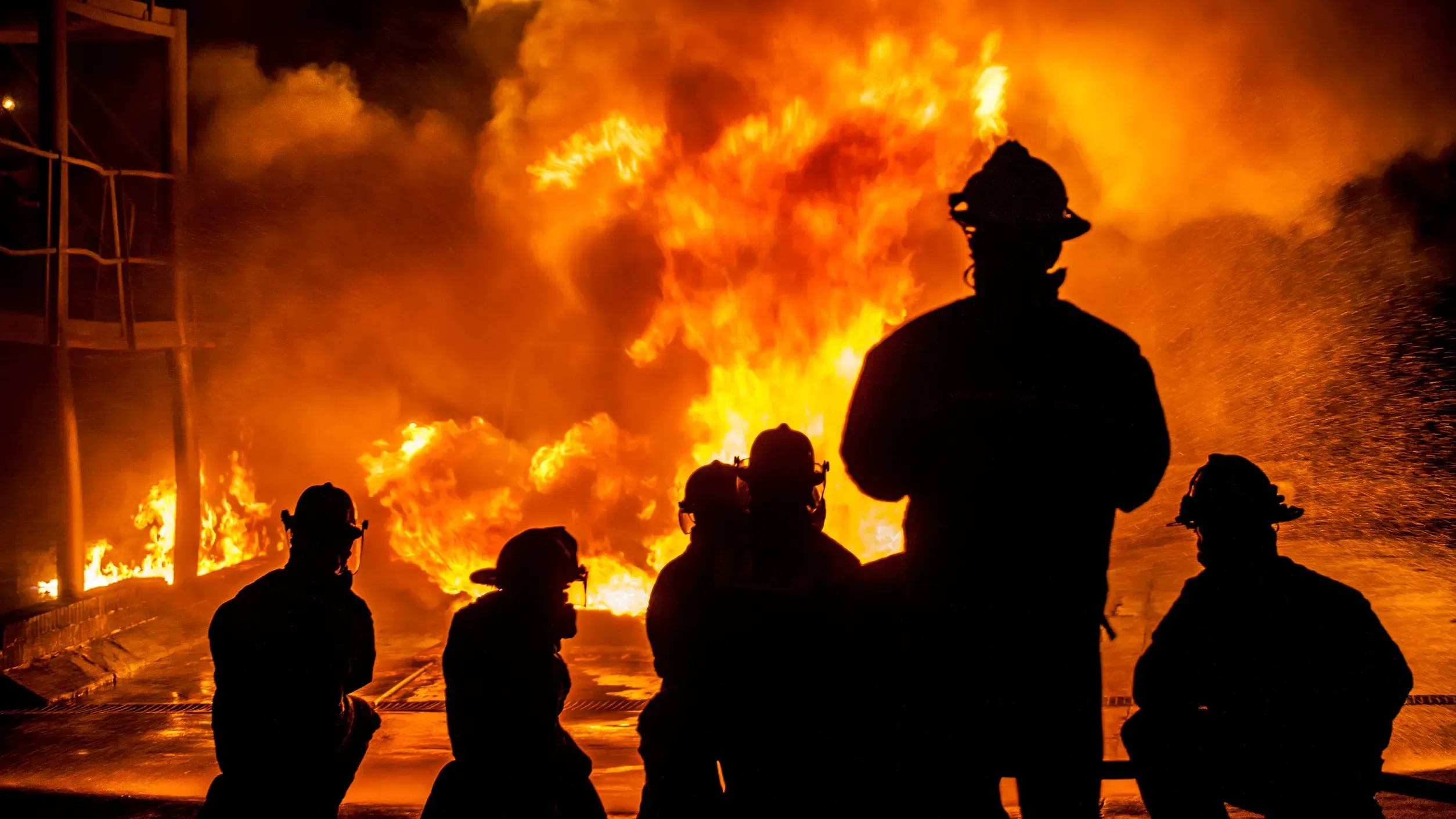
According to official reports, the Palisades Fire consumed about 24,000 acres of land, destroying more than 7,000 buildings and causing at least 12 deaths. Meanwhile, the Eaton Fire proved even deadlier, with a toll of 17 dead and more than 10,000 structures razed to the ground. Weather conditions made these fires particularly hard to bring under control: strong winds, with gusts of up to 160 km/h, fed the flames, spreading them at an astonishing speed and making containment efforts extremely arduous for firefighters.
In the aftermath of the emergency, a debate arose centred on one fundamental question: to what extent did climate change play a role in these disastrous events? Critics of the green policies that California has introduced in recent years began to argue that the state’s environmental management has not had the hoped-for effects in terms of wildfire prevention.
However, what does the scientific evidence suggest?
The role of climate change
What is certain is that, although California is the greenest state in the USA, it has suffered increasingly frequent wildfires in recent decades: this is largely due to climate change, which the state is virtuously trying to combat.
According to scientists at World Weather Attribution, climate change has in fact increased by 35% the likelihood of weather conditions favourable to the spread of flames. Temperatures in California have also risen by about 1°C since 1980, doubling the number of days on which vegetation becomes extremely dry and flammable. In short, prolonged drought, combined with rising temperatures, has created an ideal environment for wildfires to spread!
California’s at-risk season has thus become sadly longer: whereas in the past it was concentrated in the summer and autumn months, today it lasts almost all year. The winter of 2025, for example, was unusually warm and dry, with rainfall well below the historical average. This helped make California’s forests highly flammable, encouraging the development of uncontrolled fires.
California: a green but vulnerable state
As we said, California has distinguished itself as one of the most advanced states in environmental policy in the United States. In recent years, it has invested billions of dollars in renewable energy, sustainable mobility and the reduction of greenhouse gas emissions. Yet despite these efforts, wildfires continue to devastate the region.
Although some critics claim that the state’s green policies have had no effect on wildfire prevention and that California’s environmental management should be rethought, it is worth stressing that emission-reduction measures cannot prevent wildfires in the short term, but aim to mitigate climate change in the long run.
Another crucial aspect is forest management: historically, fire prevention practices included controlled burns to reduce the build-up of flammable material. However, owing to restrictive environmental regulations and a shortage of funds, these practices have been scaled back in recent years, unintentionally contributing to the increased risk of catastrophic fires.
Climate change is a decisive factor
In conclusion, California’s policies can certainly be improved; however, the real crux remains climate change, whose effects are growing exponentially, making land management ever more difficult.
There is no doubt, in fact, that rising temperatures, prolonged drought and the intensification of extreme weather events create ideal conditions for wildfires to spread. The green policies of a single state can certainly help with prevention, but they can do little in the face of a global problem!
Only through an integrated approach, combining environmental sustainability and proactive risk management, will it be possible to protect the land and its communities from the increasingly frequent and destructive spectre of forest fires.