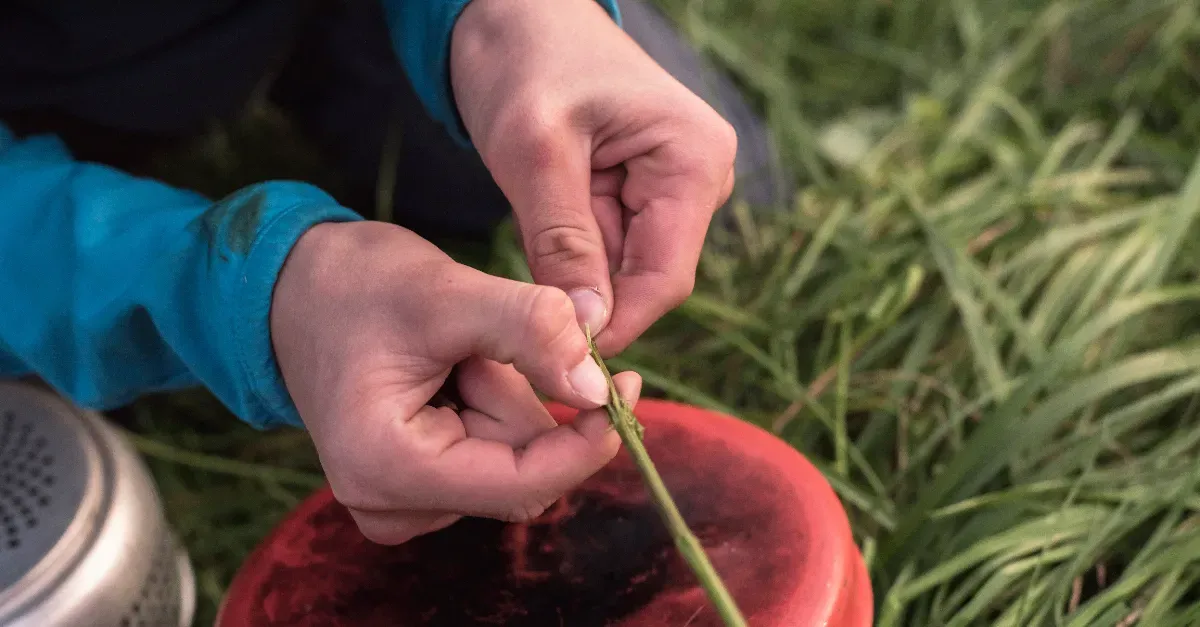
Nature Deficit Disorder is a term that was introduced with the publication of ‘Last Child in the Woods: Saving Our Children from Nature-Deficit Disorder’ by Richard Louv, to indicate a psychological disorder that is hypothesised to be triggered by human beings’ estrangement from nature.
In general, when people return to contact with nature, they find themselves more balanced and their empathy towards others increases. This is probably the very reason why bushcraft is practised more and more: a discipline that teaches how to survive in the wild with limited means: lighting a fire, finding water, cooking food with minimal tools.
In survival courses you also learn to build shelters in the woods and to regain confidence with tools such as hatchets and knives, which are useful for obtaining what you need to shelter from the rain or to light a fire without a lighter.
The most important point is that what bushcrafters learn is respect for nature; they also learn not to take the presence of water, fire, shelter or food for granted.
After a survival experience, psychologists have found that one can gain a sense of well-being and balance and rediscover abilities that seemed to be lost; at the same time, one understands how important it is not to waste vital resources.
Wikipedia says so too: ‘Bushcraft is the use and practice of skills, thereby acquiring and developing knowledge and understanding, in order to survive and thrive in a natural environment. Bushcraft skills provide for the basic physiological necessities for human life: food, water sourcing and purification, shelter-building and firecraft. Wikipedia’. Let us reflect.

Medieval villages, forests, waterfalls, fortresses. A unique experience, marked by the presence of the Supreme Author of the …