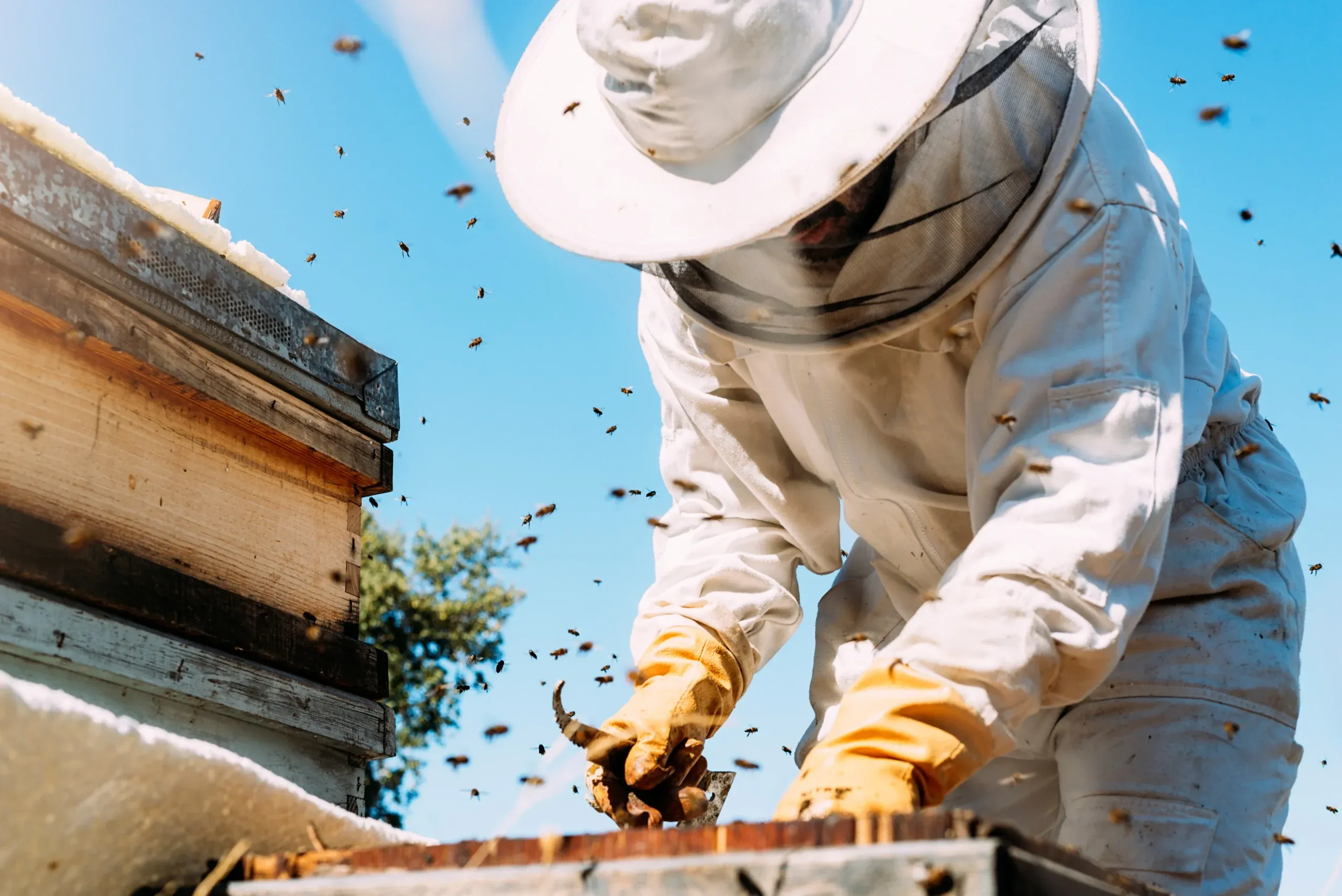
Bees are remarkable creatures, vital to the balance of our planet. Not only do they provide natural products such as honey and wax, they are also responsible for the pollination of many plants, making the production of fruit and vegetables possible. Their presence is essential to the survival of our ecosystems and of our species.
For this very reason, campaigns to protect bees have been launched for some time now by various international organisations. Among the best known, Greenpeace, with its ‘Save the bees’ initiative, is at the forefront of the fight to protect this precious species, threatened by pesticides, habitat loss, monocultures and parasites.
The city of Paris has therefore wisely decided to counter the phenomenon by installing numerous hives on rooftops, terraces and in gardens, where bees can easily find a wide range of flowers and plants from which to gather nectar throughout the year. The varied nature of the food sources available to insects in the city also contrasts with the scarcity of resources they find in monocultures. In addition, in this way bees are kept away from the pesticides used in rural areas, which harm them so badly.
The main hotels in the city centre; world-famous museums such as the Musée d’Orsay; renowned cultural institutions such as the Opéra Garnier; and even churches of the stature of Notre Dame cathedral have joined the initiative, hosting hives on their rooftops.
The benefit, however, is not only for the small striped insects, but also for those around them: the presence of bees in the city creates a more sustainable urban environment, helping to give rise to a flourishing ecosystem and encouraging people to tend urban gardens and vegetable plots on terraces or in other public spaces.
Urban agriculture has, in fact, become increasingly popular in recent years, thanks to its ability to provide local communities with fresh, sustainable, zero-mile food. The presence of bees in cities helps to support this trend, improving the production of fruit and vegetables in inhabited areas.
In Paris, urban vegetable gardens have been common for some time, and their number is fortunately growing, thanks also to the population’s increasing awareness of sustainability and ecology. The terrace of the BHV Marais department store, for example, is used to grow as many as 300 different species, such as berries, aromatic herbs and tomatoes, making it a small green lung in the heart of the historic centre of Paris.
Partnerships with local chefs and businesses, which support urban vegetable gardens and the installation of beehives, and the active involvement of citizens are, moreover, key elements that Paris is deploying to promote sustainable practices and urban biodiversity, and to educate its inhabitants in a green lifestyle. That is why, in the end, Parisians welcome the presence of bees in the city.