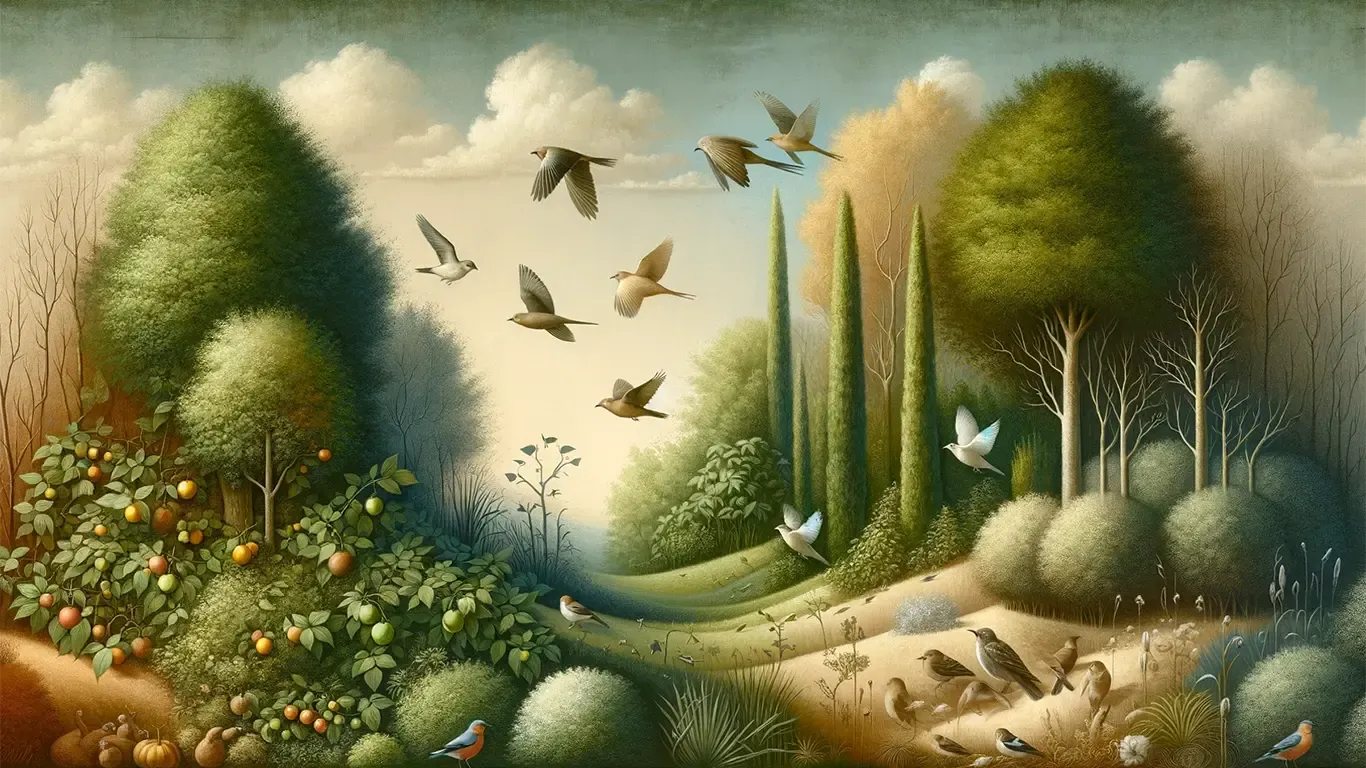
The same poetry, the same sensitivity, can also be found in seventeenth-century landscapes and in those of the Romantic era, where nature takes on a more sublime and picturesque character. Given their figurative nature, these paintings are unlikely to leave us indifferent; on the contrary, they are able to speak to all generations and to convey emotions across the board.
The case of more contemporary works of art is different, as they often abandon figuration in favour of research that makes use of more experimental techniques and materials. How many times, standing before an installation, have we wondered what it meant, or even been left perplexed because “I could have done that too”? The intellectual effort is certainly greater, but if we are willing to make it, we will discover that yes, the form has undoubtedly changed, but often not the substance.
When it comes to eco-art, the artists’ sensitivity is, in fact, the same: through their poetics they express an equal love for nature and the same sense of harmony with it. Indeed, they do more: they fight to preserve it, raising awareness of the climate and sustainability.
Among the first movements to show an “ecological” tendency was the Italian Arte Povera which, as early as the 1970s, reflected on the relationship between man and the environment, often using natural materials such as wood, leaves or mud. The case of Giuseppe Penone, born in Garessio (Cuneo) in 1947 and trained at the Accademia di Belle Arti in Turin, is particularly exemplary.
Recently celebrated by the exhibition “Giuseppe Penone. Gesti universali”, curated by Francesco Stocchi and held in Rome at the Galleria Borghese, Penone is a world-famous artist whose poetics centre on the relationship between humanity, nature and ecology.
The idea that emerges from his works is that of restoring contact between humanity and the environment, often through a meditation on growth and the cycle of life. Among his favourite materials is wood, which the artist uses to create organic works that seem to merge with the surrounding environment.
In Albero di 12 metri, for example, Penone lets a tree grow inside a block of marble, representing the struggle between the force of nature and the force of man, but also nature’s ability to regenerate itself and overcome the obstacles imposed by man, with a view to rebalancing and reconciling humanity and the ecosystem.
Another artist who places the relationship between man and the environment at the centre of his research is Olafur Eliasson (Copenhagen, 1967), known to the wider public also thanks to a recent exhibition at Palazzo Strozzi (Florence), curated by Arturo Galansino. His artistic output often foregrounds the complexity of environmental dynamics and addresses ecological themes, with the aim of raising society’s awareness.
Many of his projects are large installations that use organic materials, solar energy or water, and offer the public immersive sensory experiences of nature. The work The Weather Project, created in 2003 at Tate Modern in London, recreated, for example, the effect of the sun inside the museum space, and through the use of light, mist and mirrors created an evocative and interactive atmosphere that prompted reflection on humanity’s impact on the climate.
The younger Francesco Simeti (Palermo, 1968) also considers the role of art fundamental in raising awareness of climate change and the ecological crisis, and through his works he explores themes linked to nature, sustainability and human interactions with the environment.
One of the recurring features of his artistic output is the use of recycled materials, such as plastic, wood and fabrics, which encourage reflection on waste and the consumer society. Moreover, Simeti’s works often overflow with lush vegetation, flowers and animals, all elements symbolising the beauty and fragility of the natural world.
An example of the artist’s ecological commitment is the installation The Wild Side at the 2019 Venice Biennale, made up of decorative tiles produced from plastic recovered from the oceans. Each tile was, moreover, designed by Simeti with images of endangered marine species.
At first sight, works such as those by Giuseppe Penone, Olafur Eliasson and Francesco Simeti might perhaps seem less evocative than a traditional landscape; however, by understanding a little better what lies behind them, we will discover that they have the same communicative power and the same sensitivity towards the environment. Eco-art, moreover, does not merely celebrate the beauty of nature, but also strives to promote a rebalancing between man and planet, making an important contribution to the ecological cause.