Today is monday 9 november 2026
Webzine of ecological news

Eco thinking

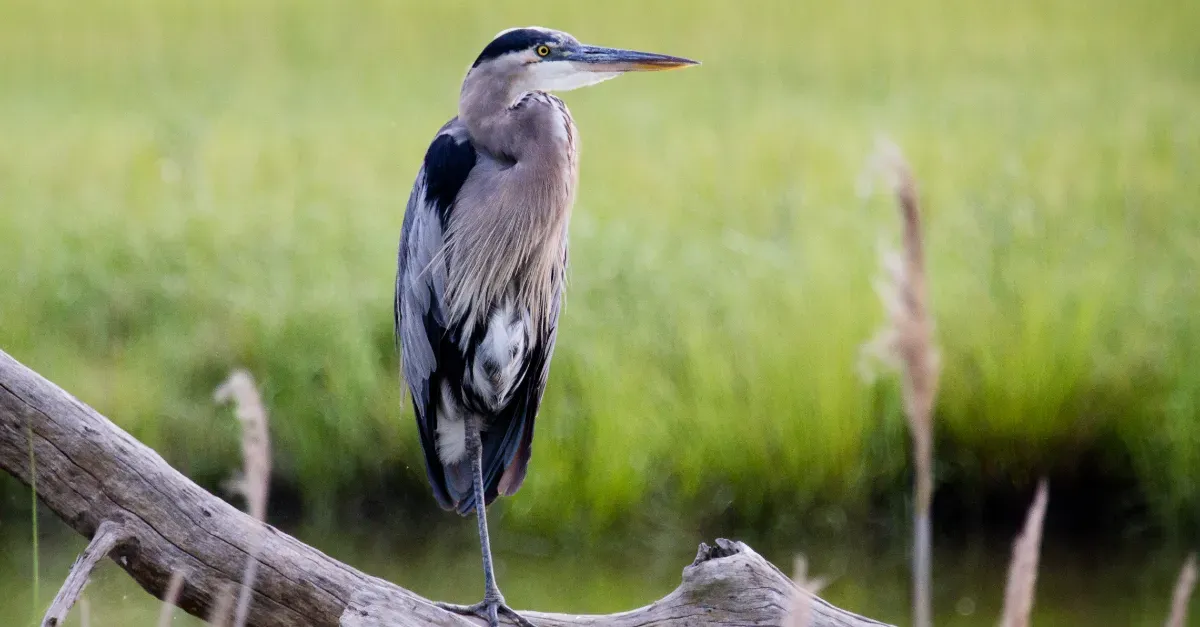
And the herons stay at home

Climate change also has an impact on bird migration. A phenomenon that is increasingly visible in our countryside and our cities too

image by :[natehughesphoto] © 123RF.com

Late autumn days, when the sky is cloudless, turn into afternoons not to be missed for their serenity and the delicacy of their colours, from bright red to green fading into the cobalt blue of the evening.

As I finish my daily walk, made even better today by an outdoor temperature that makes everything almost ideal – were it not for that persistent, penetrating smell of polluted lowland air, which relentlessly accompanies me at every step – I stop to look at, or rather to contemplate, a vast, irregular expanse of white wings and tails resting on a field on the outskirts.

The sight is truly beautiful. The irregular movements, almost vibrations, of the flock of white birds on the withered green of the rough meadow – crossed by the usual lowland power line – have something soothing for the soul.

They are like a fragment of a mosaic, a fleeting episode of nature, in a territory – that of the Emilian countryside, or what remains of it – that has managed to preserve little or nothing of its “natural environment”, hiding behind the false alibi of the “great road” (the Via Emilia) which has supposedly always favoured and attracted, with its linear presence, human settlement, building, the civilisation of men and machines.

That white, jagged cloud is made of herons, I believe I am not mistaken. Cattle egrets. At least those I think I can recognise: they have accompanied me, accompanied us – we lowland dwellers with a few decades behind us – since childhood. Almost a characteristic element of the natural landscape, together with the drainage canals, their banks, and the poplar groves that until a few years ago you could still see rising between two cultivated fields, just outside the towns. And which now, I don’t know why, have almost all disappeared; not to mention the rows of trees: those, uprooted long ago, you can only see in some old film like The Spider’s Stratagem.

Show more Show less

But today is 4 December: and so I wonder. Shouldn’t the herons, the cattle egrets, have already migrated to warmer shores (that’s how one says it, isn’t it?) Why are they here? Have they decided to spend Christmas at home?

Being neither an ornithologist nor an ethologist but only a modest journalist, I decide that, as soon as I am home, I will try to understand this better. Perhaps I have said, or thought, a scientific blunder; perhaps it is only an old reminiscence of school poems, that of migration, applied to a species, a category that is instead proverbially sedentary.

I know that is not the case. But I still want to bring the question into sharper focus.

“Cattle egrets, with global warming they do not leave for Africa and stay here: 4 rescued in Modena”.
This is the headline of an article in the magazine sulpanaro.net dated 27 November 2022.
So the phenomenon has been under way for some time. The cattle egrets of my childhood, too, are changing their way of life, as I already knew several species of birds have done, and not only birds.

Animal migration is a natural phenomenon involving the movement – seasonal for many species – of populations from one habitat to another, in order to survive and reproduce. Besides birds, it affects various mammals, fish, reptiles and insects. And – incidentally – homo sapiens too.

Birds migrate with the change of season, as Franco Battiato sang, in search of African warmth.

But for some years now they seem, indeed are, destabilised by the weather: which is why they tend to delay their departure. This is also what happens with cattle egrets.
One might say: after all, what’s wrong with that? They save themselves the journey.

The joke is hardly a good one, and the point is that it isn’t so. As temperatures drop, the animals begin to show serious breathing difficulties.
This is confirmed by the volunteers of wildlife centres, such as (to stay in the Emilian lowlands) the Pettirosso in Modena, who for years have had to collect and treat herons that clearly have difficulty standing and breathing.

Not to mention that, as ornithologists explain to us, the absence of herons from African lands, like all imbalances and disturbances of the natural order, has consequences for the systemic balance down there too.

Herons help to rid hippopotamuses and elephants of parasites – how many times have we seen it in documentaries. This hygienic function, with the herons absent, is lost.

The link between climate change and changes in the migratory habits of various animal species is by now an established fact.

A 2022 study, coordinated by Andrea Romano, a researcher at the University of Milan and published in “Ecological Monographs”, remains fundamental on this subject.

The consequences, in the short or long term, for the biodiversity of a planet as closely interconnected as the one we live on will be far more serious – scientists assure us – than we might think when observing the “oddity” of birds that “stay at home” or delay their departure in the depths of winter.

fund1

Machine translation

We respect your privacy

When you use this site, we and the third-party providers listed in the preferences may use cookies and similar technologies for the following purposes:

  • Necessary: Core functions: security, session and storing your choices.
  • External services: Embedded third-party content such as videos. It only loads if you allow it: the provider then receives your IP address and may set cookies of its own.

Only necessary cookies are active without consent. Some providers may transfer data outside the EU. You can change your choices at any time from the «Privacy settings» link at the bottom of the page; closing with the X continues with necessary cookies only.

Customise