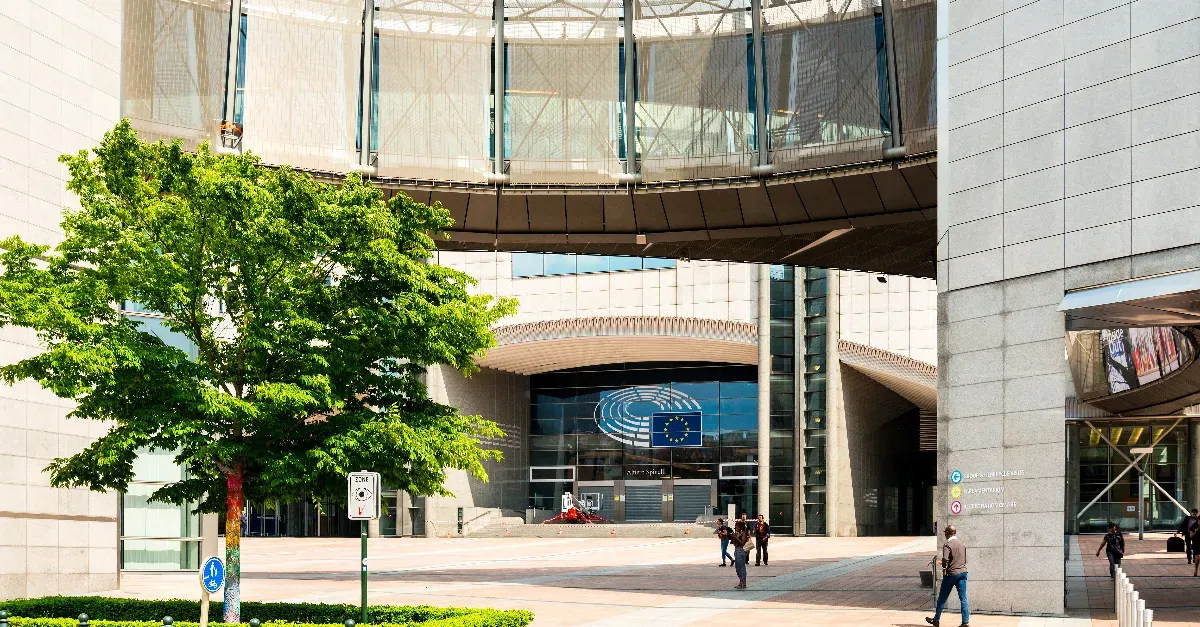
HEI hosted a meeting together with the European Respiratory Society (ERS) and the International Society for Environmental Epidemiology (ISEE), on 24 May 2023 in the Belgian capital.
The purpose of the meeting was to discuss the recently proposed revisions to the EU Ambient Air Quality Directive (AAQD), to identify its strengths and weaknesses and, where appropriate, to propose further environmental and air quality policy options.
The discussion was based on topics such as the health effects of low levels of exposure to pollution, the relative contributions of different sources and components, and successful examples of good practice in air quality. Finally, there was the question of how to maximise health benefits for everyone, in Europe and beyond.
The two messages that emerged very clearly from the meeting are those mentioned at the beginning. Exposure to air pollution damages our health; reducing air pollution saves money.
Every year in the 27 EU member states about 412,000 people die prematurely because of particulate pollution, the speakers recalled. But this is only part of the impact of pollution on health. Air pollution is also a factor in many of our chronic diseases; it damages our health from before birth, through childhood and into old age.
And so it also costs us in economic terms. A great deal. “Air pollution at current European levels is not free,” said Professor Barbara Hoffmann of the University of Düsseldorf. “It entails high costs in terms of hospital care, lost working days, inability to work and reduced intelligence in children. All this translates into enormous expense, which could be avoided.”
The new EU proposals, although they do not fully adopt the guidelines of the World Health Organization, would reduce the legal limits for particulate pollution by 60% and cut the limit for nitrogen dioxide by 50% by 2030.
The opponents of this package of proposals (more or less ‘deniers’) use the weapon of costs as their first objection. The methods used by experts to calculate costs and benefits, brought to the attention of the Brussels meeting, vary from country to country, but the general message is the same from everyone. The benefits of reducing the health burden caused by air pollution are so high that they almost always outweigh the investment.
The US Clean Air Act and its amendments are estimated to have saved the lives of 230,000 Americans in 2020. To this figure must be added the reduction in asthma, emergency room visits and days away from work and school. Adding up all the items, the benefits reach more than 30 times the investment.
For the EU proposals, the expected benefit is at least 10 times greater than the cost and could be up to 35 times greater.
This is why the scientists have challenged the European Commission to strengthen the proposals made so far: in short, to ‘throw their heart over the obstacle’ (represented above all by many national political parties). “The new EU directive, with stricter limits, could be the greatest health intervention for a generation,” said Professor Mark Nieuwenhuijsen of the Barcelona Institute for Global Health.
If it is true that the health impacts of air pollution amount to 6.1% of global gross domestic product, according to World Bank estimates, the EU has the opportunity to become a world leader in clean air technology and action. The scientists gathered in Brussels hope that their rallying cry will pass through the walls of the Berlaymont building, the seat of the Commission, and reach the ears of the 27 members of the Commission.