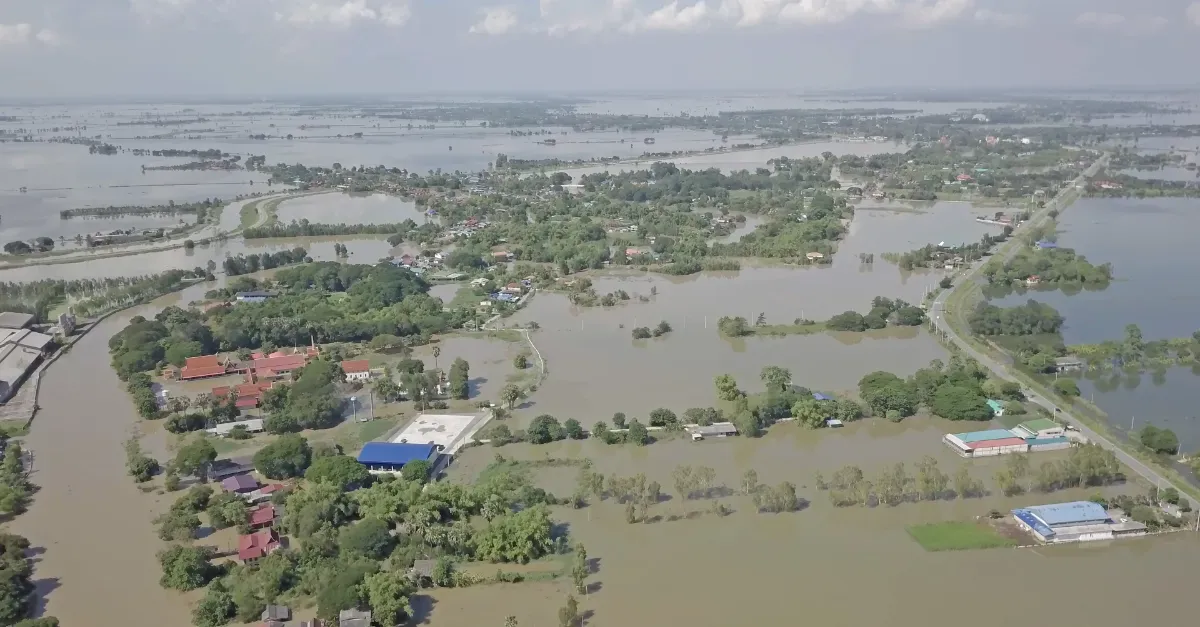
Also in Greece, Storm Daniel dropped the equivalent of 18 months of rain on the region of Thessaly between 4 and 7 September, temporarily turning its fertile plain into a lake and causing damage estimated at over 2 billion euros.
Italy did not escape, as we know all too well. In 2023 it faced several extreme climate events that had a significant impact on the country. These events exposed the full vulnerability of the peninsula, highlighting the importance of effective adaptation and prevention strategies.
In particular, the Emilia-Romagna region was hit by devastating floods caused by exceptional rainfall. In some areas, half of the average annual precipitation fell in just 36 hours, causing rivers to burst their banks and submerging thousands of hectares of farmland.
These phenomena were described as rare events, with an estimated probability of once every two hundred years. Research has revealed that these exceptional events were driven by an unprecedented sequence of three low-pressure systems in the central Mediterranean region, making the situation more complex than initially forecast.
The collapse of the Marmolada Glacier was another extreme climate event in the Italian Alps. This disaster revealed new danger conditions in Alpine glaciers, which had previously not been considered a threat. The collapse highlighted the need for advanced monitoring systems and the difficulty of predicting such events, despite scientific warnings about the growing risk of glacier instability due to climate change.
That is not all. The rise in temperatures has confirmed the most alarming climate change predictions, with a global average of 1.40 °C above pre-industrial levels.
The increase is certainly one of the main causes of the greater frequency of extreme climate events.
From the floods in Libya to the devastation of Tropical Cyclone Freddy in Madagascar, Mozambique and Malawi, and the unprecedented fires in Canada, we have seen some of the tangible effects of global warming.
We can therefore conclude that 2023 marked a turning point in the impact of climate events on human societies and on the global economy.
The frequent natural disasters have exposed critical vulnerabilities in existing infrastructure and emergency systems, forcing a rethink of strategies for responding to such crises. The international community faces the pressing need to review environmental policies, invest in sustainable technologies and strengthen cooperation on the climate.
The point to be made at the end of this year is by now well known, but it is worth repeating. Adapting to these new climate challenges requires a global approach that includes reducing greenhouse gas emissions, promoting renewable energy and developing resilience programmes for the most exposed communities. Only with a joint commitment at global level can we aim for a safer future, reducing the risks for present and future generations.
Among the sources:
https://earth.org/the-state-of-the-global-climate-in-2023-a-recap/
https://www.reuters.com/world/europe/greek-floods-fires-expose-europes-frail-climate-defences-2023-11-21/
https://e360.yale.edu/digest/billion-dollar-disasters-us-climate-change